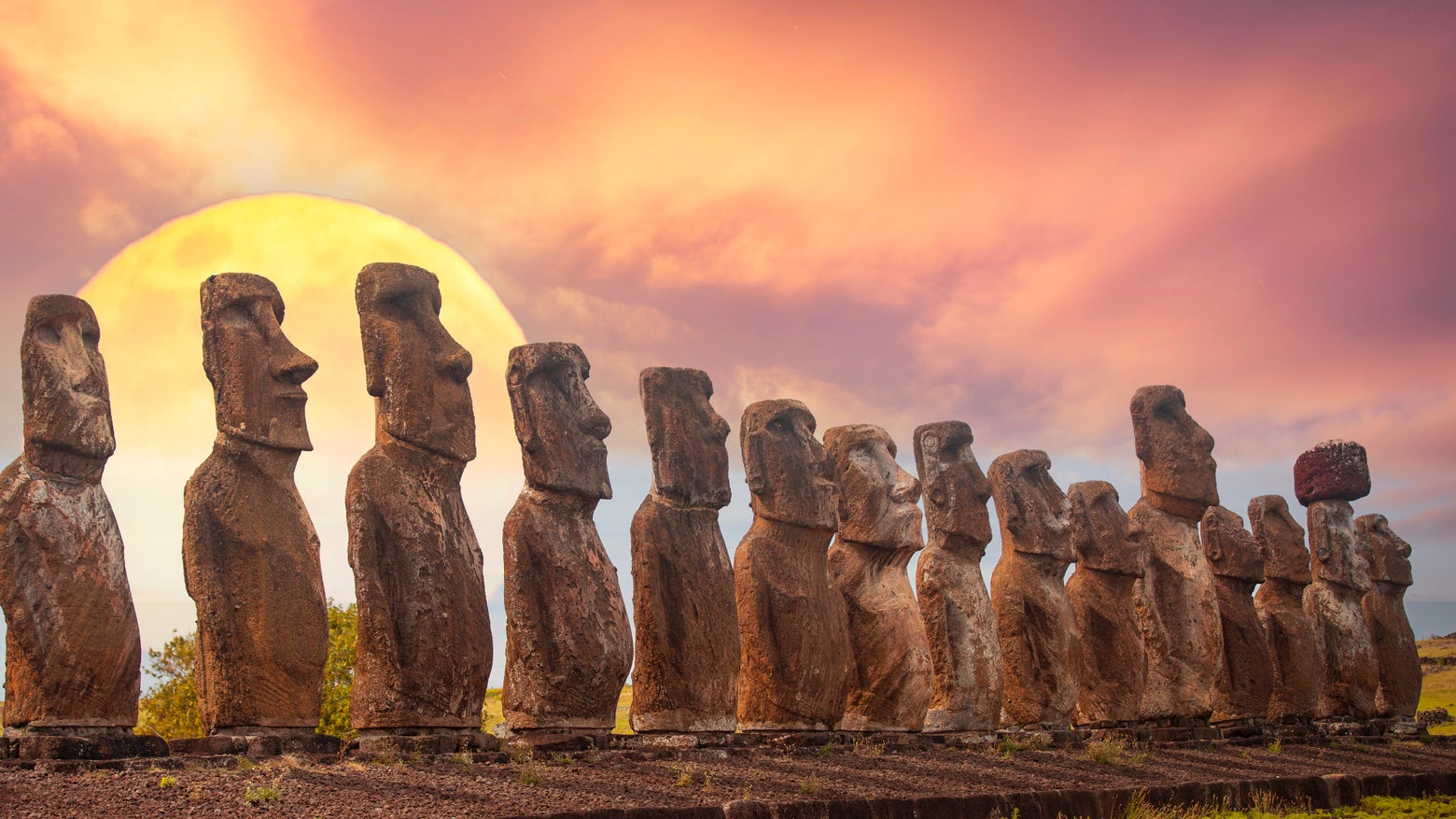
"More than 1,289 miles from the nearest human settlement, Easter Island-or Rapa Nui, as its own people call it-is arguably the world's most remote inhabited place. To the mystique of its isolation amid vast expanses of the South Pacific Ocean, add the hundreds of colossal stone carvings of human figures scattered over the island, from orderly rows placed on plinths near the coast to even larger statues at seemingly random spots along its ridges and highlands."
"Rapa Nui's iconic statues are often presented as a mystery. How were the figures, which can weigh as much as 80 tons, moved from the volcanic quarry where they were carved to their positions around the island? What do they represent to whoever made the mammoth effort to carve and situate them? The idea of Rapa Nui as enigma arises from the belief of Westerners, almost from their first contact with the islanders in 1722,"
Easter Island (Rapa Nui) sits more than 1,289 miles from the nearest human settlement and hosts hundreds of colossal stone human carvings. The statues appear in coastal plinth rows and larger, isolated positions on ridges and highlands, with some figures weighing up to 80 tons. Core questions include who built them, why, how they were transported from the volcanic quarry, and what they represented. Western observers since 1722 often assumed the Rapanui could not have achieved these feats, giving rise to fantasies from ancient astronauts to a drowned lost civilization. An archaeologist experienced at Stonehenge challenges the dominant historical theory and dismisses alien-architect explanations as "demonstrable claptrap."
Read at Slate Magazine
Unable to calculate read time
Collection
[
|
...
]