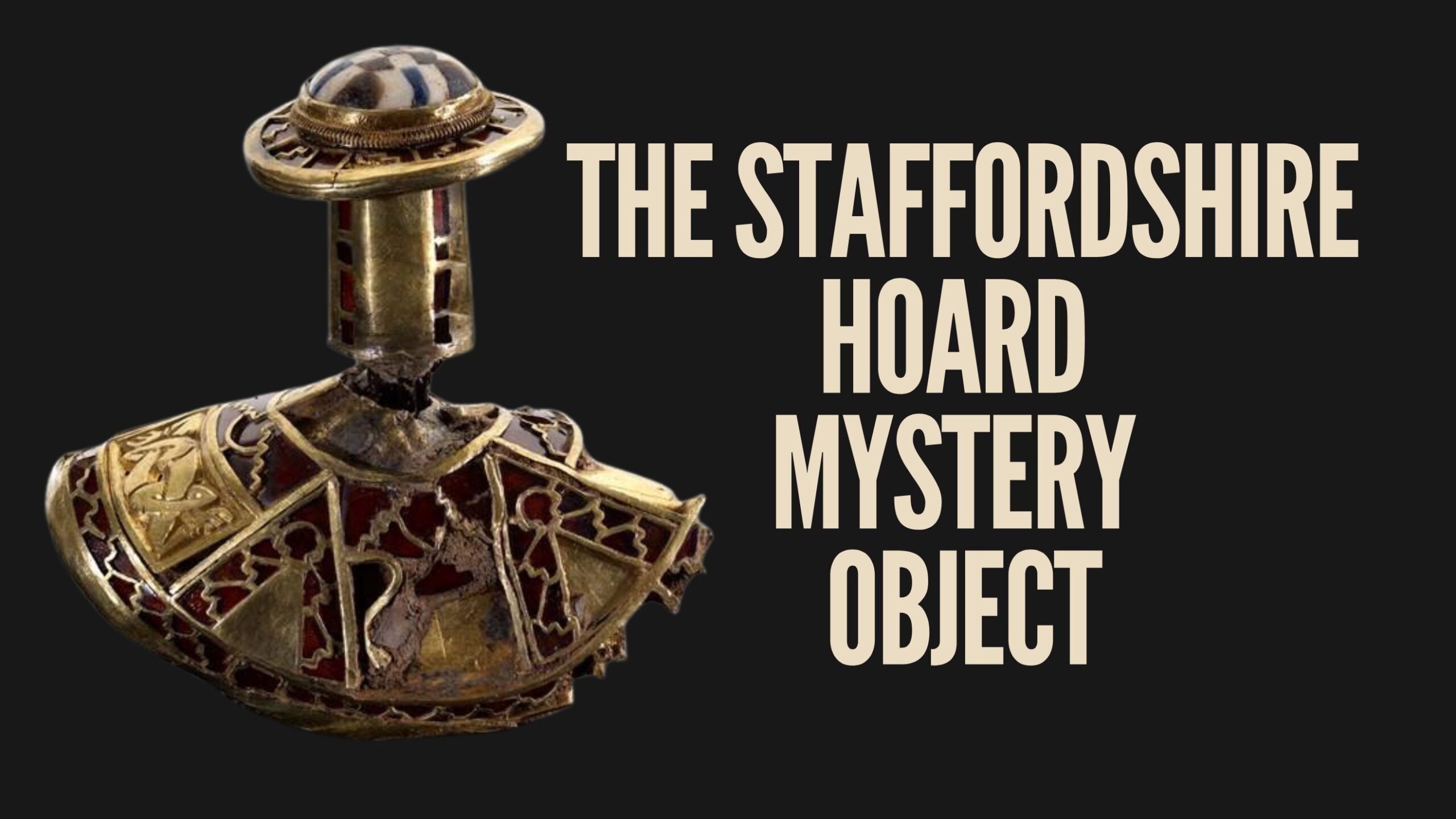
The Staffordshire Hoard contains over 1,500 objects found in central England, including roughly 5 kg of gold (about 75% of metal content) and 1.3 kg of silver. Most objects are military: sword‑hilt fittings, pommels, pendants and other warrior items. Dating places the deposit in the 7th–8th centuries during Mercian dominance. The hoard’s purpose remains debated between Christian and pagan explanations and why it was buried. One unique piece has no known European parallel; research suggests it may have been an ornamental headdress worn by a priest or bishop in the mid‑7th century, incorporating up to seven cross motifs. Lack of archaeological context complicates interpretation.
"When the Staffordshire Hoard was unearthed by a metal detectorist in 2009, its glittering fragments transformed our understanding of early Anglo-Saxon craftsmanship and warfare. Now recognised as the largest Anglo-Saxon gold hoard ever discovered, it contains an astonishing 5 kg of gold, representing roughly 75% of the hoard's total metal content, and 1.3 kg of silver. Found in a Staffordshire field in central England,"
"An initial assessment places the hoard in the 7th and 8th centuries, during the height of the kingdom of Mercia, one of the most dominant powers in early medieval Britain. Yet despite the wealth of material, the purpose of the hoard remains unresolved. Scholars continue to debate whether this extraordinary deposit was assembled for Christian or pagan reasons, and why such a rich cache of martial splendour was buried at all."
"Unlike the vast majority of the hoard, which consists of recognisable martial fittings, the mystery object is unprecedented. Its shape, construction, and symbolic motifs resist easy classification. The absence of archaeological context-common in hoard discoveries-only deepens the enigma. A decade-long research programme suggests that the piece may have been part of an ornamental headdress, possibly worn by a priest or bishop in the mid-7th century. The design incorporates up to seven cross motifs"
Read at Medievalists.net
Unable to calculate read time
Collection
[
|
...
]