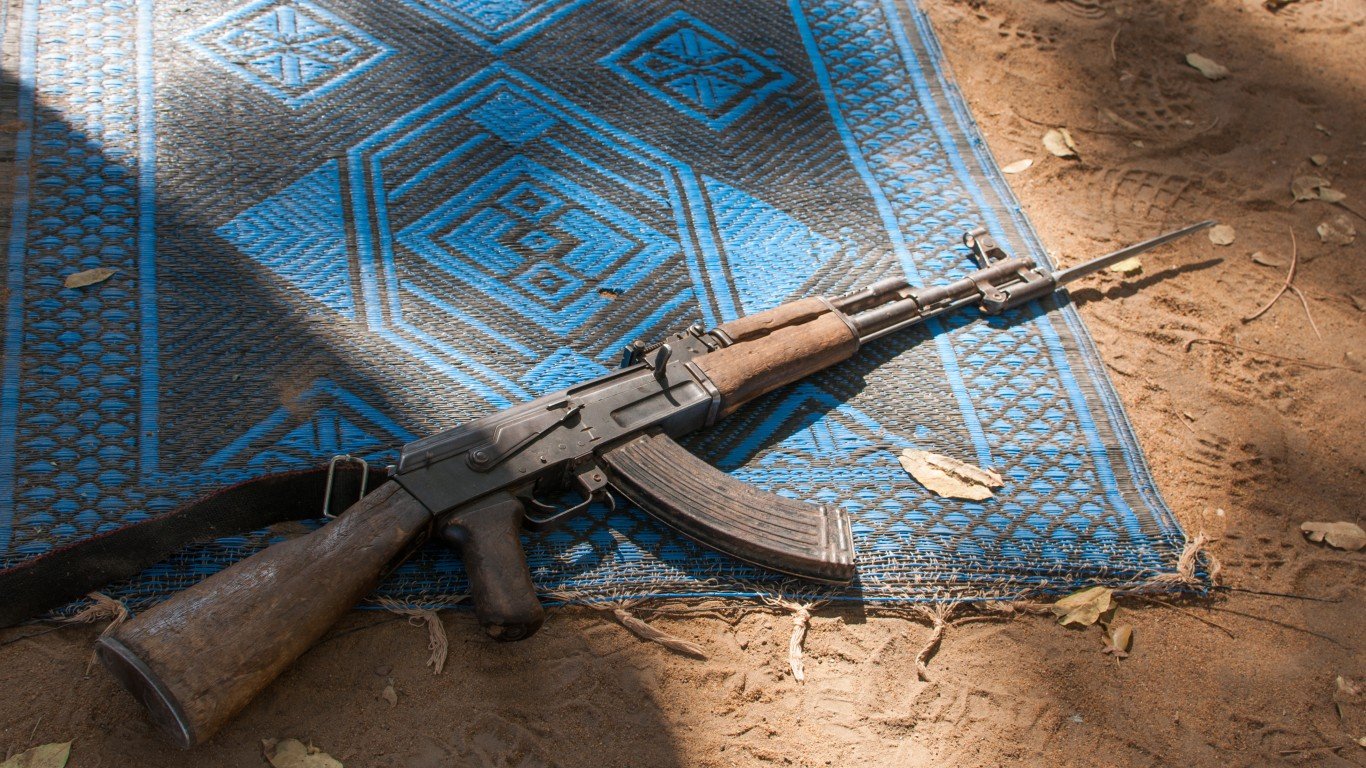
"Not every shift in infantry tactics comes from better equipment. Some changes emerged because weapons failed to perform as intended, forcing troops to adapt in order to survive and remain effective. Reliability issues, safety risks, and handling limitations reshaped how soldiers moved, engaged, and coordinated. Here, 24/7 Wall St. is taking a closer look at the infantry weapons that changed tactics, but not because they were better."
"Understanding infantry weapons that changed tactics is important because it challenges the assumption that battlefield evolution is driven only by technological improvement. In many cases, soldiers altered how they moved, fought, and organized not to gain advantage, but to compensate for unreliable, awkward, or limiting equipment. Examining these weapons reveals how real-world infantry tactics often emerge from constraint and adaptation, offering a more honest picture of how combat behavior evolves when doctrine is forced to bend around imperfect tools rather than improved capability."
"Infantry tactics are often assumed to evolve because weapons improve. In reality, many tactical shifts emerged because soldiers were forced to adapt to weapons that were unreliable, awkward, dangerous, or mismatched to doctrine. This article examines infantry weapons that changed how troops fought-not because they offered an advantage, but because their shortcomings demanded new behavior."
Many infantry tactical shifts occurred because weapons failed to perform as intended, forcing soldiers to alter movement, engagement, and coordination to survive and remain effective. Reliability problems, safety risks, and handling limitations reshaped how troops moved, engaged enemies, and organized at the squad level. Several infantry weapons introduced friction by offering limited range, dangerous malfunctions, awkward operation, or incompatibility with existing doctrine, creating new tactical constraints. Troops adapted through altered movement patterns, revised engagement distances, modified coordination, and ad hoc procedural changes to compensate for equipment shortcomings. These adaptations show that battlefield evolution can stem from practical necessity rather than technological advantage, producing tactical changes that are responses to constraint.
Read at 24/7 Wall St.
Unable to calculate read time
Collection
[
|
...
]