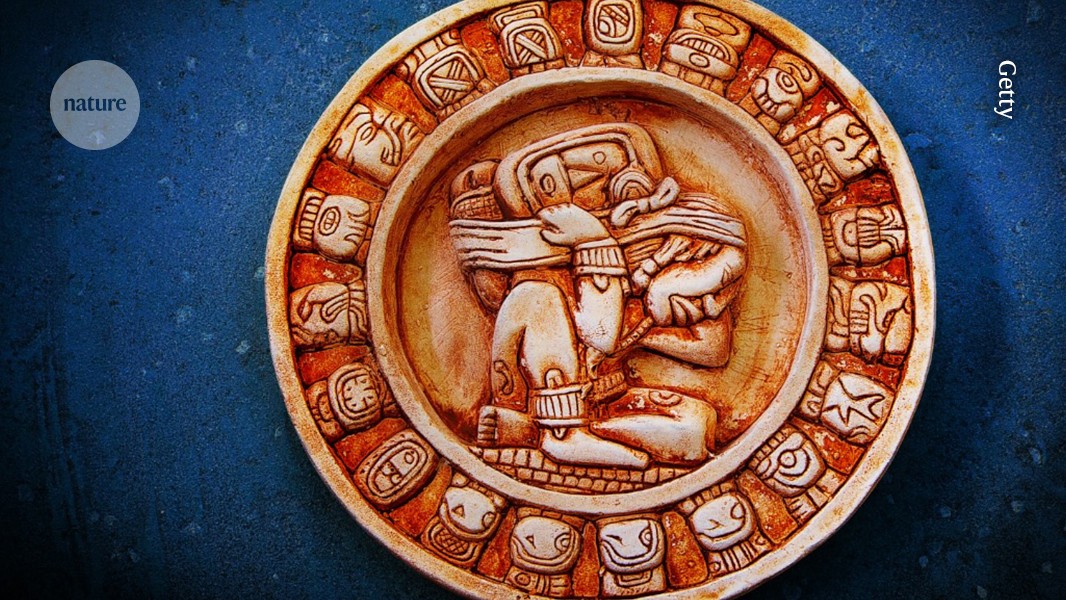
"Before the 1970s, ancient Maya history was impenetrable. The civilization's grand ceremonial buildings and striking art, created in parts of Mesoamerica during the Classic Maya period (ad 150-900) had tantalized foreign visitors since the arrival of Spanish conquistadors in the sixteenth century. But no one, including several million twentieth-century speakers of Maya languages, could read the ancient Maya hieroglyphs."
"Epigrapher David Stuart embraced this challenge while still a child, living with his archaeologist parents in a small village in Mexico's Yucatán Peninsula, where he learnt to speak the local Yucatec Maya language. He began working with Mayanist Linda Schele to understand the inscriptions of the ancient city-state of Palenque in Chiapas, on the peninsula's western side."
"Stuart takes aim at outdated views of the Maya as 'quintessential noble savages living in remote cities in the jungle' under the control of impersonal rulers and priests who were 'more interested in esoteric knowledge than the concerns of the real world'. Instead, he portrays the Maya as living in a world that consisted"
David Stuart, a leading epigrapher and Mesoamerican specialist, learned Yucatec Maya as a child and began deciphering ancient Maya hieroglyphs as a prodigy, presenting his first conference paper at age 12 and receiving a MacArthur Fellowship at 18. His new book, The Four Heavens, presents Maya history for general audiences using twenty-first-century archaeological discoveries and hieroglyphic translations. The title references Maya cosmology's division of the sky into four sides based on solar movements. Stuart challenges outdated stereotypes portraying the Maya as isolated noble savages ruled by detached priests, instead presenting them as a sophisticated civilization with complex political and intellectual systems.
#maya-hieroglyphics-decipherment #ancient-mesoamerican-civilization #maya-cosmology-and-history #archaeological-discoveries #epigraphy-and-linguistics
Read at Nature
Unable to calculate read time
Collection
[
|
...
]