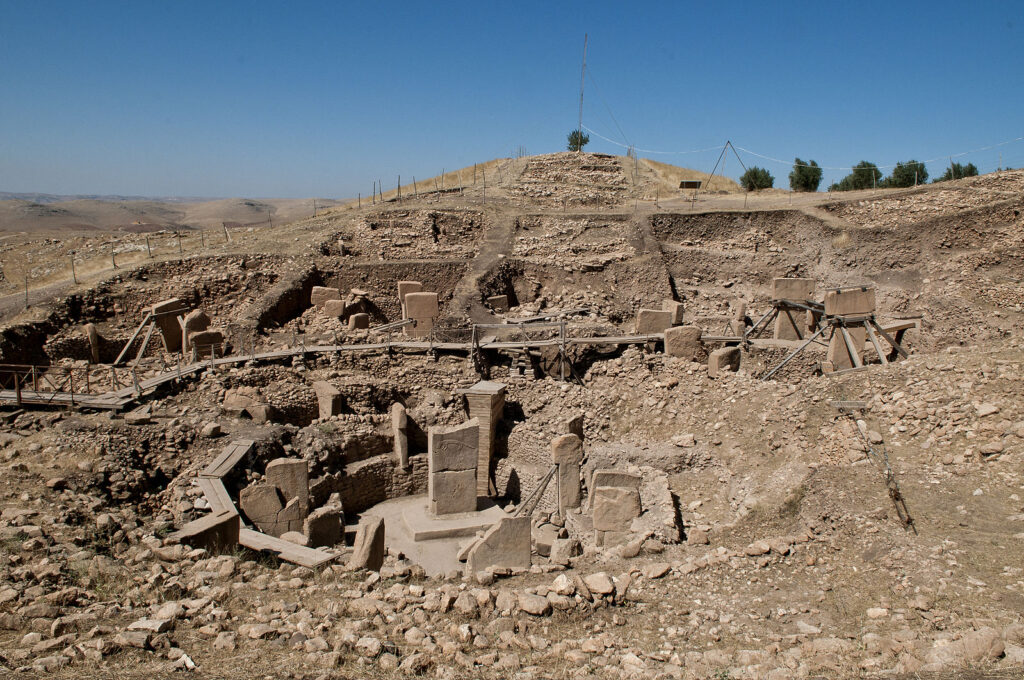
"Appar­ent­ly inhab­it­ed from around 9500 to 8000 BC, the ancient set­tle­ment pre­dates the Pyra­mids of Giza by near­ly 8,000 years, and Stone­henge by about 6,000 years. Though it was once believed to be a site used for rit­u­al pur­pos­es only, lat­er research unearthed evi­dence that sug­gests it was host to a vari­ety of activ­i­ties we asso­ciate with urban civ­i­liza­tion, rather than what we usu­al­ly think of hunter-gath­er­er sites."
""Like Stone­henge, Göbek­li Tepe's struc­ture includes cir­cles of T‑shaped lime­stone pil­lars, many of them fea­tur­ing etch­ings of ani­mals," says YouTu­ber Joe Scott in the video above. These pil­lars are arranged into enclo­sures, which togeth­er con­sti­tute a site that "fea­tures archae­o­log­i­cal com­plex­i­ty that prob­a­bly would have been too advanced for hunter-gath­er­ers." Klaus Schmidt, the archae­ol­o­gist who led the exca­va­tions at Göbek­li Tepe between 1996 and 2014, believed that it was "a sanc­tu­ary and maybe a region­al pil­grim­age cen­ter where peo­ple gath­ered to per­form reli­gious rites.""
Common narratives place agriculture before cities and cities before civilization. Göbekli Tepe, occupied roughly 9500–8000 BC in southeastern Turkey, predates the Pyramids and Stonehenge by millennia. The site contains circles of T-shaped limestone pillars, many with animal etchings, organized into enclosures. Archaeological evidence indicates a range of activities more commonly associated with settled, urban life than with mobile hunter-gatherer bands. The monumental construction and symbolic ornamentation demonstrate complex social organization and ritual practices. Excavations led between 1996 and 2014 identified the place as a major ritual center and possible regional pilgrimage destination.
Read at Open Culture
Unable to calculate read time
Collection
[
|
...
]