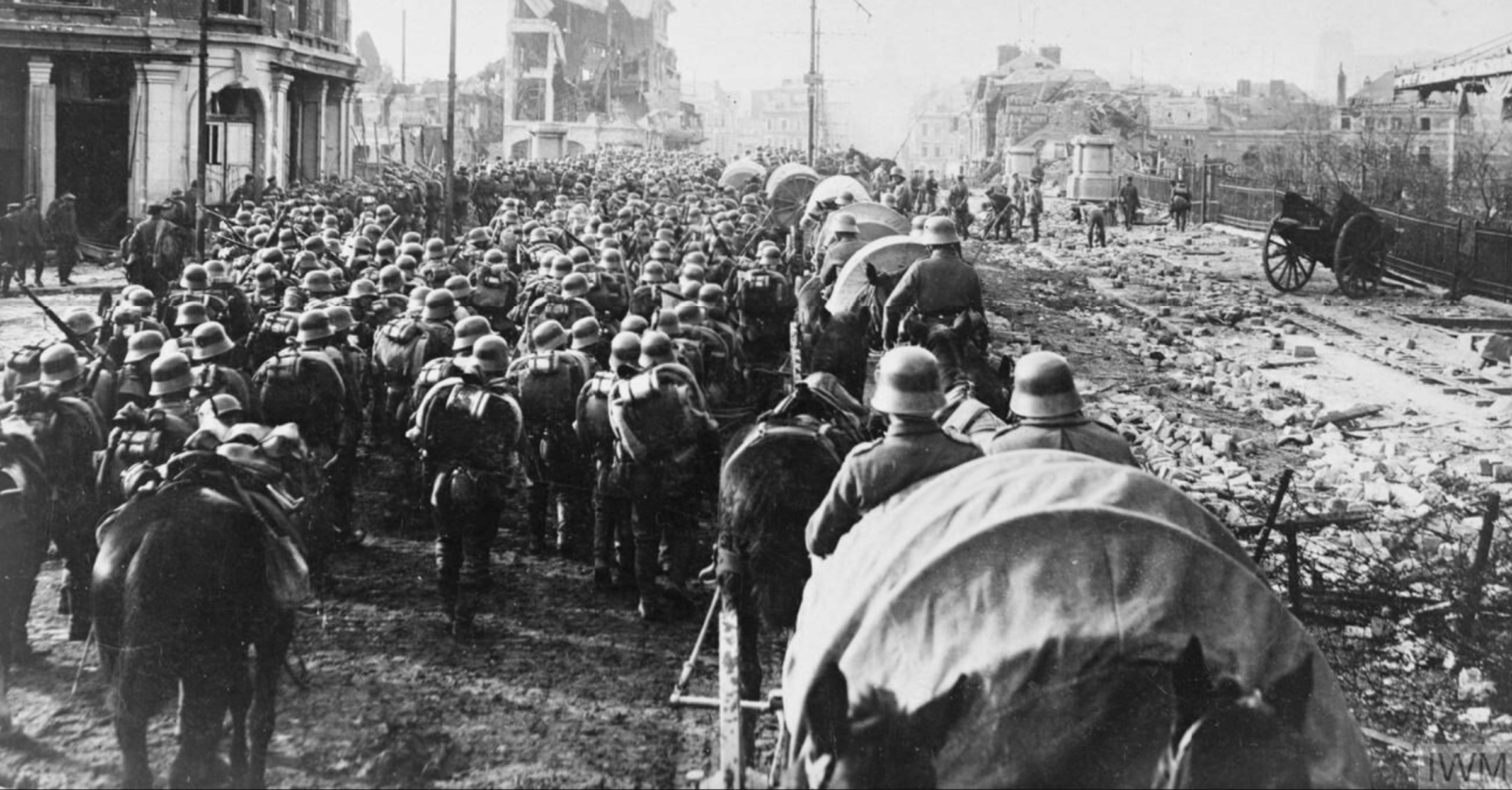
"The German Spring Offensive, also called the Ludendorff Offensive after its commander, was the last major German advance of the First World War (1914-18). From March to July 1918, Ludendorff launched five major attacks on the Western Front to break the deadlock of trench warfare. The Allied resistance, use of tanks, and massive reserves, along with German logistical failures, meant that the offensives, despite each starting well, eventually petered out."
"By the spring of 1918, the war was looking increasingly desperate from the German point of view. It was true that Russia had dropped out of the war following the Bolshevik Revolution of 1917. Germany was thus able to withdraw troops and material from the Eastern Front to significantly boost the Western Front. 44 German divisions were moved westwards. On the other hand, the United States had finally entered the war on the side of the Allies,"
By spring 1918 Germany concentrated forces on the Western Front after Russia’s 1917 exit, transferring 44 divisions westward. Erich von Ludendorff launched five major attacks from March to July 1918 aiming to break trench warfare deadlock before US forces could tip the balance. Early gains occurred but Allied resistance, effective tank use, and growing Allied reserves—including fresh US divisions—stopped the offensives. German logistical failures and skepticism about tanks limited operational sustainability. The offensives exhausted German manpower and resources, producing approximately 800,000 German casualties. Germany could not match the combined military and economic strength of the Allies.
Read at World History Encyclopedia
Unable to calculate read time
Collection
[
|
...
]