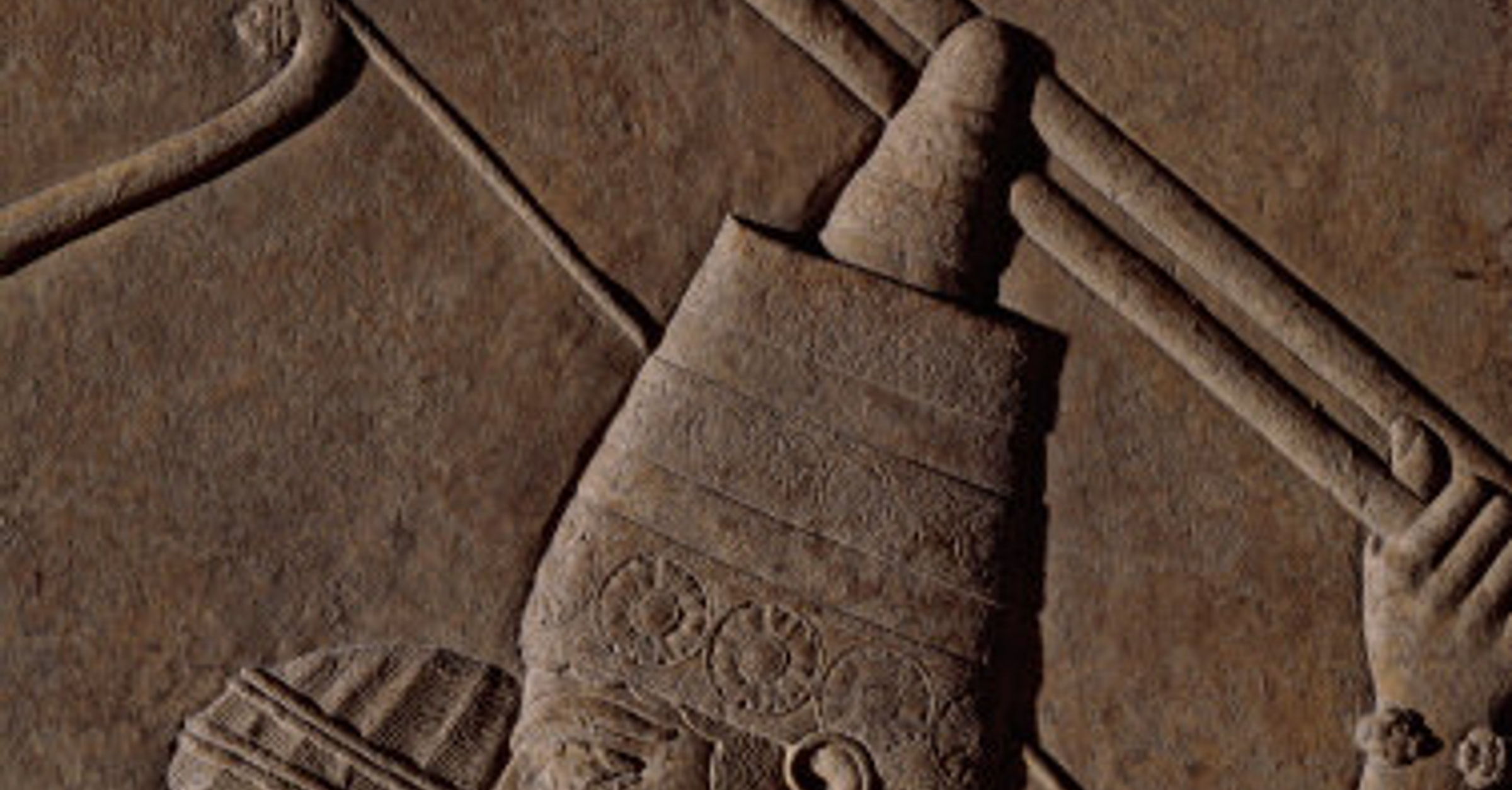
"Ashur (also known as Assur) was an Assyrian city located on a plateau above the Tigris River in Mesopotamia (today known as Qal'at Sherqat, al-Shirqat District, northern Iraq). The city was an important center of trade, as it lay squarely on a caravan trade route that ran through Mesopotamia to Anatolia and down through the Levant. In time, however, it became the capital of the Assyrian Empire and one of the wealthiest cities in ancient Mesopotamia."
"It was originally established during the Early Dynastic I period (circa 2900-2750/2700 BCE) but began to gain prominence after circa 1900 BCE, becoming the first great Assyrian city and, under the Neo-Assyrian Empire (912-612 BCE), an important religious and cultural site. The city that would become Ashur rose on the site of a pre-existing community that had been built by the Akkadians at some point during the reign of Sargon the Great (2334-2279 BCE) of Akkad."
"All the great Assyrian kings but one were buried at Ashur, no matter where the capital city was located. Because of the lucrative trade Ashur enjoyed with the city of Karum Kanesh in Anatolia, it flourished long before it became the capital of the Assyrian Empire. Even after the capital was moved to the cities of Kalhu (Nimrud), then Dur-Sharrukin, and finally Nineveh, Ashur continued to be a"
Ashur, located on a plateau above the Tigris River in northern Iraq, originated during the Early Dynastic I period around 2900-2750 BCE on a site previously established by Akkadians under Sargon the Great. The city gained prominence after 1900 BCE as a major trade hub positioned on caravan routes connecting Mesopotamia, Anatolia, and the Levant. It became the capital of the Assyrian Empire and a crucial religious and cultural center during the Neo-Assyrian period (912-612 BCE). The city was named after the Assyrian deity Ashur, though biblical accounts attribute its founding to Ashur, son of Shem. Nearly all great Assyrian kings were buried at Ashur regardless of where the empire's capital was located. The city maintained prosperity through trade with Karum Kanesh and remained significant even after the capital moved to Kalhu, Dur-Sharrukin, and Nineveh.
Read at World History Encyclopedia
Unable to calculate read time
Collection
[
|
...
]