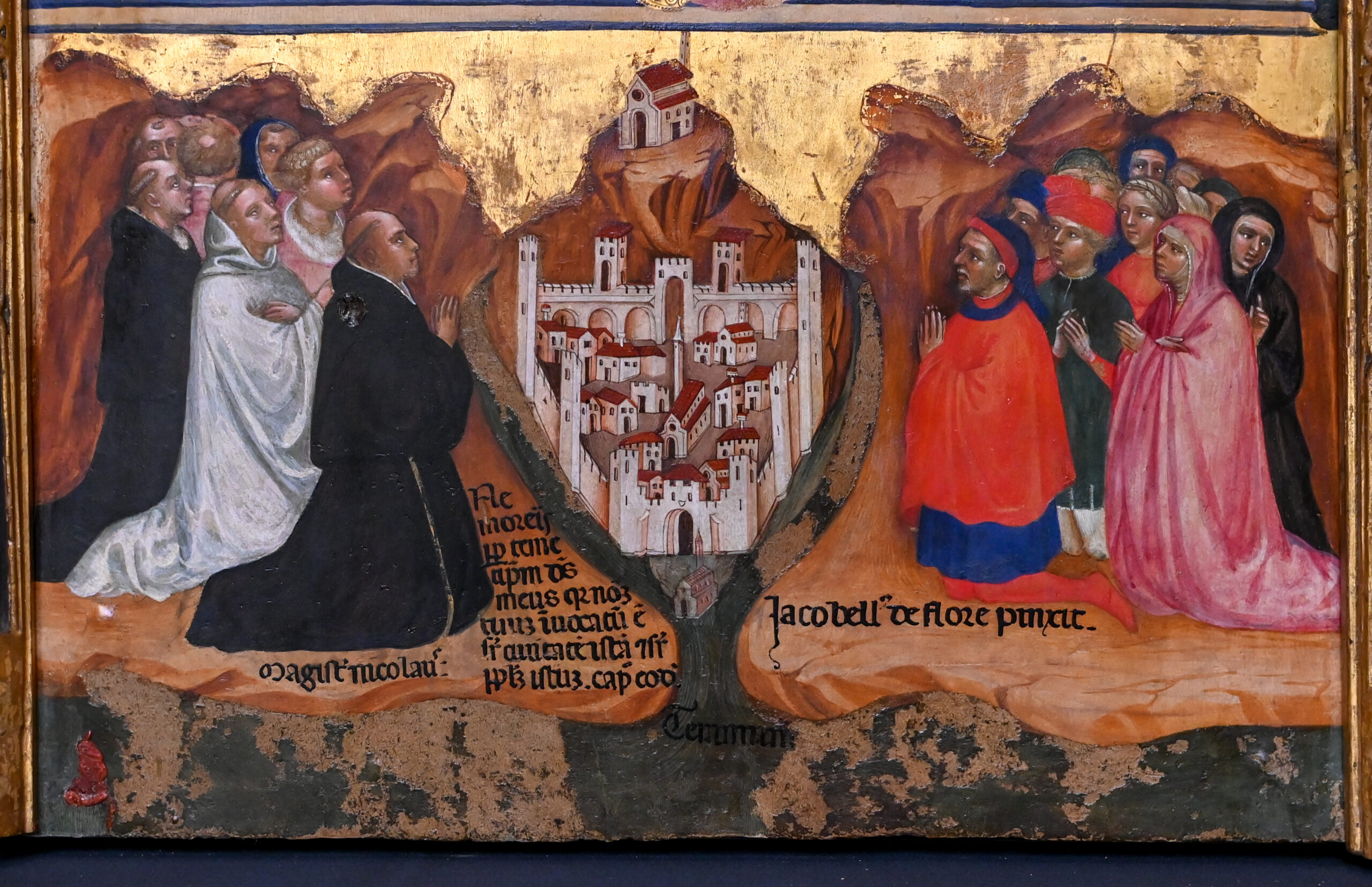
"A new study offers a striking re-evaluation of the Augustinian Order, revealing that its medieval reputation rested not on urban preaching or scholastic learning, but on miracles rooted in the countryside: healing livestock, restoring barren land, multiplying crops, and even defeating dragons. Cambridge University historian Krisztina Ilko presents the findings in her new book, The Sons of St Augustine, published today by Oxford University Press. She contends that historians have long misunderstood the Augustinians' place in medieval and early Renaissance religion."
"Her findings highlight a forgotten world where divine interventions were profoundly practical-ensuring food production, protecting rural communities, and countering the environmental dangers that shaped medieval life. Dragons, Swamps, and the Battle for Fertile Land One of the most vivid examples is the twelfth-century hermit Guglielmo of Malavalle, celebrated by the Augustinians not for theological teaching but for slaying a dragon with a wooden staff shaped like a pitchfork."
"In medieval Europe, dragons were widely associated with disease, crop failure, and poisoned air-especially in swampy, storm-ravaged regions. Guglielmo settled in Malavalle, "the bad valley" in Tuscany's Maremma, where storms and mists had rendered the land "so dark, and terrible" that even hunters avoided it. Dr Ilko argues that his veneration stemmed from transforming this hostile landscape into fertile ground."
The Augustinians' medieval reputation rested on rural miracles rather than urban preaching or scholastic learning. The order became associated with practical divine interventions that restored barren land, multiplied crops, healed livestock, and revived fruit trees. These miracles supported food production, protected rural communities, and countered environmental dangers such as swamps, storms, and disease. The twelfth-century hermit Guglielmo of Malavalle exemplified this role by slaying a dragon and transforming a storm-wracked valley into fertile ground. Dragons functioned as symbols of disease and crop failure, and Augustinian miracle-working targeted the everyday ecological threats that shaped medieval life.
Read at Medievalists.net
Unable to calculate read time
Collection
[
|
...
]