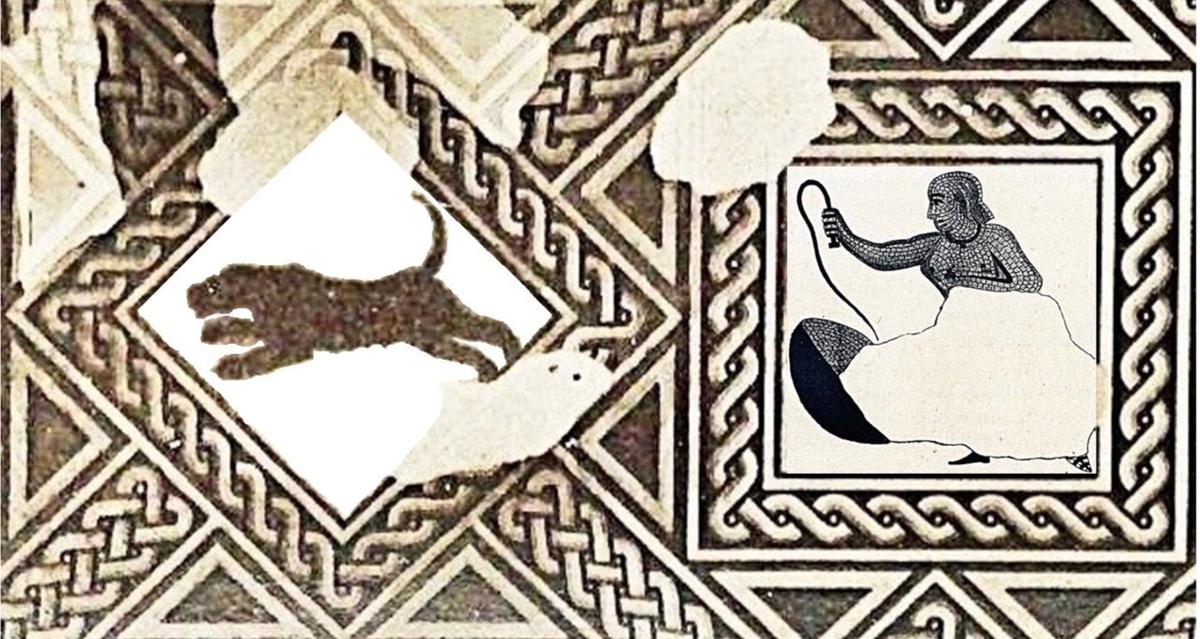
In C.E. 80, Titus opened the Flavian Amphitheater with games that included women dressed as the goddess Diana fighting boars in the arena. The existence of venatrices had been uncertain because written references were rare and earlier evidence was limited to depictions and scattered accounts. Female convicts were known to be used in animal killings, and trained female gladiators appear in some sources and ceramics. A new study reports the first physical confirmation by examining a large third-century mosaic from Reims, France, rediscovered in 1860 and largely destroyed in 1917 during World War I bombing. Only one surviving panel and earlier drawings remain, including a figure depicted as topless and holding a whip and a dagger or cloth.
"In the summer of C.E. 80, Roman emperor Titus opened the Flavian Amphitheater—colloquially called the Colosseum—with a series of games. According to writings from the time, in one game, women dressed as the goddess Diana and used spears to fight vicious boars across the arena floor. The question of whether these venatrices, or female beast hunters, truly existed had long been a mystery."
"Female convicts were known to be tossed to the leopards or other animals, and there has been some written evidence, as well as depictions in ceramics, of trained female gladiators fighting other people. But there are only a handful of written accounts mentioning venatrices. Nero apparently had women riding chariots equipped with bows and arrows in C.E. 59, while later emperors supposedly had them fighting leopards, bears and other beasts either topless or dressed as famed goddesses."
"The new research focuses on a large third-century mosaic from Reims, France, which was rediscovered in 1860 by French researcher Jean Charles Loriquet but mostly destroyed in 1917 by World War I bombing campaigns. Archaeologists and historians have only been able to examine a single surviving panel and Loriquet's drawings. A subsequently obliterated panel that Loriquet had depicted featured a topless figure holding a whip in one hand and what was likely a dagger or cloth in the other."
"Loriquet's descriptions used gender-neutral language to describe the figure and neglected to mention it was topless, whi"
Read at www.scientificamerican.com
Unable to calculate read time
Collection
[
|
...
]