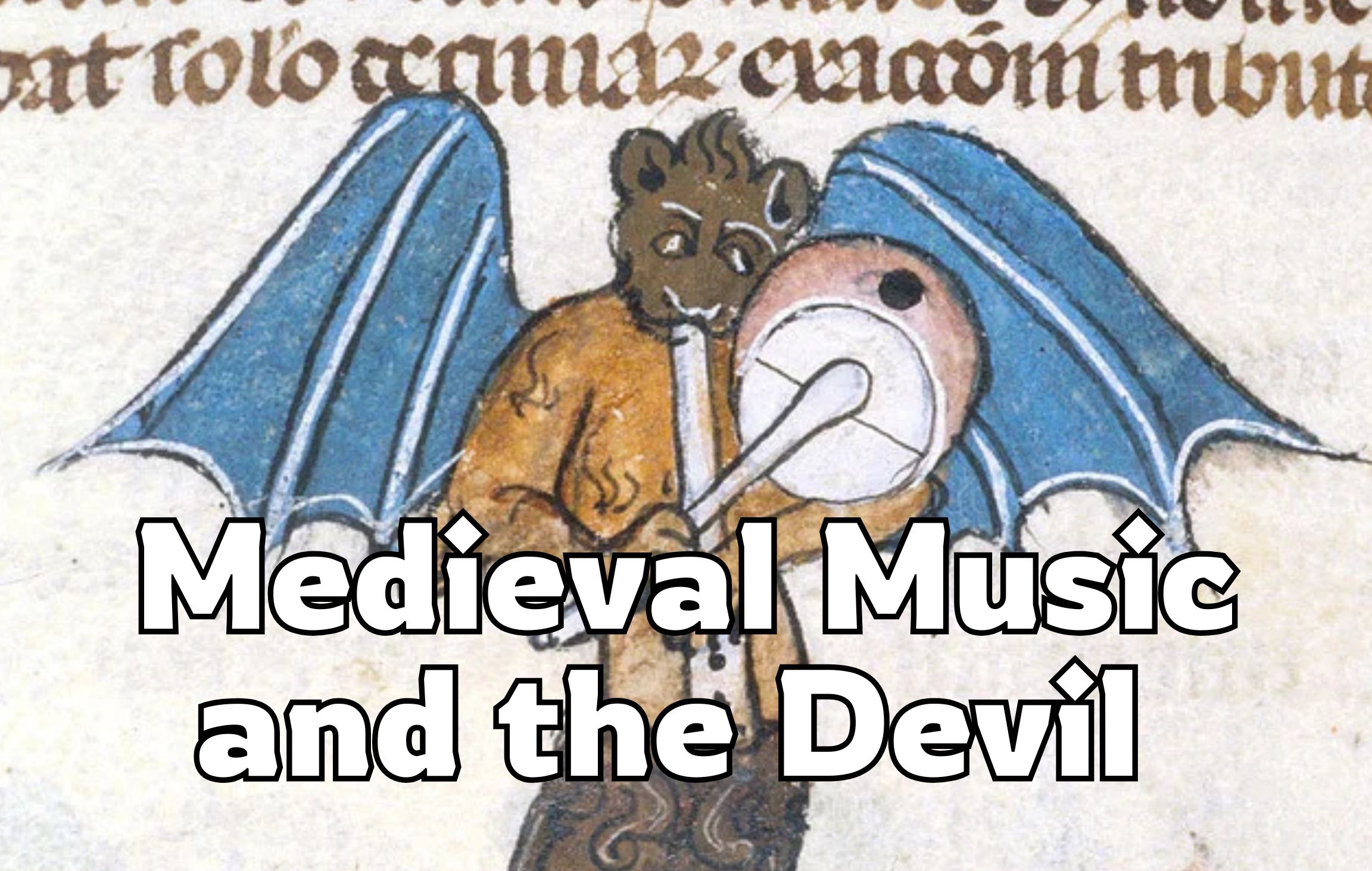
"The Devil is a pervasive figure in medieval European sacred art. For every extant portrayal of Christ, the saints, angels, or biblical heroes, there also exists a multitude of spine-chilling images depicting the underworld's torments, grotesque demons, or Satan himself. These pictorial renditions of the Devil provide us with a frightening glimpse into the ways in which medieval minds envisioned evil incarnate, which included physical attributes ranging from angelic and humanoid to entirely bestial."
"So powerful was the sinister effect of the tritone that the medieval Church categorically prohibited composing or singing music that included this interval for fear that Satan would - quite literally - come knocking on their doors. Considering that the Church exerted great power and control over many facets of medieval society, including the arts, it seems probable that religious authorities would have been compelled to prevent the performance of musical devices that were deemed to be particularly menacing."
Medieval sacred art frequently depicted the Devil with a variety of physical forms ranging from angelic to entirely bestial. Contemporaries questioned not only what the Devil looked like but also what he sounded like and whether audible features could be perceived. Popular sources claim that the medieval Church believed the tritone interval could summon the Devil when played or sung. The tritone allegedly inspired such fear that composing or singing music containing it was prohibited in church contexts. The Church’s broad authority over artistic practices made musical restrictions plausible, and some musical activities were already limited.
Read at Medievalists.net
Unable to calculate read time
Collection
[
|
...
]