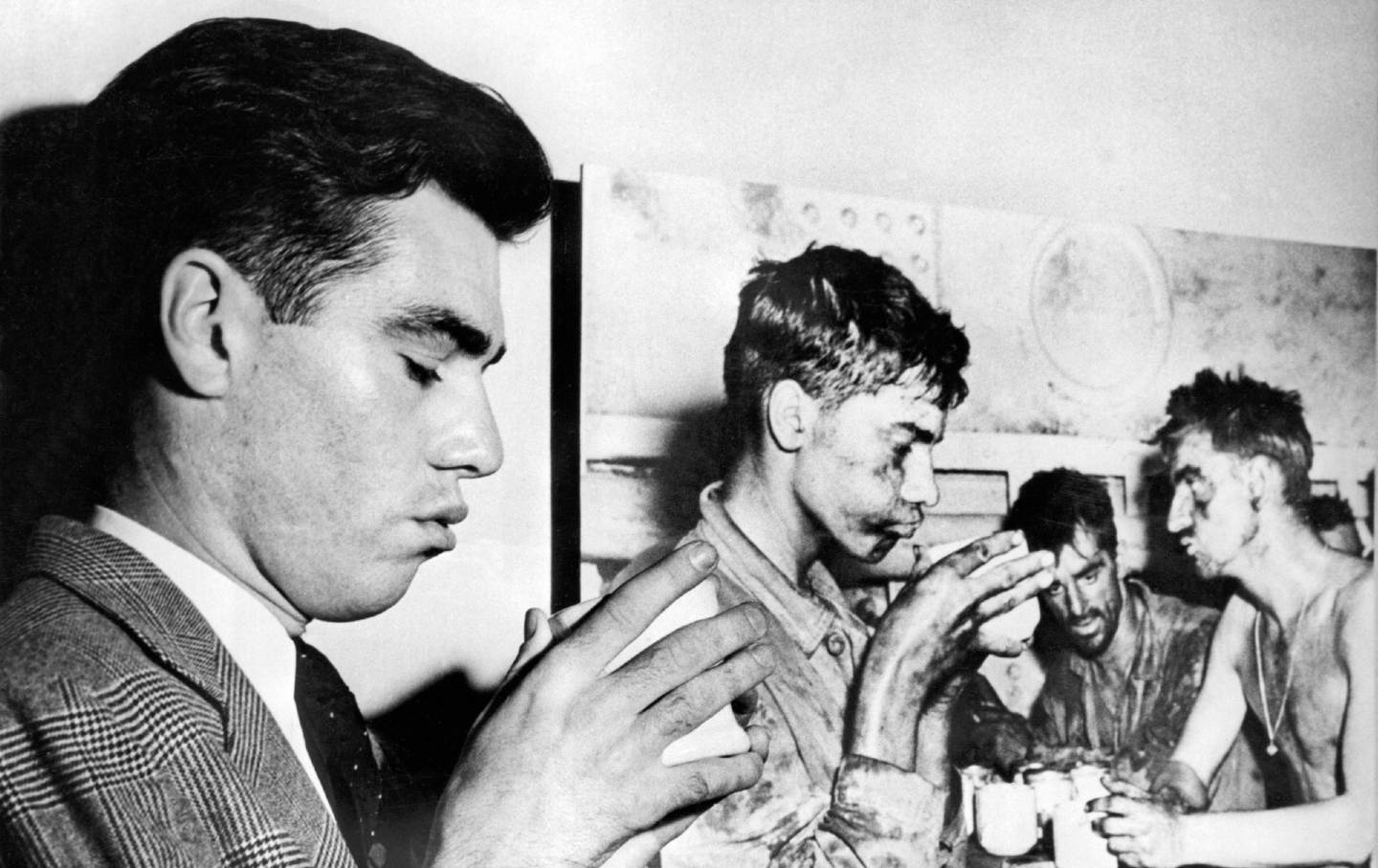
World War II remains a defining event whose human and social consequences continue to shape contemporary life. The conflict caused unprecedented casualties and directly led to the Cold War's nuclear standoff. Many Americans idealize the era as a clear, morally justified victory, unlike later ambiguous interventions. That idealization obscures the war's enduring costs for combatants and civilians, including psychological trauma, broken families, and social dislocation. With almost all veterans deceased, collective memory increasingly relies on sanitized stories that can misrepresent lived experiences. Honest reassessment of sacrifices and long-term harms is necessary to understand the full price paid and its continued impact.
"Let's you and I start honestly here: World War II is part of an ever-more-distant national past-one that, given the troubles we're now in, likely hasn't been at the top of your mind these days. Yet even now, 80 years on, that war is worth our serious reflection for reasons I'm about to explain, thanks to David Nasaw's sterling new book, The Wounded Generation."
"And yet many of us reflexively think of it as America's "last good war," not only because it was fought against real fascist enemies but because we were able to clearly defeat them-something we've not since been able to do against our declared enemies in Korea, Vietnam, Cambodia, the Balkans, Iraq, Iran, Syria, or Afghanistan. (Congress hasn't officially declared us at war since Pearl Harbor-and our invasions of Granada and Panama don't deserve being called "victories," let alone "wars.")"
"Nasaw wants us to revisit America's role in that 'last good war,' in order to probe its human costs on warriors and civilians alike, and to recalculate the price we paid for defeating fascism in its original malignant form. Because over 99 percent of World War II veterans are dead now, in their place what we have left are stories, stories that for Nasaw bear weak-and too often dishonest-resemblance to the lived experiences of those years of war and its aftermath."
Read at The Nation
Unable to calculate read time
Collection
[
|
...
]