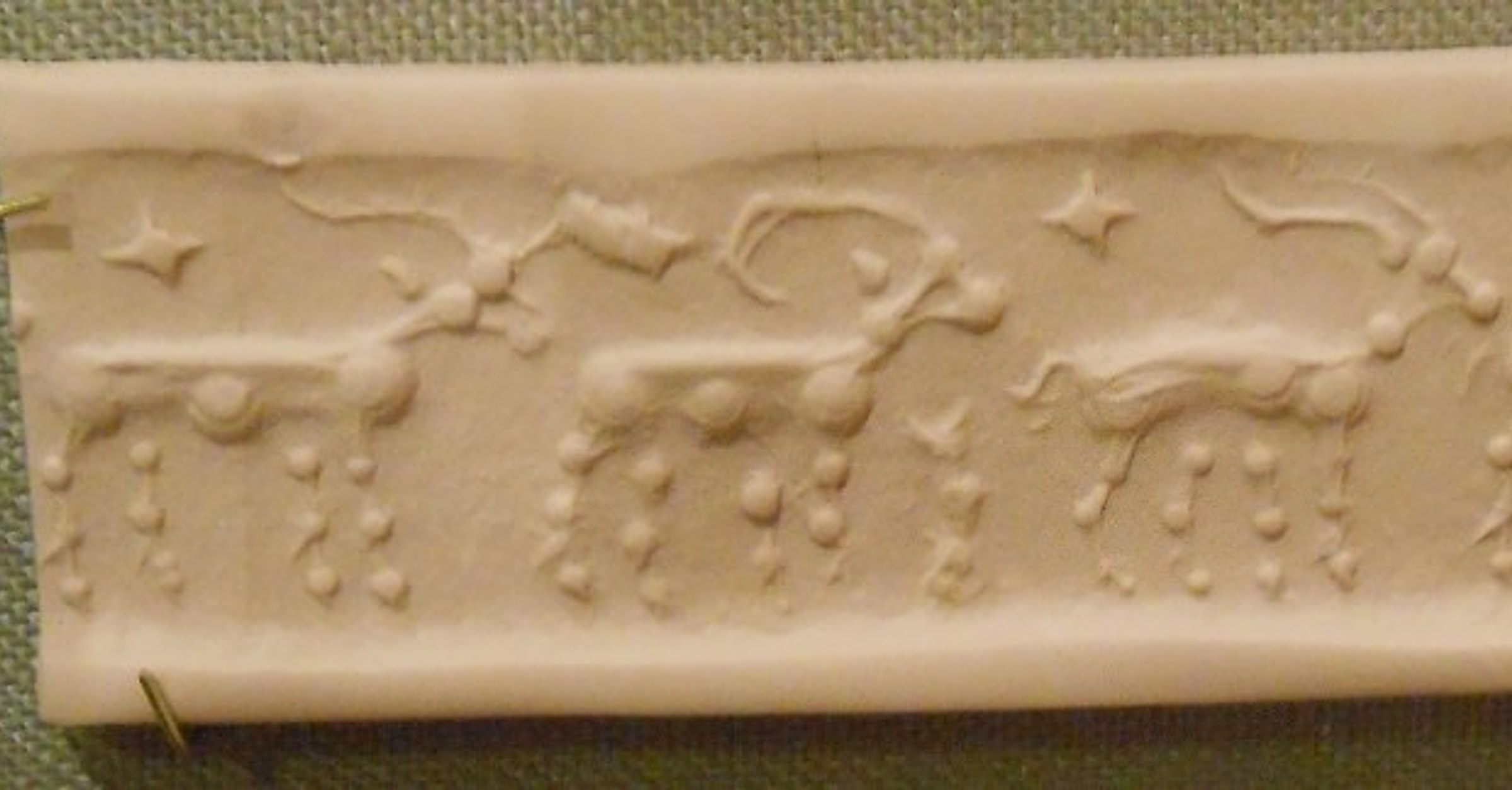
"They originated in the Late Neolithic Period, circa 7600-6000 BCE, in the region known today as Syria (though, according to other claims, they originated later in Sumeria, modern Iraq) and were made from semiprecious stone (marble, obsidian, amethyst, lapis lazuli, to name only some) or metal ( gold or silver). These seals were worn by their owners on strings of leather or other material around the neck or wrist or pinned to a garment."
"The purpose of seals was to serve as a personal signature on a document or package to guarantee authenticity or legitimize a business deal; in the same way one signs a letter or form today or writes one's return address on an envelope or package to be mailed. The seal was rolled onto the moist clay of the document as an official, binding signature."
"Cylinder seals were also used in Egypt and developed completely independently in Mesoamerica, as evidenced by archaeological finds of Olmec cylinder seals dating to circa 650 BCE. The Mesopotamian cylinder seal is the best known, however, and was the most widely used."
"Contemporaneous with cylinder seals were stamp seals, which were smaller and less ornate in design. The typical cylinder seal was between 3-4 inches (7-10 cm) long, while stamp seals were less than an inch (2 cm) in total and more closely resembled the later signet ring. It would make sense that the stamp seals preceded the cylinder seals, as the former are more rudimentary, but evidence suggests the seals were in use at the same time, with one type favored more than the other in different regions."
Cylinder seals and stamp seals originated in the Late Neolithic period around 7600–6000 BCE in the region of modern Syria, though some claims place their origin later in Sumeria. They were made from semiprecious stones such as marble, obsidian, amethyst, and lapis lazuli, or from metals like gold or silver. Owners wore them on strings around the neck or wrist or pinned to garments. Seals functioned as personal signatures to guarantee authenticity and legitimize business deals. The seal design was rolled onto moist clay to create an official binding mark. Cylinder seals were also used in Egypt and independently in Mesoamerica, with Olmec examples around 650 BCE. Stamp seals were smaller and simpler, resembling later signet rings, and both types were used concurrently with regional preferences.
Read at World History Encyclopedia
Unable to calculate read time
Collection
[
|
...
]