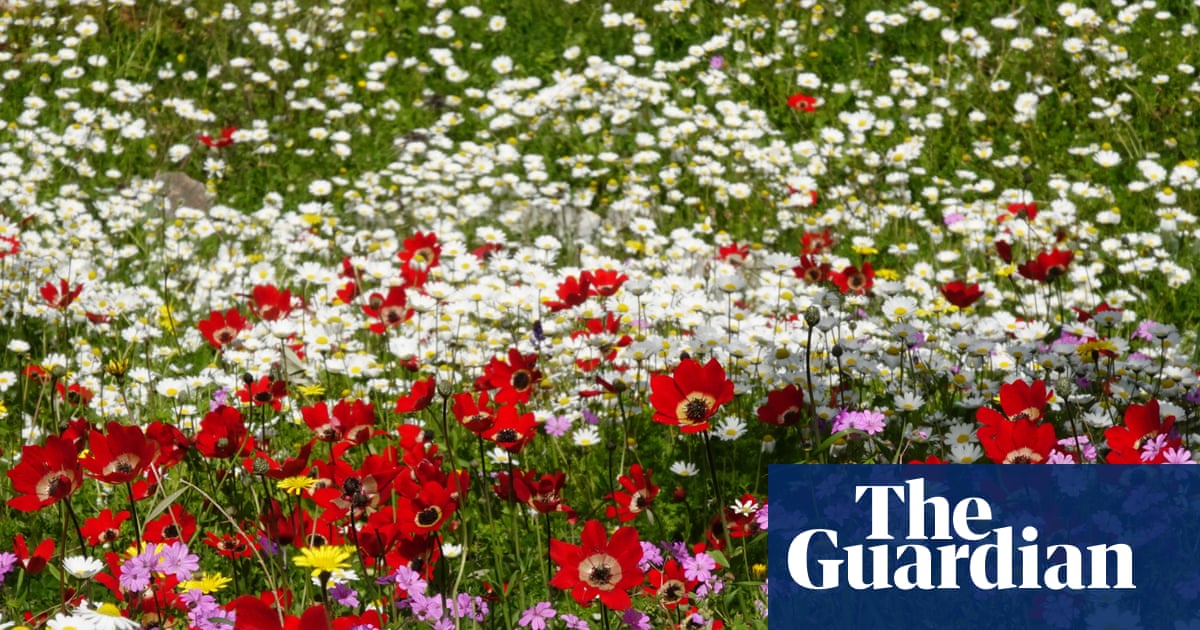
The Mani, the southernmost tip of the Peloponnese, derives its name from a Byzantine fort at Cape Tigani and its desolate, mountainous terrain. Historically known for clan vendettas, piracy, and early Greek liberation efforts, the region has been documented by writers including Patrick Leigh Fermor and Charles Foster. Despite its reputation for violence, the Mani is equally renowned for spectacular spring wildflowers. The ancient agricultural system of stone-walled plots cultivates olives, almonds, figs, and carobs across the rocky landscape. The region's flowers create a compelling visual display, with blooms tracking the sun's movement throughout the day in coordinated patterns, creating a striking contrast against the barren moonscape terrain.
"The fierce Maniot people were well described by Patrick Leigh Fermor in his book Mani (1958), but the region has been more recently celebrated in Charles Foster's brilliant The Edges of the World, published in January. In history the Mani was known variously for the relentless and sometimes centuries-long vendettas between its local clans, as a fertile recruiting ground for Mediterranean piracy and as an early outpost for Greek liberation from Ottoman rule."
"What a reputation for violence and stone-reflected heat cannot easily conjure is the Mani's equal renown for spring flowers of astonishing richness. The ancient field system of miniature stone-walled plots planted up with olive, almond, fig and carob trees looks to have been an exercise in monumental labour and almost fruitless rearrangement of the super-abundant rock."
"What's so compelling is the way that these collective millions self-choreograph in a slow rotational ballet as every flowerhead tracks the position of the sun. At pre-dawn, I noticed how most blooms had ended their day-dance facing west, but within minutes of our star's reappearance on the eastern horizon, they'd all done a 180-degree tilt to begin again."
Read at www.theguardian.com
Unable to calculate read time
Collection
[
|
...
]