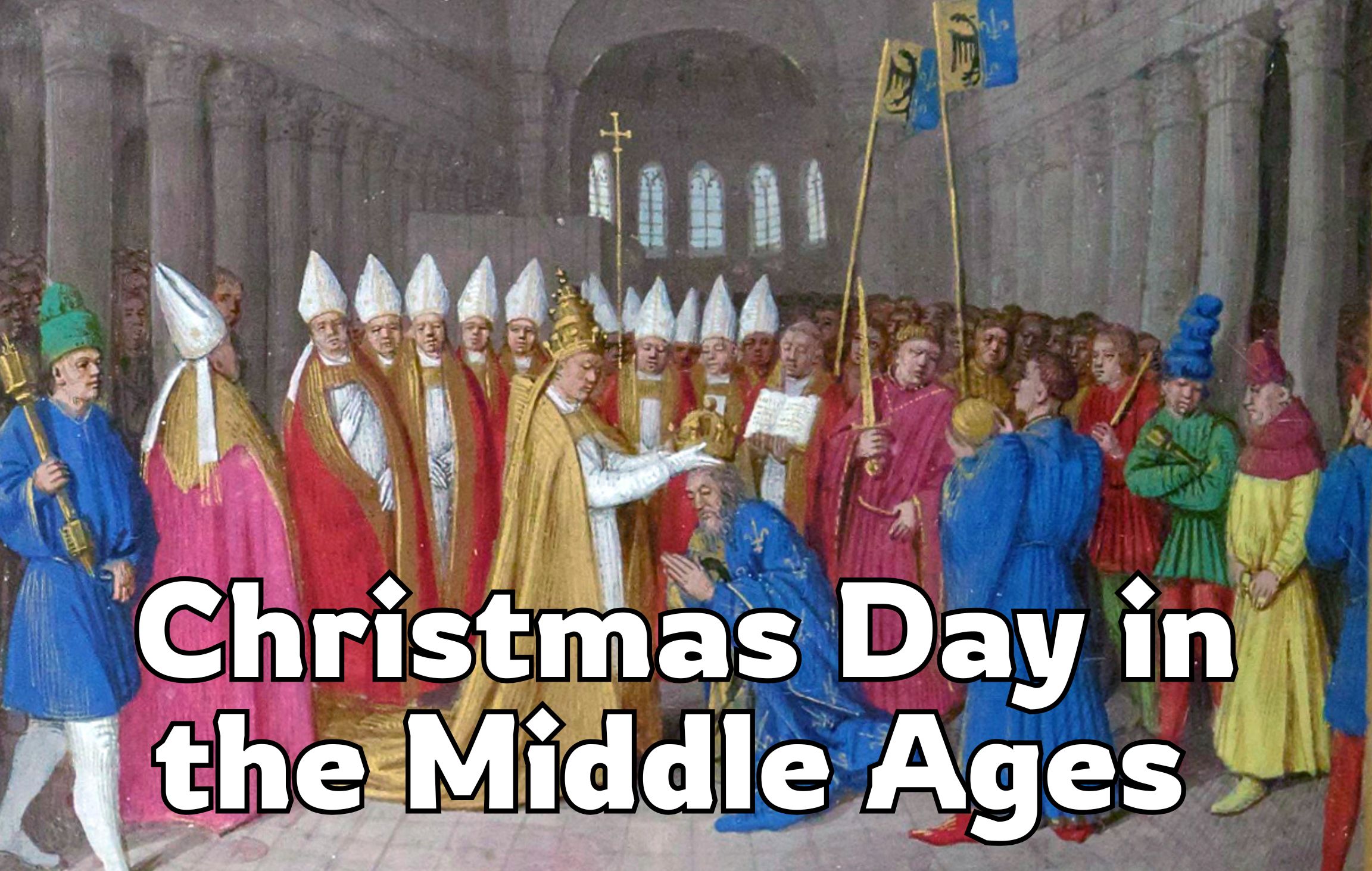
"The connection between 25 December and the birth of Jesus Christ was established by the early fourth century. The Chronograph of 354, a text produced for a Roman citizen, includes an entry as part of its list of dates: "On December 25 the Birth of Christ at Bethlehem of Judea." Other notices of Christmas Day appeared in the early part of the Middle Ages."
"The public squares were draped with coloured cloths, the churches were adorned with white hangings, the baptistry was prepared, sticks of incense gave off clouds of perfume, sweet-smelling candles gleamed bright and the holy place of baptism was filled with divine fragrance. God filled the hearts of all present with such grace that they imagined themselves to have been transported to some perfumed paradise."
Christmas Day served as a major feast for medieval Christians and hosted important liturgical and political events. The association of 25 December with Jesus' birth was established by the early fourth century. The Chronograph of 354 records "On December 25 the Birth of Christ at Bethlehem of Judea." Notices of Christmas Day continued in the early Middle Ages. The spread of Christianity in Europe often followed rulers' conversions by baptism. Clovis, king of the Franks, married Clotilde in 493 and was persuaded to convert. Bishop Remigius baptized Clovis on 25 December 496, and about 3,000 followers were baptized, leading to the Merovingian dynasty's rise.
Read at Medievalists.net
Unable to calculate read time
Collection
[
|
...
]