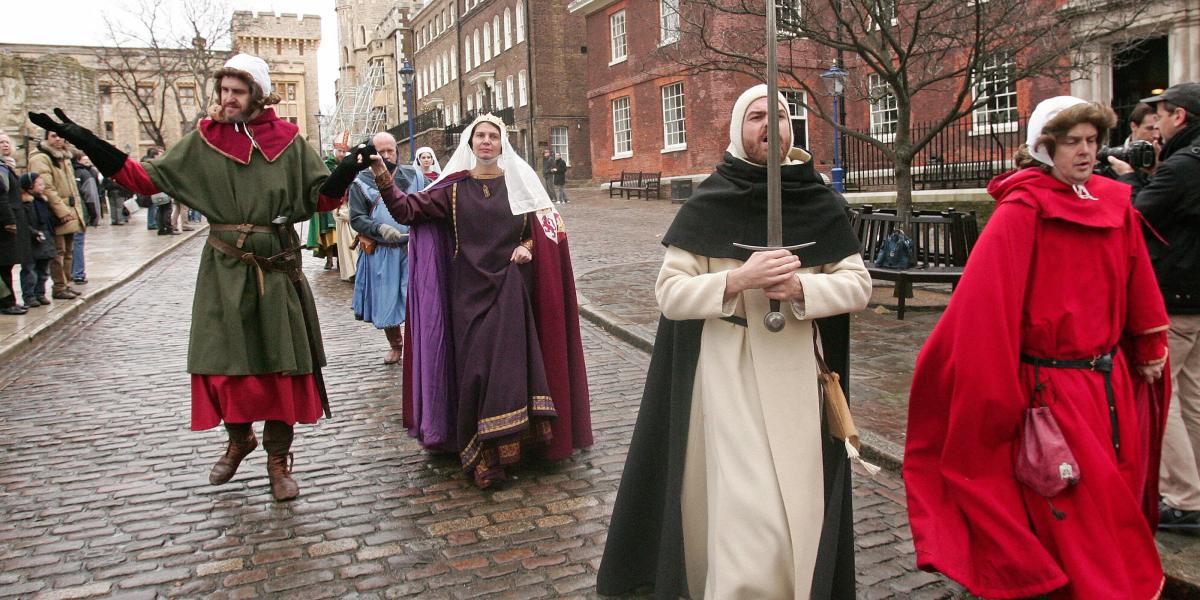
"For all their hard work, peasants had a fair amount of downtime. Add up Sundays and the many holidays, and about one-third of the year was free of intensive work. Celebrations were frequent and centered around religious holidays like Easter, Pentecost and saints' days. But the longest and most festive of these holidays was Christmas. As a professor of medieval history, I can assure you the popular belief that the lives of peasants were little more than misery is a misconception."
"A peasant was not simply a low-class or poor person. Rather, a peasant was a subsistence farmer who owed their lords a portion of the food they grew. They also provided labor, which might include bridge-building or farming the lord's land. In return, a lord provided his peasants with protection from bandits or invaders. They also provided justice via a court system and punished people for theft, murder and other crimes. Typically, the lord lived in the village or nearby."
Peasants made up about 90% of the medieval European population and worked as subsistence farmers who owed food rents and labor to local lords. Lords provided protection, administered justice, and often lived in or near the village. Villages contained communal ovens, wells, mills, brewers, and blacksmiths, with houses clustered and surrounded by farmland; typical English dwellings were around 700 square feet. Peasants had significant downtime: Sundays and numerous religious holidays freed roughly one-third of the year from intensive work. Celebrations were frequent and centered on Easter, Pentecost, saints' days, and especially an extended, festive Christmas season.
Read at Fortune
Unable to calculate read time
Collection
[
|
...
]