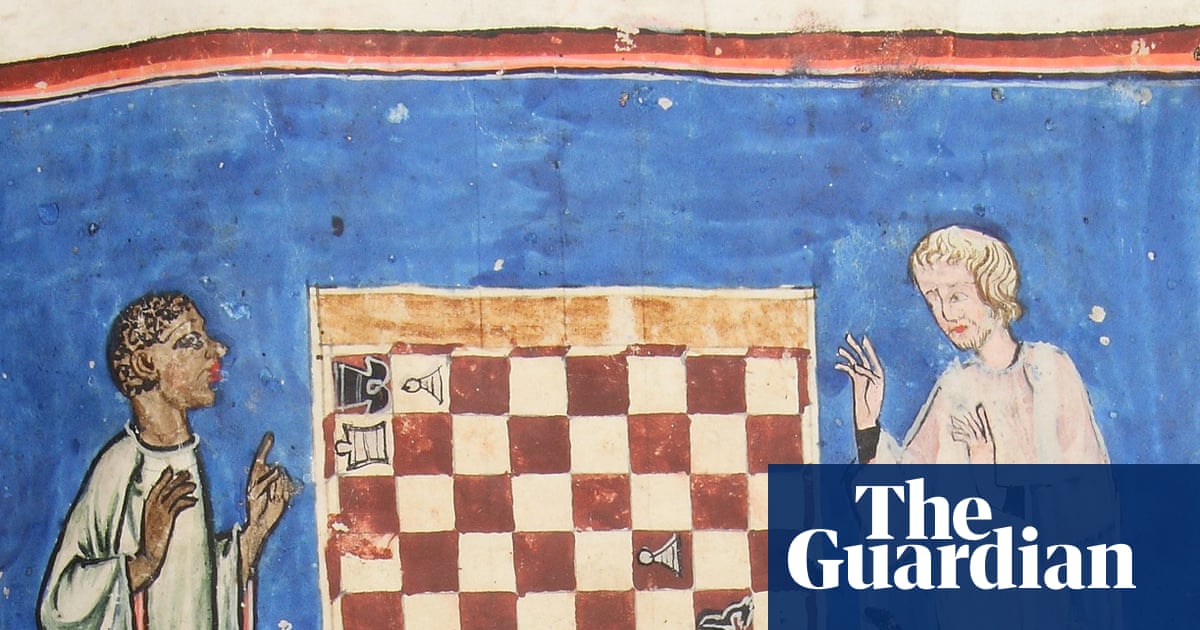
"Libro de axedrez, an illustrated 13th-century treatise on chess produced for King Alfonso X of Castile, features dozens of depictions of players from Africa, the Middle East and Asia that defy preconceptions of medieval social attitudes. In one scene, a Black player is depicted on a finely decorated bench, a bottle of wine close at hand, about to defeat his white opponent in a friendly game."
"Chess was an imaginary space that did not eradicate preconceived social norms and hierarchies but rather empowered players to challenge them. Rather than projecting some sort of fictitious image of an egalitarian medieval society which could put aside racial prejudices, chess offered a way of bridging divides through intellectual exchange."
"A Muslim and a Jewish player sit down to a game in another scene from Libro de axedrez, just one text that reveals that while political conflict, religious differences and medieval notions of race were a fact of life, chess offered a way of bridging divides."
Medieval chess manuscripts and artwork reveal a vision of equality and mutual respect transcending racial and religious boundaries. Analysis of 13th-century texts like Libro de axedrez, commissioned by King Alfonso X of Castile, depicts players from Africa, the Middle East, and Asia engaging in friendly competition on equal footing. These depictions show Black players on decorated benches, Mongol warriors in casual poses, and Muslims playing alongside Jewish opponents. Rather than erasing social hierarchies, chess functioned as an imaginary space empowering players to challenge preconceived norms. The game offered intellectual exchange as the primary measure of worth, contrasting with typical medieval depictions that relegated non-white figures to exalted or subdued positions.
Read at www.theguardian.com
Unable to calculate read time
Collection
[
|
...
]