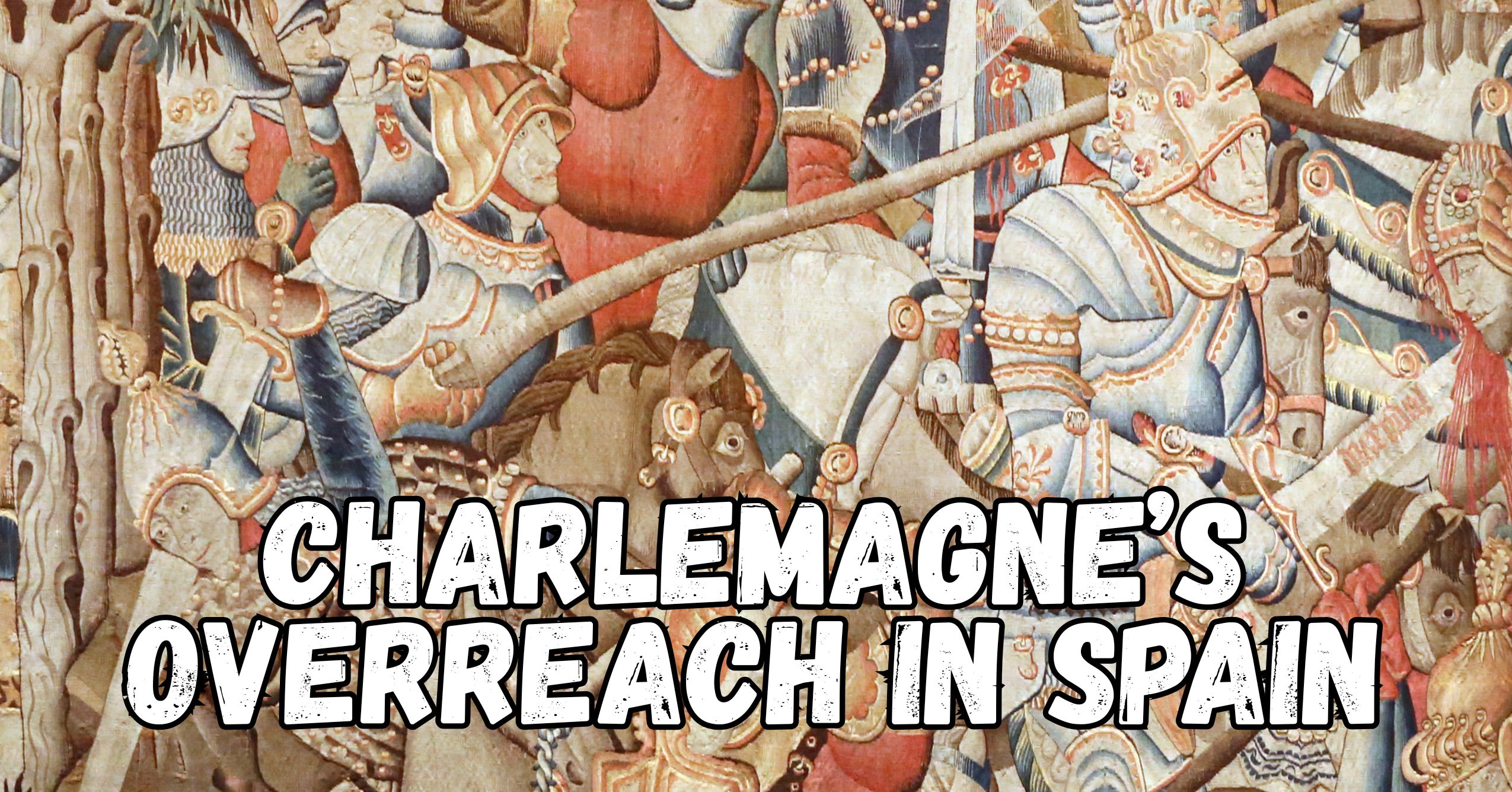
"One campaign, however, stands out as an abject failure in which Charlemagne achieved none of his military goals and suffered significant losses. This was the failed effort during the spring and summer of 778 to secure control over the fortress cities along the Ebro River valley in Spain, including Pamplona, Saragossa, Huesca, and Lérida."
"This campaign gained enduring fame from the romantic legend that grew up around the annihilation of the Frankish baggage train by Basque forces. Among the commanders of the rearguard of Charlemagne's army was Roland, praefectus of the Breton March, the eponymous hero of the Song of Roland."
"The establishment of the Umayyad caliphate in exile by Abd al-Rachman I (756-788) had the potential to reignite the Muslim effort to conquer the lands north of the Pyrenees that had been lost to Pippin and his father Charles Martel in the two decades following the Frankish victory at the battle of Poitiers (732)."
Charlemagne's reign from 768-814 was marked by consistent military success across 46 years, particularly in Saxon campaigns. However, his 778 expedition into Muslim-controlled Spain to capture fortress cities including Pamplona, Saragossa, Huesca, and Lérida stands as his sole major military failure. The campaign resulted in significant losses when Basque forces ambushed the Frankish baggage train at Roncevaux Pass, killing Roland, praefectus of the Breton March. This event inspired the legendary Song of Roland. Charlemagne's southwestern frontier concerns stemmed from the establishment of the Umayyad caliphate in exile by Abd al-Rachman I in 756, which threatened Frankish territories previously secured by Pippin and Charles Martel following their victories after the Battle of Poitiers in 732.
#charlemagne-military-campaigns #roncevaux-pass-ambush #song-of-roland #frankish-muslim-conflict #medieval-spain
Read at Medievalists.net
Unable to calculate read time
Collection
[
|
...
]