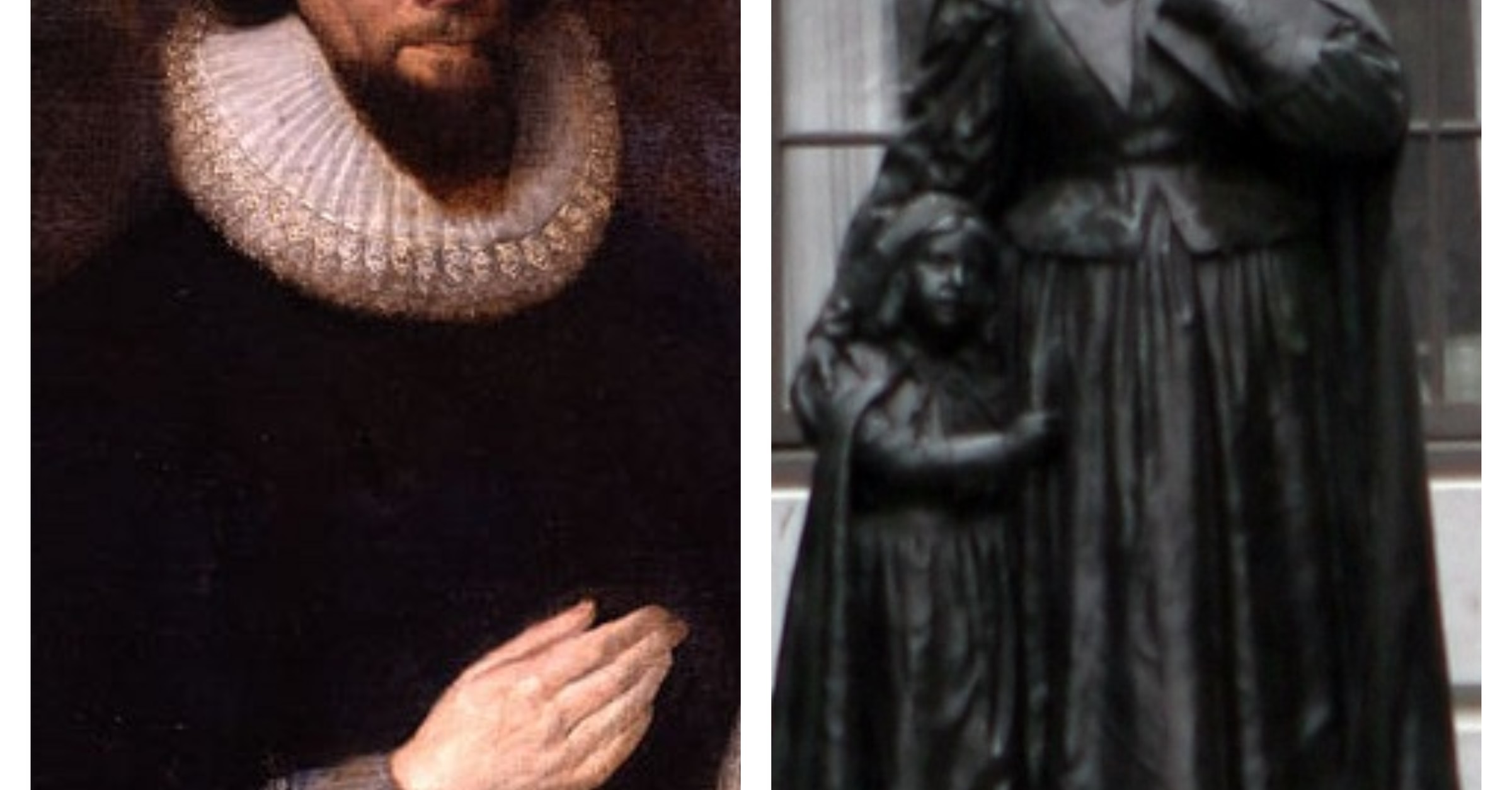
The Antinomian Controversy (1636–1638) was a religious-political conflict in the Massachusetts Bay Colony over whether God's free grace and a covenant of grace superseded a covenant of works. Key participants included Governor John Winthrop, magistrates such as John Cotton and Thomas Dudley, and dissenters Anne Hutchinson, John Wheelwright, and Henry Vane. The dispute revolved around challenges to civil magistrates' authority over religious matters and colonial unity rather than a denial of grace. The controversy led to banishments (including Wheelwright, Hutchinson, and earlier Roger Williams), sparked debates over religious freedom, and helped shape ideas about church-state separation.
"The Antinomian Controversy ( antinomian from the Greek "against the law") ended with the banishment of Anne Hutchinson in 1638. Wheelwright had been banished the year before, and Henry Vane had returned to England that same year (1637). After Hutchinson was expelled, another religious dissenter, Roger Williams (1603-1683), who had been banished in early 1636, began a literary duel with John Cotton over religious freedom and persecution, which addressed a number of points raised by the Antinomian Controversy."
"The argument was never definitively won by either side. Cotton continued to argue for the importance of the covenant of works and defended the practice of religious persecution of dissenters, while Williams championed religious tolerance and liberty of conscience in his new colony of Providence, just as Hutchinson and the others did in theirs. The dispute would eventually inform the decision of the Founding Fathers to separate church from state in the formation of the United States government."
Read at World History Encyclopedia
Unable to calculate read time
Collection
[
|
...
]