"In 1836, Apaches raided a remote ranch near Janos, a tiny town on the northern fringes of the state of Chihuahua, in the newly independent republic of Mexico. The Natives absconded with some cattle, as well as with a young widow named Camila. Setting off in pursuit was José María Zuloaga, a taciturn lieutenant colonel in the Mexican army supported by a band of irregulars. Among them: a self-possessed teenager who served as an aide-de-camp, a pair of Yaqui brothers whose permanent address was the town jail, and a sharp-shooting nun named Elvira, who was actually a singer of zarzuelas dressed up in a habit."
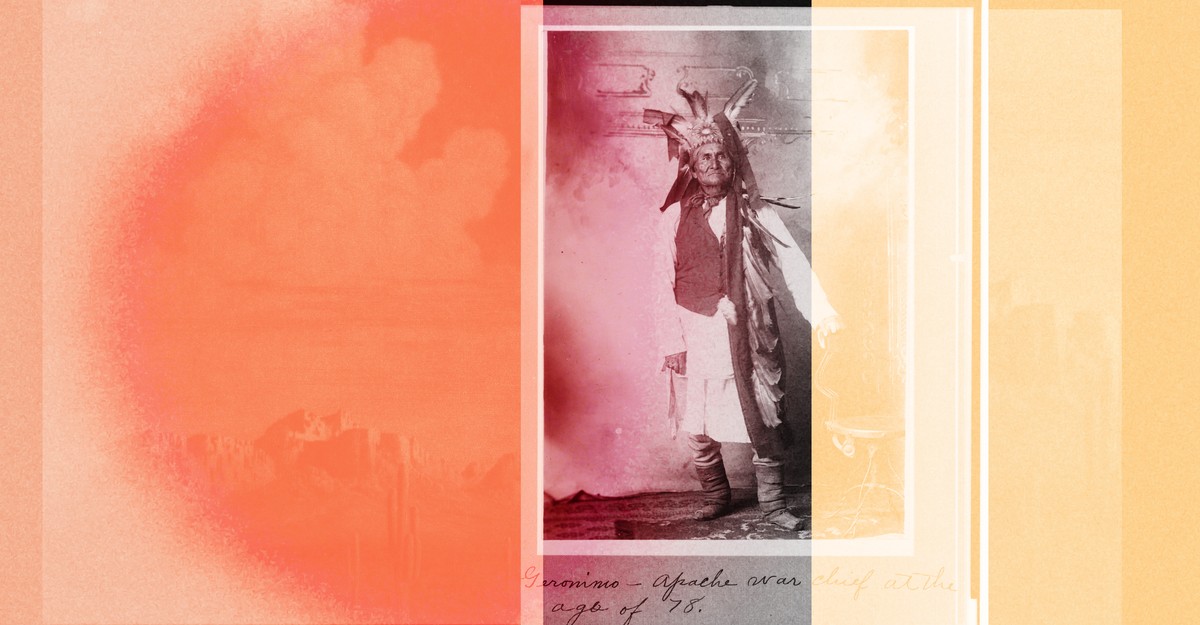
"Camila's kidnapping will tie into the true story of Geronimo, the famed Apache warrior and medicine man. Enrigue's novel is inspired by the long-running Apache Wars of the 19th century, a series of brutal skirmishes between various Apache bands and the armies of the United States and Mexico. The trouble began in 1861, after Apaches kidnapped a boy from a ranch in Arizona, and it didn't end until 1886, when Geronimo surrendered to the U.S. Army."
"Now I Surrender takes its title from the indelible words he uttered on that occasion: "Once I moved about like the wind. Now I surrender to you and that is all." This is a sentence, writes Enrigue, "so broken and sad that there's no way we can forgive ourselves for it.""
"The author's approach to this cataclysmic history is to shred it, reassemble it, and reframe it, offering the satisfactions of Westerns, historical epics, and metafiction even as he overturns all three traditions. Enrigue has a penchant for shooting the facts of history through a prism of the absurd."
Now I Surrender is Álvaro Enrigue's novel inspired by the Apache Wars of the 19th century, a brutal conflict between Apache bands and U.S. and Mexican armies spanning 1861 to 1886. The narrative begins with an 1836 Apache raid near Janos, Mexico, where a widow named Camila is kidnapped, prompting pursuit by Lieutenant Colonel José María Zuloaga and an eccentric band of irregulars including a teenage aide-de-camp, Yaqui brothers, and a sharp-shooting nun who is actually a zarzuela singer. The story connects to Geronimo's eventual surrender to the U.S. Army, with the novel taking its title from his poignant words: "Once I moved about like the wind. Now I surrender to you and that is all." Enrigue employs an absurdist approach, deconstructing and reframing historical facts while delivering the satisfactions of Westerns, historical epics, and metafiction.
Read at The Atlantic
Unable to calculate read time
Collection
[
|
...
]