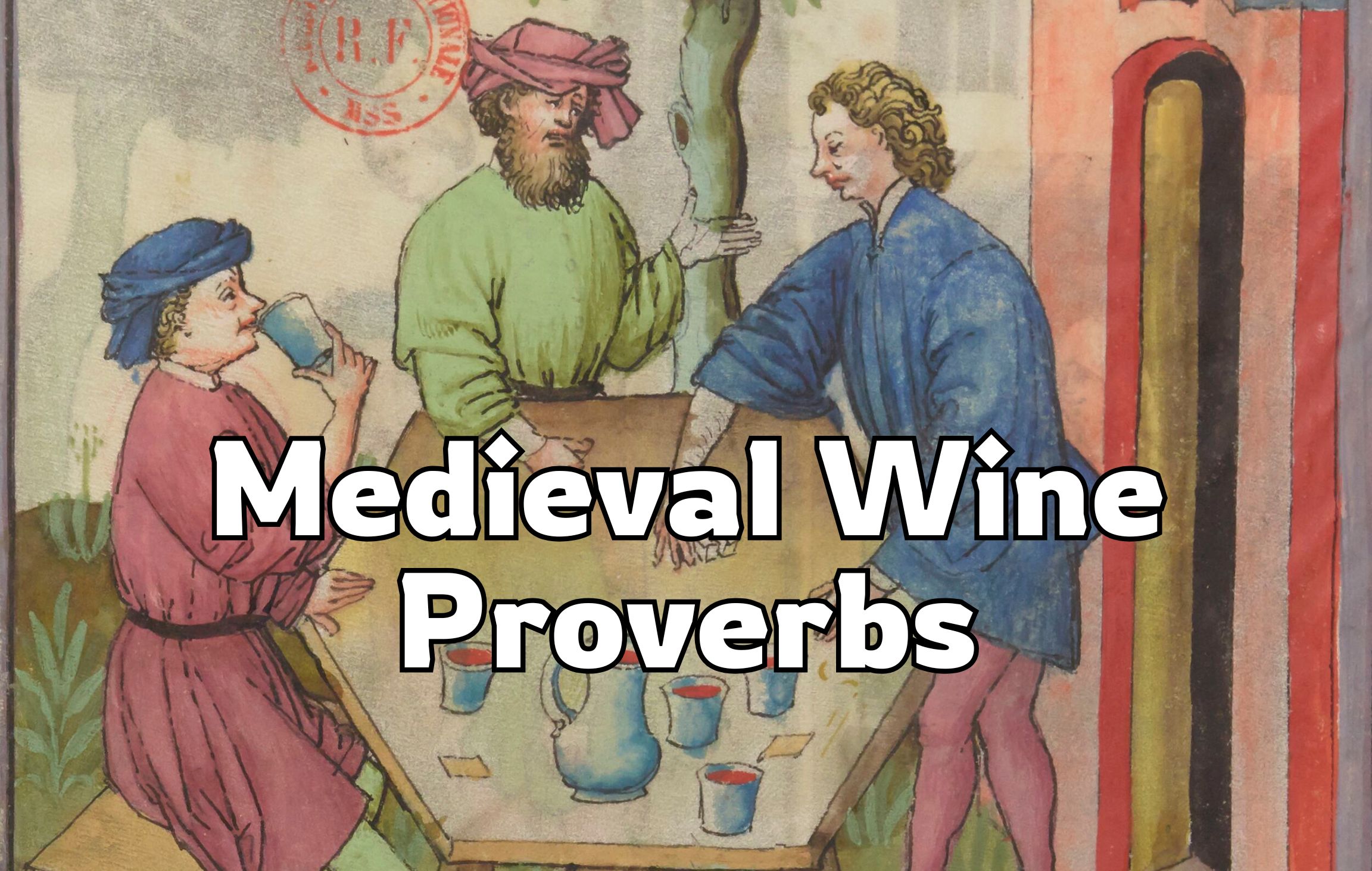
"1. Vinum da docto, laico de flumine cocto; Ille bibat vinum, qui scit formare Latinum. Translation: Give wine to the learned, water cooked from the river to the layman; Let him drink wine who knows how to shape Latin. Explanation: This proverb highlights the idea that wine, symbolising sophistication and culture, is suited for those educated and knowledgeable (the learned), while the uninitiated (laymen) might make do with simpler fare, here metaphorically described as "water cooked from the river." It also implies that true appreciation (of wine or language) requires skill and understanding."
"2. Vinum dat festum, frigus convertit in estum, Letificat mestum, parcum quoque reddit honestum. Translation: Wine gives celebration, turns coldness into warmth, It cheers the sad, and even makes the thrifty honest. Explanation: This proverb captures the uplifting and transformative power of wine. It warms both body and spirit, bringing joy to sorrow and loosening the tight-fisted, encouraging generosity and festivity."
Medieval Latin proverbs repeatedly treat wine as a cultural signifier and social force. Wine is associated with the learned and with refinement, while the uneducated receive simpler fare. Wine creates celebration, warms the cold, soothes sadness, and promotes generosity. Wine interacts with social roles and communal practices around food and company. Wine alters speech and conduct, prompting actions or utterances normally beyond a person. The sayings present wine as both socially integrative and behaviorally transformative, linking taste, status, emotion, and custom in vivid metaphorical language.
Read at Medievalists.net
Unable to calculate read time
Collection
[
|
...
]