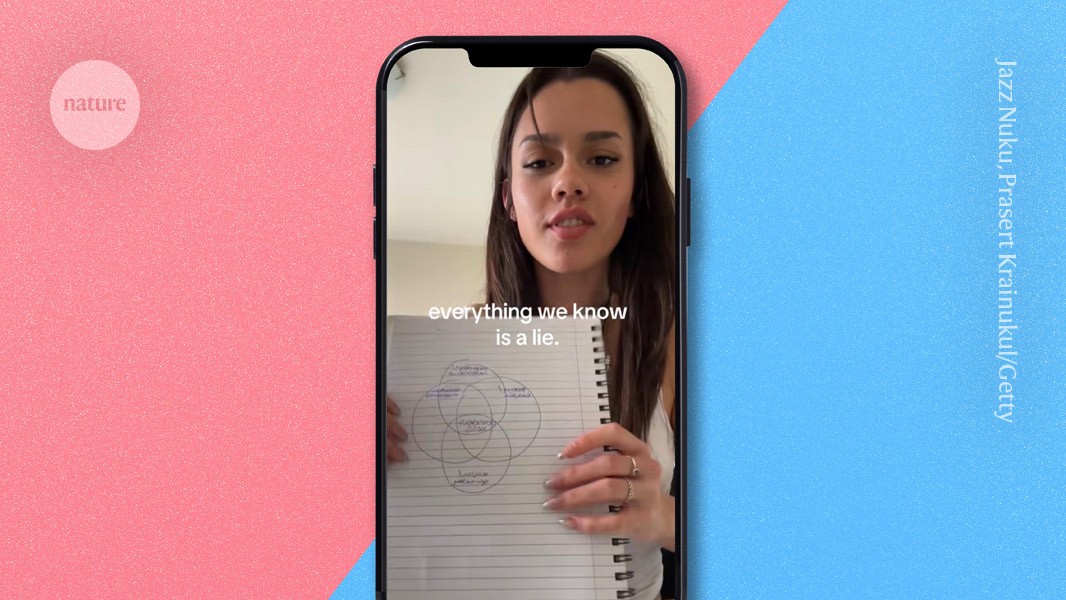
A former student created a viral TikTok video about consciousness and perception that garnered four million views by combining hand-drawn illustrations, unscripted language, and bold conceptual leaps connecting quantum physics, evolutionary biology, psychology, and religion. Rather than presenting polished scientific precision, she conveyed genuine wonder about how perception differs from reality and how consciousness works. This experience prompted reflection on science education: the most valuable contribution educators can offer is not information itself, but the excitement and meaning they derive from their subjects. In an era where AI chatbots like ChatGPT can provide information, human educators must focus on inspiring wonder and helping students understand why these topics matter, fostering curiosity that students carry forward into their lives.
"What moved me wasn't her scientific precision. It was the wonder in her voice. She wasn't explaining for marks. She was marvelling, out loud, to strangers on the Internet and somehow that marvel had travelled through the screen to millions of people, who stopped scrolling and started thinking."
"maybe what we can offer as science educators is not information itself, but the excitement and meaning we derive from the topics we teach. And we can hope that our students will carry that wonder with them into the world."
"She was trying to convey something I remembered feeling as a psychology student myself - the moment when the gap between perception and reality truly hits home, and you realize that your own mind is not what you thought it was."
#science-education #wonder-and-engagement #consciousness-and-perception #teaching-methods #digital-learning-platforms
Read at Nature
Unable to calculate read time
Collection
[
|
...
]