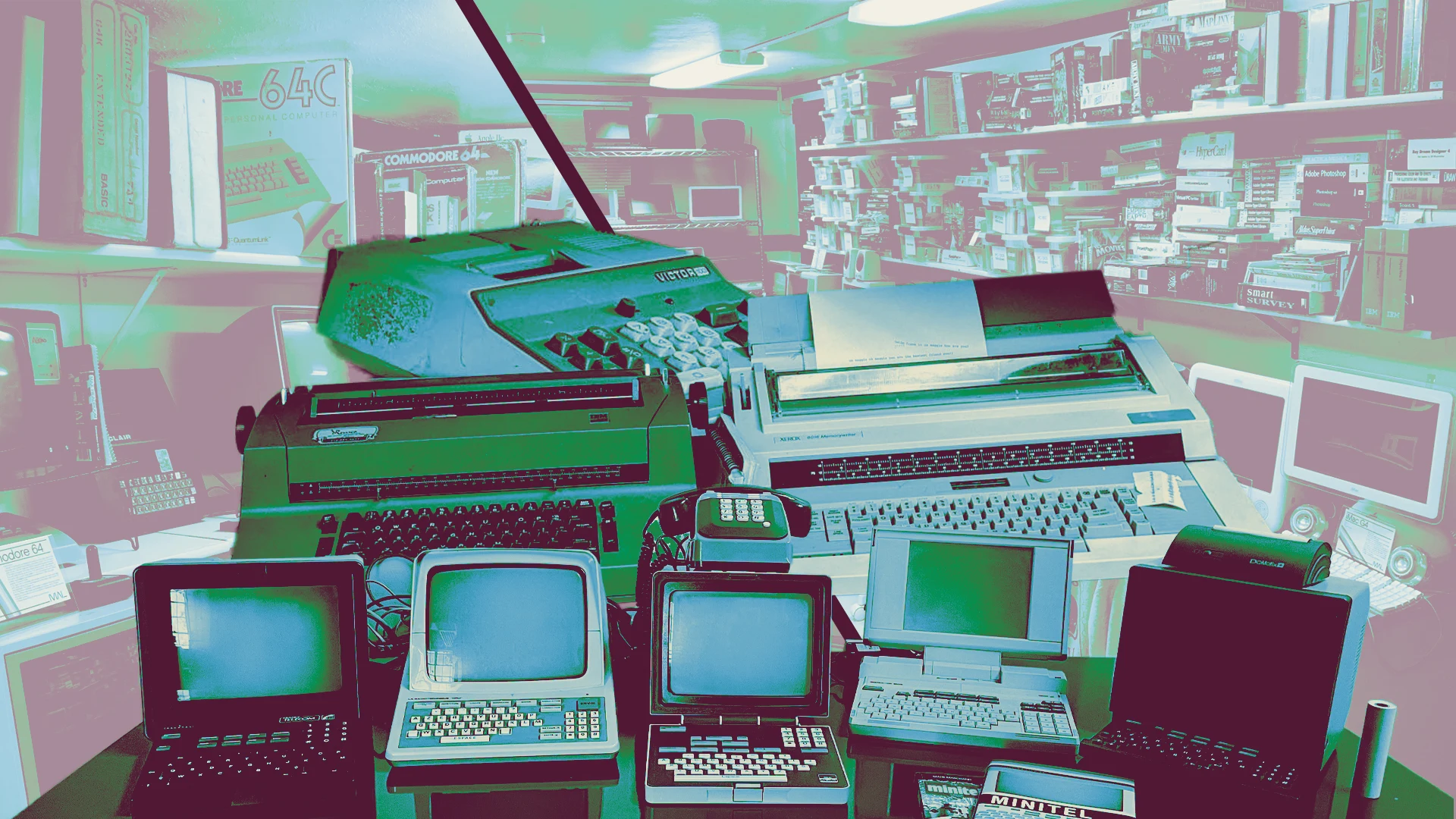
"In 2021, University of Wisconsin-Milwaukee history professor Thomas Haigh began teaching a course on the history of computers. Haigh, the coauthor of a book on the subject published around that same timenoticed that many classic histories of computing from the 1990s assumed that readers would have firsthand knowledge of technology from around that era-desktop PCs and Macs, early game consoles, and the once-ubiquitous floppy disk. But for many of his students, that equipment was obsolete before they were born. While it might make millennials grimace, Windows 95 and Nintendo 64's GoldenEye 007 are now firmly in the purview of the history department."
""With today's undergraduates, they're just as distanced from the days of the Apple II, or the IBM PC, or the first Mac as people [then] were from ENIAC and the very earliest computers," Haigh says. Haigh can't practically show his students how to use the ENIAC or the other room-sized machines from the mid-20th century. But he realized he could stock a lab with equipment from the 1980s, 1990s, and 2000s, letting students experience and understand what it was like to load a spreadsheet from floppy disk on an Apple IIe, boot up Windows on a Gateway PC, or play a game on a vintage Atari or Nintendo 64."
""The idea isn't to collect one of everything, and it's also not really to collect rare and exotic things," Haigh says. "We're more interested in recapturing what the typical experience was of using computer systems in different eras." Haigh believes the Retrocomputing Lab, or simply Retrolab, may be the only such lab run out of a U.S. history department. It's one of a handful of university labs around the country that provide students and researchers with access to machines and software from before the age of ubiquitous internet and cloud computing."
A university history department created a Retrocomputing Lab that stocks typical machines from the 1980s, 1990s, and 2000s so students can use period hardware and software. The lab enables hands-on activities like loading spreadsheets from floppy disks on an Apple IIe, booting Windows on a Gateway PC, and playing vintage console games. The collection focuses on everyday systems rather than rare artifacts and is assembled from eBay purchases, university surplus, and faculty hand-me-downs. The facility gives students and researchers access to pre-internet computing environments for teaching and study.
Read at Fast Company
Unable to calculate read time
Collection
[
|
...
]