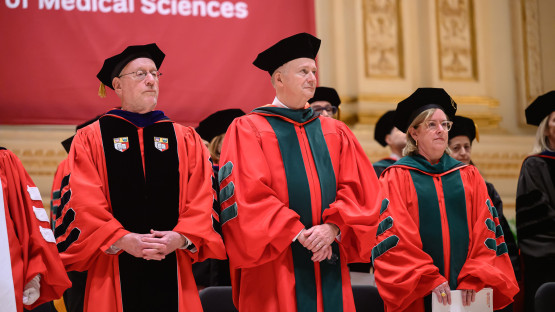
"The class comprises 447 expected graduates - 108 medical doctors, 28 physician assistants, 86 with doctorates and 225 with master of science degrees. For the first time in the institution's history - and in reflection of a dramatic expansion in master's degree programs - the Weill Cornell Graduate School held a ceremony separate from Weill Cornell Medical College."
"President Michael I. Kotlikoff joined Dean-Provost Robert A. Harrington and leaders from both schools in conferring degrees on Weill Cornell students. Graduates crossed the Perelman Stage to receive their diplomas in front of an audience of cheering classmates, family and friends."
"Connecting the past to the present, Kotlikoff reflected on Cornell's history and the role of Weill Cornell Medicine, highlighting the mission of founder Ezra Cornell to establish an institution, "where any person can find instruction in any study.""
""The idea that individuals from different backgrounds, different cultures and different viewpoints could work together was a radical idea in 1865," Kotlikoff said. "But it has, of course, proven to be the essential strategy underlying successful modern medicine and the delivery of equitable and excellent healthcare. "From the bench to the bedside, the idea that all members of the team have agency, and anyone should have access, has become the model for academic medicine," he said."
The graduating class includes 447 expected graduates: 108 medical doctors, 28 physician assistants, 86 with doctorates, and 225 with master of science degrees. For the first time in the institution’s history, the Weill Cornell Graduate School held a ceremony separate from Weill Cornell Medical College, reflecting a dramatic expansion in master’s degree programs. President Michael I. Kotlikoff joined Dean-Provost Robert A. Harrington and leaders from both schools to confer degrees. Graduates crossed the Perelman Stage to receive diplomas in front of cheering classmates, family, and friends. Kotlikoff connected Cornell’s history to the mission of Ezra Cornell, emphasizing instruction for any person in any study. He also highlighted collaboration across backgrounds as essential to modern medicine and equitable healthcare, and described shared agency and access as the model for academic medicine.
Read at Cornell Chronicle
Unable to calculate read time
Collection
[
|
...
]