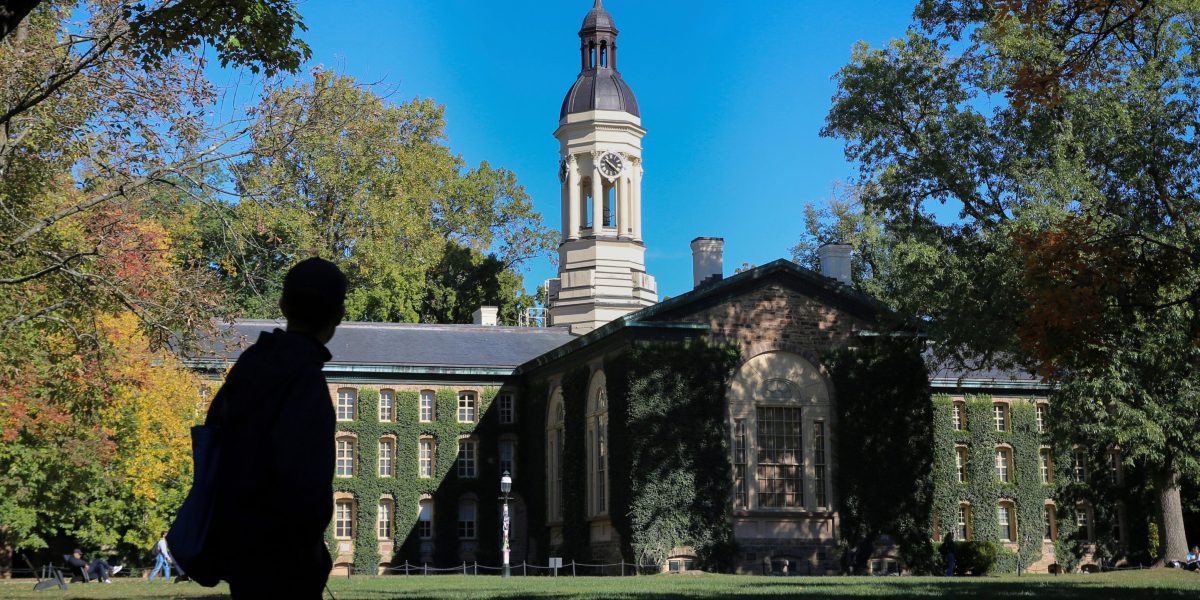
"The strategy could lead to friction with the federal government. The Trump administration, which has pulled funding from elite colleges over a range of grievances, has suggested it's illegal to target needier students. College leaders believe they're on solid legal ground. At Princeton University, this year's freshman class has more low-income students than ever. One in four are eligible for federal Pell grants, which are scholarships reserved for students with the most significant financial need."
""The only way to increase socioeconomic diversity is to be intentional about it," Princeton President Christopher Eisgruber said in a statement. "Socioeconomic diversity will increase if and only if college presidents make it a priority." Last year, Princeton set aggressive goals to recruit more low-income students in the wake of the Supreme Court's ban on affirmative action in higher education. Without the ability to consider race, officials wrote in a campus report, focusing on economic diversity offers "the university's greatest opportunity to attract diverse talent.""
Some of the nation's most prestigious colleges are enrolling record numbers of low-income students as a growing admissions priority following the ban on affirmative action. Top campuses remain disproportionately wealthy, but several universities have accelerated outreach to urban and rural areas and expanded free-tuition programs for families below the highest income tiers. The approach risks regulatory friction, with the Trump administration questioning programs that target needier students while college leaders assert legal defensibility. Princeton reports one in four freshmen eligible for Pell grants and has set aggressive goals to boost economic diversity as a path to broader campus inclusion.
Read at Fortune
Unable to calculate read time
Collection
[
|
...
]