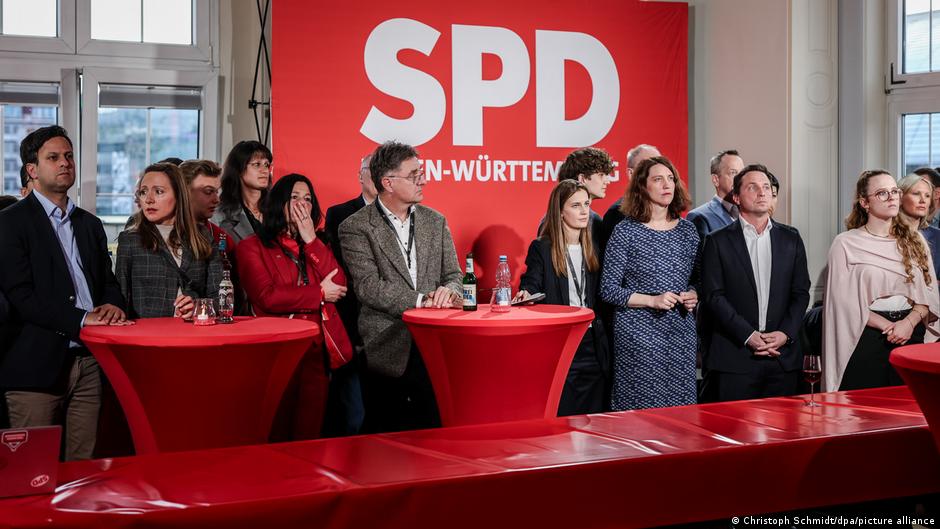
"The SPD was founded as a traditional workers party in 1863, which makes it the country's oldest political party. In that period, it aimed to be the political representative of factory workers, whose precarious lives were characterized by long working hours, low wages, job insecurity, a lack of occupational safety and a housing shortage."
"According to a survey by pollster Forsa in November 2025, only 9% of Germany's blue-collar workers and the unemployed said they would vote for the SPD. Those who feel socially disadvantaged now tend to sympathize with the far-right populist Alternative for Germany (AfD)."
"After the general election in February 2025, an infratest-dimap poll found that 38% of working class voters had cast their ballot for the AfD. Many former SPD voters have also switched to the socialist Left Party, which was formed in part because of dissatisfaction with the social welfare policies of the SPD."
The SPD, founded in 1863 as Germany's oldest political party, historically represented factory workers by promising education, equal opportunities, and equal rights. However, the party now faces an existential crisis, achieving its worst post-war result of 5.5% in Baden-Württemberg state elections and languishing at 13-16% federally. The traditional working class that formed the SPD's voter base has largely disappeared as well-paid industrial workers became middle class. Contemporary working-class and unemployed voters have abandoned the SPD, with only 9% supporting it according to 2025 polling. These voters increasingly support the far-right AfD, with 38% of working-class voters choosing them in the February 2025 general election. Former SPD supporters have also migrated to the socialist Left Party, partly due to dissatisfaction with the SPD's social welfare policies.
Read at www.dw.com
Unable to calculate read time
Collection
[
|
...
]