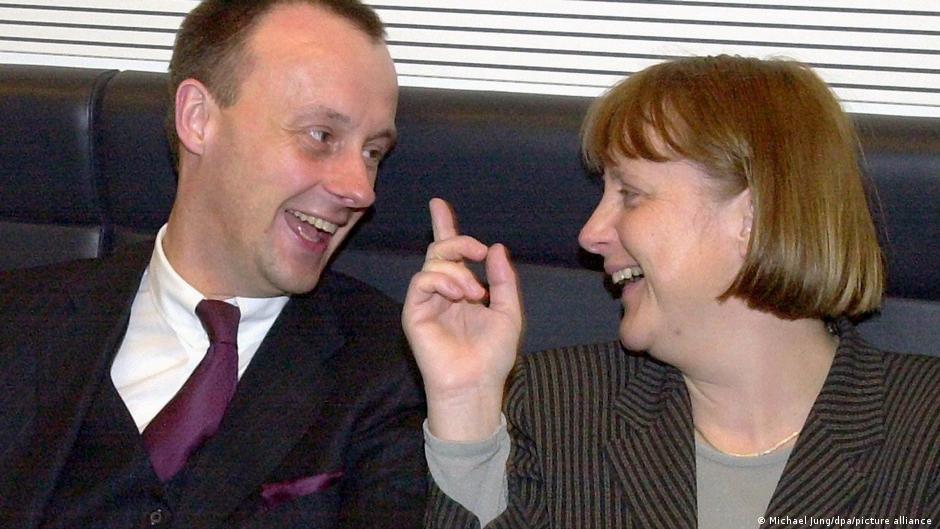
"Whatever I did, I was always put in relation to a man again. Whatever I did, it was never interpreted as my own decision, at least that was how it was portrayed. I found that strange, but later it subsided. I honestly consider it absurd."
"Men constantly push other men out of the way. And when a woman does it, when she claims the path to a position for herself in exactly the same way as a man, then people speak of 'male-killing Merkel.' From my perspective that is completely baseless. Helmut Kohl did not become chancellor without encountering others who also wanted to become chancellor. That is simply how it is."
"It referred to the fact that several powerful male rivals or mentors saw their careers falter while Merkel advanced, including former Chancellor Helmut Kohl. During the CDU donations scandal in 1999, Merkel publicly distanced herself from Kohl in a newspaper article that helped end his dominance over the party. High-ranking conservative Wolfgang Schauble, who had been seen as Kohl's heir, saw his position weakened during the same scandal."
“Male-killing Merkel” was a German political label used during Angela Merkel’s rise in the CDU. It claimed that powerful male rivals or mentors saw their careers falter while Merkel advanced, including former Chancellor Helmut Kohl. During the CDU donations scandal in 1999, Merkel publicly distanced herself from Kohl in a newspaper article that weakened his dominance in the party. High-ranking conservative Wolfgang Schäuble, viewed as Kohl’s heir, also saw his position weakened during the same scandal, later serving under Merkel as a minister. Merkel rejected the characterization, saying her actions were repeatedly interpreted in relation to men and that the label was baseless, absurd, and reflective of how people reacted to a woman pursuing power similarly to men.
Read at www.dw.com
Unable to calculate read time
Collection
[
|
...
]