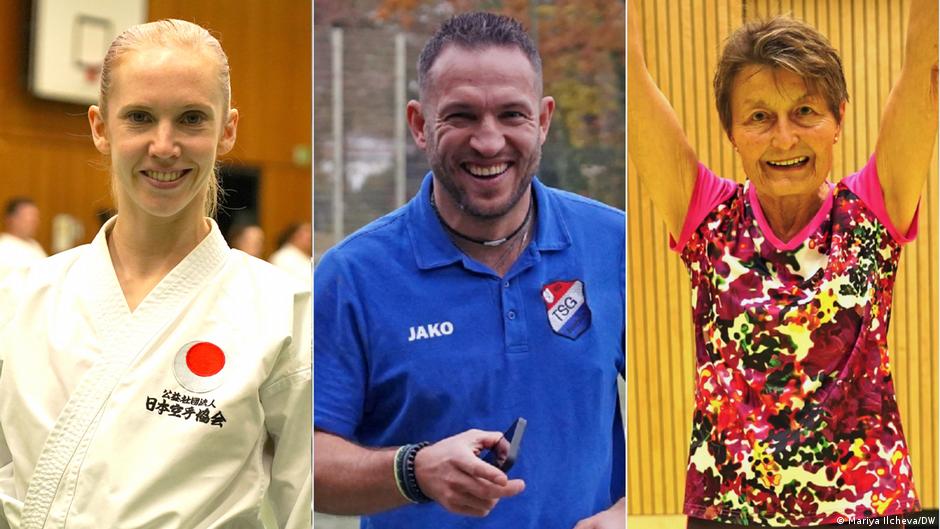
"Imagine you do karate for fun, but are being trained by a 10-time European champion and it only costs you around 20 ($23) a month. Sound unlikely? In Germany, it is possible. At the Dojo Ochi karate club in the western city of Bonn, Melissa Rathmann volunteers as part of an eight-person team of coaches. In addition to her 10 European Championship titles, the 33-year-old has won numerous German championships and was twice runner-up in the World Championships."
"While in many countries, popular sports have established themselves as a lucrative business model, in Germany non-profit clubs are the first port of call for those interested in sports. They are mainly financed by membership fees, public subsidies, and volunteer work. Coaches usually do not receive a salary, but rather a small expense allowance in recognition of their work. With more than 86,000 clubs, a total of around 30 million members, and almost two million volunteers,"
"Rathmann, who works as a controller at the University Hospital in Bonn, does all this in her spare time. Her work at the club is important to her because it is about more than just sport. "Sports clubs also promote social skills. People with different backgrounds, origins, and ages come together," said Rathmann, adding that these encounters strengthen social cohesion."
A volunteer 10-time European karate champion coaches at a local Bonn dojo, making elite training affordable at about $23 monthly. German sports culture relies on non-profit clubs financed by membership fees, public subsidies, and volunteer labor rather than commercial models. Coaches typically receive only small expense allowances rather than salaries. More than 86,000 clubs serve around 30 million members with nearly two million volunteers, creating broad community participation. Clubs promote social skills by bringing together people of different backgrounds, origins, and ages, thereby strengthening social cohesion.
Read at www.dw.com
Unable to calculate read time
Collection
[
|
...
]