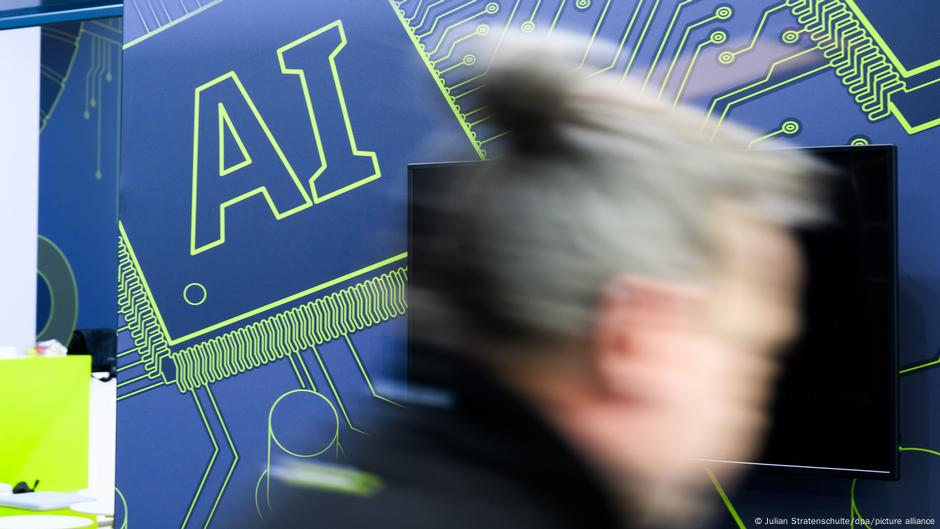
"Germany has been warned for years that it risks becoming an "industrial museum" unless it embraces radical modernization and that includes artificial intelligence (AI). Productivity in Europe's biggest economy has barely grown for fifteen years, export share in automobiles and machinery is shrinking and Germany's energy costs are among the highest in the G7 group of wealthy nations. Together, this has created a toxic mix that is steadily eroding the country's global competitiveness."
"Policymakers and business leaders believe a narrow window exists to reverse the slide by fully embracing AI in factories and supply chains, helping the country to play catch-up with the world's two biggest players, the United States and China. Speaking at the inauguration of Europe's first exascale supercomputer, Jupiter, in September, German Chancellor Friedrich Merz noted that the two global powers are in a "neckandneck race to compete for future market share in an AIsupported global economy." "We in Germany and we in Europe have every opportunity to catch up and then keep pace," he told attendees of the launch ceremony in Juelich, western Germany."
"The US and China have pushed ahead with AI models like ChatGPT and DeepSeek, advanced chips and industrial-scale stress tests of data centers. Their early tests prove their systems can handle AI workloads at business-critical scale without downtime. Germany's industrial giants, meanwhile, have been accused of being trapped in so-called pilot purgatory, experimenting with AI but hesitant to fully roll out ambitious projects. Bosch, for instance, launched generative AI pilots in its factories in late 2023 to optimize production scheduling and monitoring. Volkswagen, in collaboration with Siemens, has tested AIdriven digital-twin factories virtual replicas of production li"
Germany faces a risk of becoming an industrial museum without radical modernization, including adopting artificial intelligence. Productivity in Europe's largest economy has barely grown for fifteen years. Export shares in automobiles and machinery are shrinking while energy costs rank among the highest in the G7. These factors combine to erode global competitiveness. Policymakers and business leaders see a narrow window to reverse the decline by fully integrating AI across factories and supply chains. The United States and China have advanced large models, chips and data center stress tests that demonstrate business-critical scalability. Major German firms have often remained in pilot projects rather than wide rollouts, with pilots at Bosch and digital-twin tests by Volkswagen and Siemens.
Read at www.dw.com
Unable to calculate read time
Collection
[
|
...
]