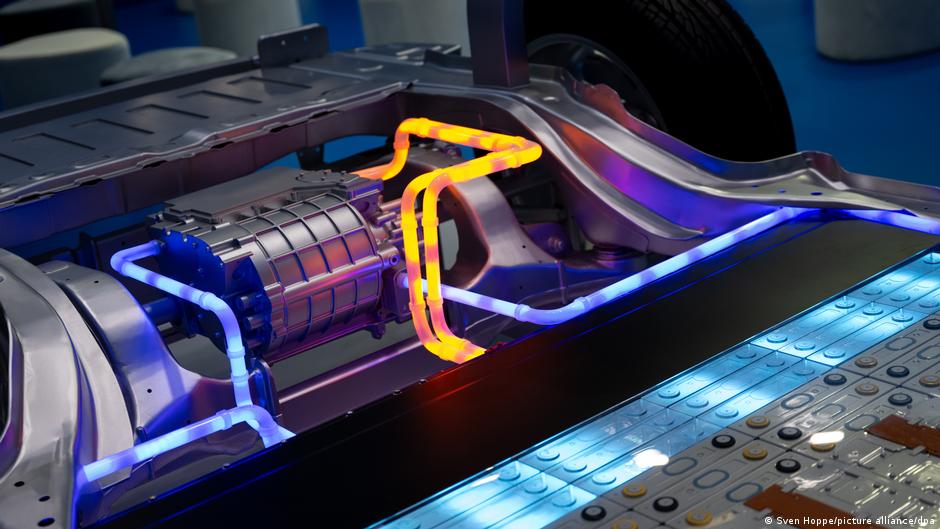
A vast Arnstadt production hall relies on countless robots and only about a dozen human workers to manufacture CATL battery cells. The plant operates under strict secrecy rules that prohibit photos, tape smartphone cameras, and require approval for audio recordings. The factory produces 14 gigawatt-hours of battery capacity annually, enough for at least 200,000 electric cars, supplying European automakers. Manufacturing in Germany shortens transport routes for heavy, flammable batteries and reduces geopolitical risks such as punitive tariffs. German "Made in Germany" manufacturing standards and Industry 4.0 cooperation helped elevate Chinese manufacturing capabilities, leading to formal cooperation agreements signed in 2014.
"Inside a hall stretching more than 100 meters (about 330 feet), countless robots hum as lights blink and warning signals chirp. Currently, only about a dozen people are working on the floor, with the remaining work being handled by high-performance machines. Journalists are rarely allowed inside this high-tech factory from China, and when they are, the rules are strict: no photos, smartphone cameras are taped over, and even short audio recordings require approval from a press spokesperson."
"The plant shrouded in secrecy is not located somewhere in China, but in Arnstadt, a small town in the eastern German state of Thuringia. It belongs to Contemporary Amperex Technology (CATL), the Chinese global market leader in electric vehicle batteries. The factory produces 14 gigawatt-hours (GWh) of battery capacity a year enough for at least 200,000 electric cars supplying, among others, European automakers. CATL's brand-new battery cell production in Arnstadt is testimony of a reverse technology transfer between China and Germany Image: Martin Schutt/dpa/picture alliance"
Read at www.dw.com
Unable to calculate read time
Collection
[
|
...
]