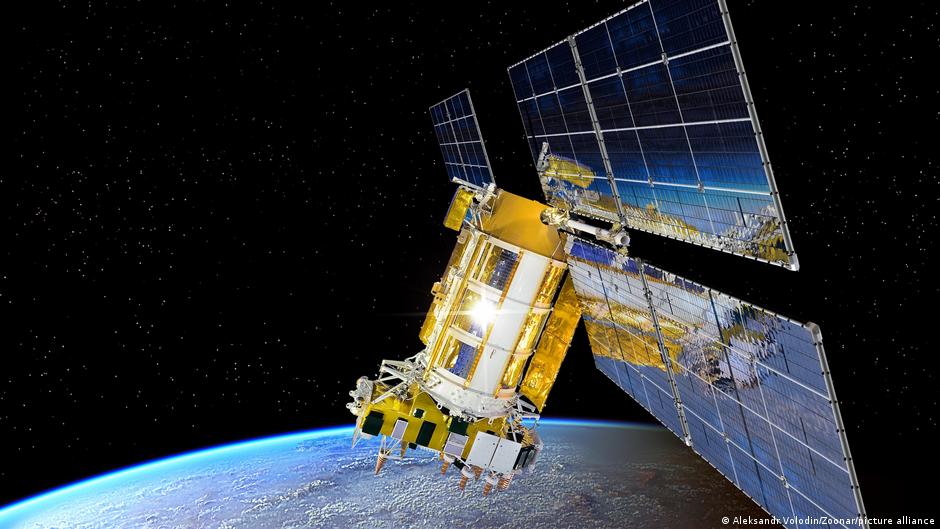
"The space industry is a multibillion-dollar business. According to a study by the German consulting firm Roland Berger and the Federation of German Industries (BDI), the market is worth around $600 billion (516 billion) and growing. By 2040, it is predicted to be worth $2.32 trillion. That is about four times Germany's federal budget in 2025. And many want a slice of the new private spaceflight pie."
"Currently, some $150 billion is flowing into the "upstream market," which "comprises production of the infrastructure required on Earth and in space, from launch pads, ground segments, and satellites," according to Roland Berger. A much larger share approximately $450 billion has been invested into downstream applications, which "consists of space-based solutions positioning, navigation & timing, Earth observation, and satellite communications.""
""New Space is essentially a data business," said Matthias Wachter, the managing director of the BDI's NewSpace Initiative and co-director of its Innovation, Security and Technology division. Space travel goes from state to private Space travel has changed dramatically since its early days. During the Cold War, it was primarily a race between the United States and the Soviet Union, with the impetus and funding coming from the state."
"In about 2000, governments began to slip into the role of clients. Since then, private companies have been providing rocket launch services and developing satellites. Major players SpaceX and Blue Origin were also born at the turn of the century. Reusable launch vehicles have also made space travel significantly more affordable, opening up new business opportunities and paving the way for various applications. According to the US consulting firm McKinsey, launch costs alone have fallen by 90% over the past 20 years."
The space industry is valued at about $600 billion and is projected to reach $2.32 trillion by 2040. Investment is split between upstream infrastructure and downstream applications. Upstream spending totals around $150 billion for production of launch and space infrastructure, including launch pads, ground segments, and satellites. Downstream spending totals about $450 billion for space-based solutions such as positioning, navigation and timing, Earth observation, and satellite communications. Space travel has shifted from Cold War state competition to governments acting as clients around 2000, while private firms provide launch services and develop satellites. Reusable launch vehicles have reduced costs, with launch costs falling by 90% over the past 20 years, enabling new business opportunities.
#space-industry #private-spaceflight #upstream-infrastructure #downstream-applications #reusable-launch-vehicles
Read at www.dw.com
Unable to calculate read time
Collection
[
|
...
]