""India serves as the office of the global economy. China, on the other hand, is more like the factory of the global economy." India has undergone rapid development in the process, Wagner told DW. "It began with the call centers. Now it is the research facilities. Many large German companies have outsourced their research institutes to India. And the Indian students who come to us mostly do degrees in science and engineering.""
"The reasons for Germany's heightened interest in the world's most populous country (India has about 1.45 billion people) are both economic and geopolitical: According to a prognosis from the Organization for Economic Cooperation and Development , the Indian economy will grow significantly more than China's this year. Germany, meanwhile, has been stuck in recession for almost three years. Germany is also desperately looking for skilled workers and is finding more and more of them in India. Meanwhile, Indians have become the largest group of foreign students at German universities."
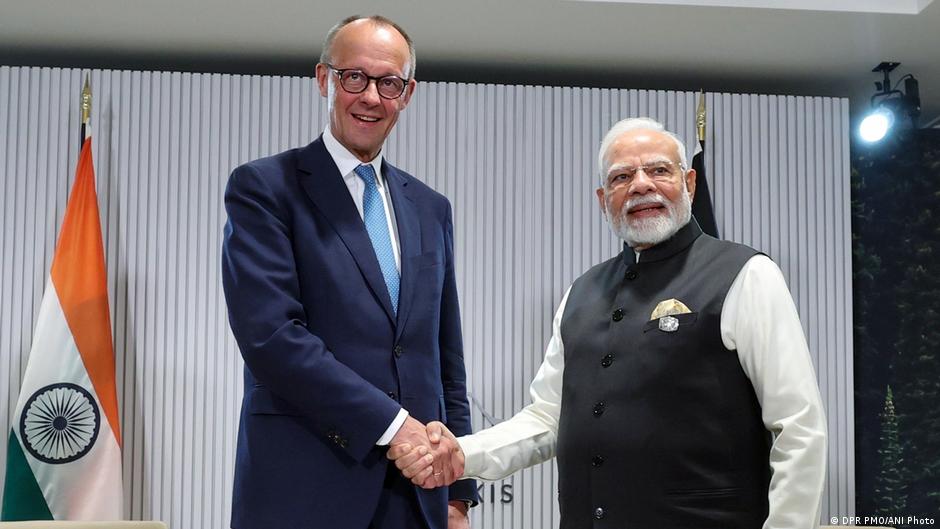
Top German politicians are increasingly traveling to India, with Chancellor Friedrich Merz visiting New Delhi with a large delegation. Economic and geopolitical factors underpin the shift toward closer ties with India. A prognosis from the Organization for Economic Cooperation and Development forecasts that the Indian economy will grow significantly more than China’s this year. Germany has endured nearly three years of recession and urgently needs skilled workers, many coming from India. Indian students are now the largest group of foreign students at German universities. India’s strengths lie in services, research facilities, and outsourced research institutes. Trade with India reached 29 billion ($33.7 billion) in 2024, remaining far below the roughly 246 billion trade volume with China.
Read at www.dw.com
Unable to calculate read time
Collection
[
|
...
]