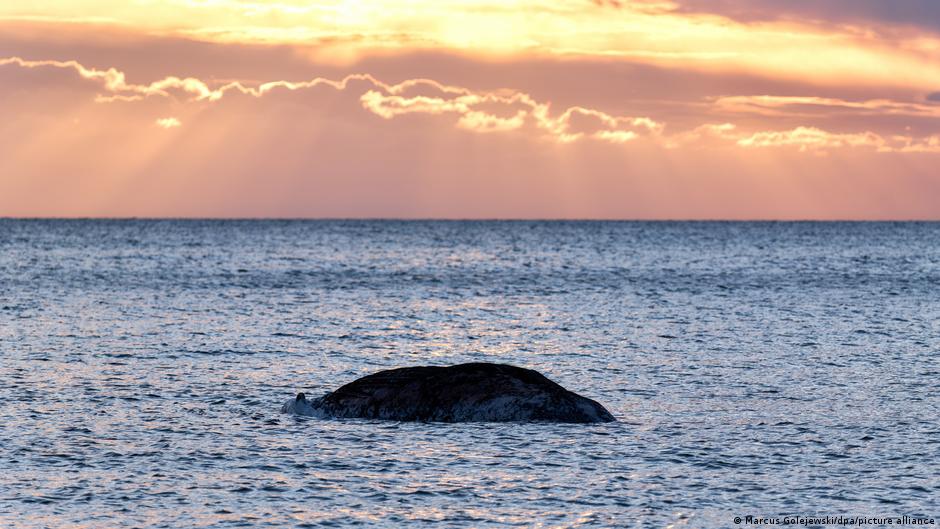
"Divers have been able to confirm that the deceased humpback whale spotted off the Danish coast is the creature that came to be nicknamed "Timmy" as it spent more than a month stranded off the northern German coastline in the Baltic Sea. Denmark's Environmental Protection Agency (EPA) confirmed the news on Saturday. The likelihood that the whale was the stricken humpback that was severely ailing by the time it was towed from the German coastline already seemed high. Animal protection groups had warned that the whale's long-term survival chances were slim."
"How did Danish authorities confirm it was indeed Timmy? An initial examination on Friday had not been able to spot a tracking device that had been attached to "Timmy" by rescuers because of the dead whale's position in the water. But on Saturday divers were able to take a picture of the animal's dorsal fin. "Conditions today made it possible for a local employee from the Danish Nature Agency to locate and retrieve an attached tracking device that was still fastened to the whale's back," Jane Hansen, division head at the Danish Environmental Protection Agency, said in a statement to the AFP news agency."
""The position and appearance of the device confirm that this is the same whale that had previously been observed and handled in German waters." Danish authorities said there were currently no plans to remove the carcass. What happened to Timmy? The 12-meter (39-foot) whale, dubbed "Timmy" by the German press, initially became stranded on a sandbank on Germany's Baltic Sea coast on March 23. After a number of failed attempts to free it from Wismar Bay, including digging channels and trying to guide it back to deeper water, authorities announced they were giving up."
A deceased humpback whale found off the Danish coast was confirmed to be the whale nicknamed “Timmy,” which had been stranded for more than a month off northern Germany in the Baltic Sea. Danish authorities reported that an initial examination did not reveal a tracking device because of the whale’s position in the water. Divers later photographed the dorsal fin and enabled a Danish Nature Agency employee to locate and retrieve a tracking device still attached to the whale’s back. The device’s position and appearance matched the whale previously observed and handled in German waters. Authorities said there were currently no plans to remove the carcass.
Read at www.dw.com
Unable to calculate read time
Collection
[
|
...
]