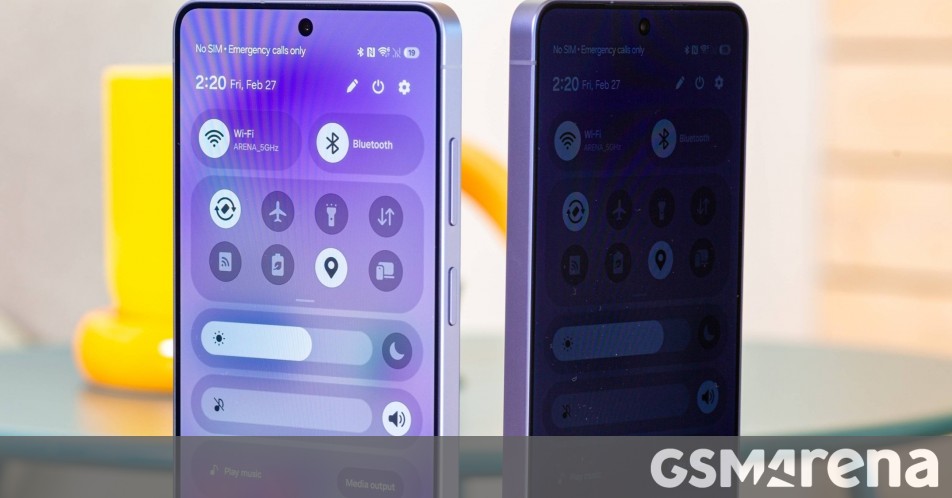
"The way the feature is implemented is by applying a hardware filter on half the pixels, which are now separated into two groups - Narrow Pixels and Wide Pixels. The Narrow Pixels emit light directly forward, while the Wide Pixels, as the name implies, emit light at a wider angle. From what we understand, the Wide Pixels are your standard pixels, whereas the Narrow Pixels have a taller "wall" around them for lack of a better word, which makes them harder to see at an angle."
"So when the Privacy Display toggle is turned on, the Wide Pixels' brightness is reduced significantly. Maybe even turned off by what we see under a microscope. So it's no surprise that when half of the pixels don't work, peak brightness is halved. Still, around 800 nits on Samsung's DX anti-reflective screen provides good enough outdoor visibility, even on a bright sunny day."
Samsung's Galaxy S26 Ultra features a Privacy Display technology designed to prevent others from viewing the screen at angles. The feature works by implementing a hardware filter that divides pixels into two categories: Narrow Pixels and Wide Pixels. Narrow Pixels emit light directly forward with protective walls around them, making them difficult to see from angles, while Wide Pixels emit light at wider angles. When Privacy Display is enabled, the Wide Pixels' brightness is significantly reduced or turned off, resulting in peak brightness being halved to approximately 800 nits. This brightness reduction is a necessary trade-off for the privacy functionality, though it still provides adequate outdoor visibility on bright days.
Read at GSMArena.com
Unable to calculate read time
Collection
[
|
...
]