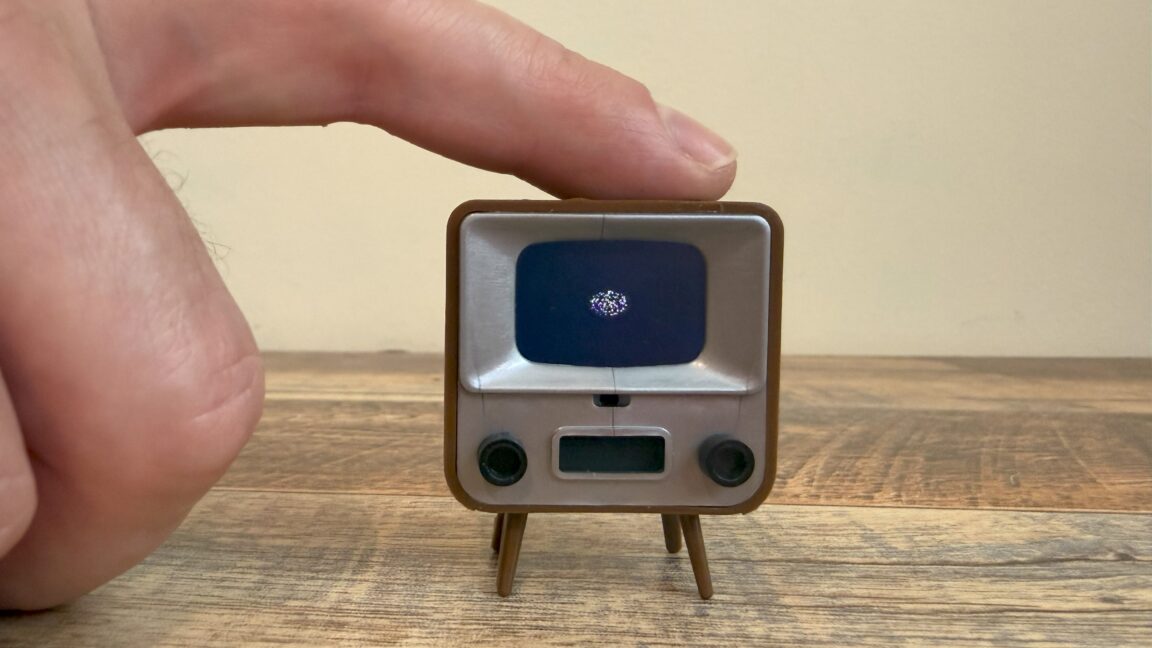
"If a family of anthropomorphic mice were to meet around a TV, I imagine they'd gather around something like TinyCircuits' TinyTV 2. The gadget sits on four slender, angled legs with its dials and classic, brown shell beckoning viewers toward its warm, bright stories. The TinyTV's screen is only 1.14 inches diagonally, but the device exudes vintage energy. In simple terms, the TinyTV is a portable, rechargeable gadget that plays stored videos and was designed to look and function like a vintage TV."
"The details go down to the dials, one for controlling the volume and another for scrolling through the stored video playlist. Both rotary knobs make an assuring click when twisted. Musing on fantastical uses for the TinyTV seems appropriate because the device feels like it's built around fun. At a time when TVs are getting more powerful, software-driven, AI-stuffed, and, of course, bigger, the TinyTV is a delightful, comforting tribute to a simpler time for TVs."
"TinyCircuits makes other tiny, open source gadgets to "serve creativity in the maker community, build fun STEAM learning, and spark joy," according to the Ohio-based company's website. TinyCircuits' first product was the Arduino-based TinyDuino Platform, which it crowdfunded through Kickstarter in 2012. The TinyTV 2 is the descendant of the $75 (as of this writing) TinyTV DIY Kit that came out three years prior."
The TinyTV 2 is a portable, rechargeable gadget that plays stored videos on a 1.14-inch diagonal screen housed in a vintage-styled brown shell with slender angled legs. Physical rotary dials control volume and scroll through a stored-video playlist, and the knobs click when rotated. The device evokes retro aesthetics and playful uses, positioning itself as a comforting counterpoint to increasingly large, software-driven modern TVs. TinyCircuits is an Ohio-based maker of tiny open-source electronics that began with the Arduino-based TinyDuino crowdfunded in 2012. The TinyTV 2 was crowdfunded in 2022 and sells alongside other small devices such as the Thumby.
Read at Ars Technica
Unable to calculate read time
Collection
[
|
...
]