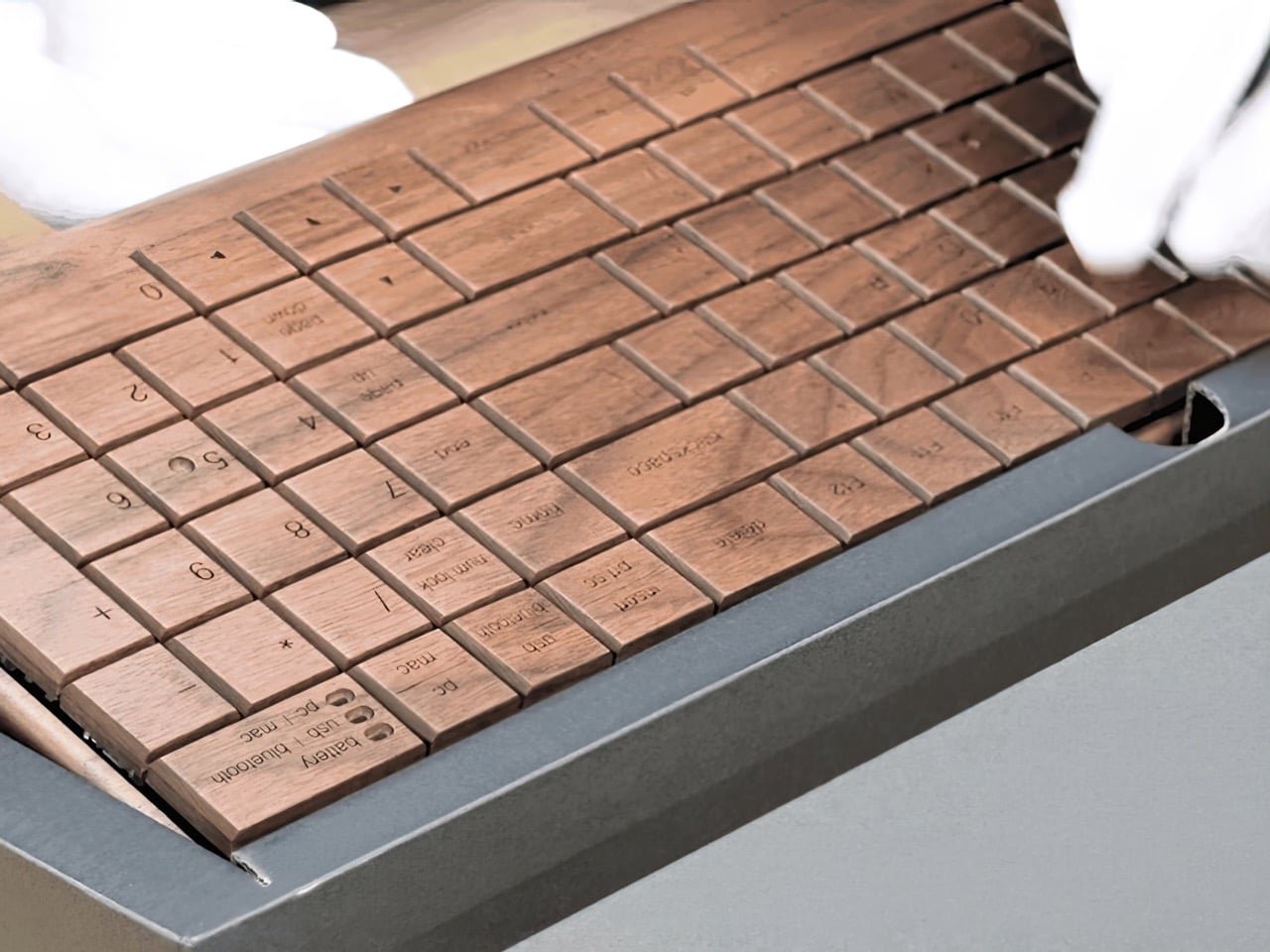
"Tech moves fast, breaks things, ships updates, iterates. The entire industry is built on the assumption that this year's product will be obsolete by next year, and that's fine because next year's version will be better anyway. Then you see someone in Fukui Prefecture spending twenty minutes hand-sanding a single wooden keyboard key, checking it by touch, and the whole paradigm feels suddenly optional."
"What makes this remarkable isn't just the craftsmanship, though watching wood move from lumber to finished keys is genuinely mesmerizing. It's the underlying assumption that contradicts everything tech culture preaches. These keyboards are built to last decades. They're made from a material that ages visibly, that will show wear and patina and the passage of time. They're designed for people who want their tools to have history rather than version numbers."
Hacoa produces wooden keyboards in Fukui Prefecture using generational woodworking techniques that prioritize longevity and tactile quality. Craftspeople select lumber by grain, measure to minimize waste, plane boards to uniform thickness, and machine pieces with multiple blade changes before chamfering and cutting individual key blanks. Each key is shaped and hand-sanded on the end grain to refine feel, then finished with careful attention to touch. The keys are designed to age and develop patina, reflecting use over decades. The wooden keycaps are mounted on standard mechanical keyboard bases so they function as practical typing tools for daily, long-term use.
Read at Yanko Design - Modern Industrial Design News
Unable to calculate read time
Collection
[
|
...
]