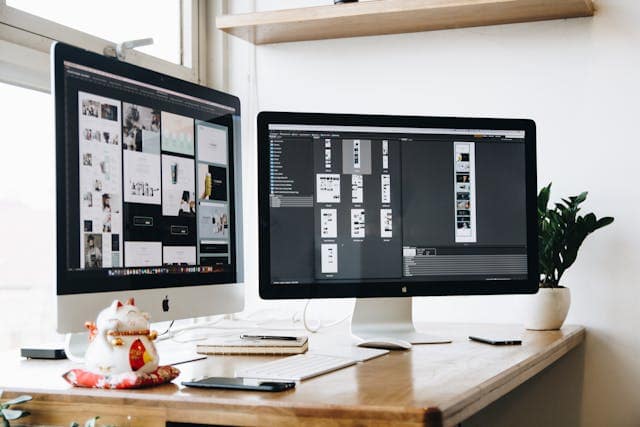
"These are the workhorses of the digital age - they can be used for an array of tasks from graphic design to data analytics to writing emails. Desktops tend to offer more robust processing power for heavy-duty tasks. Laptops, on the other hand, are excellent for teams that require mobility - employees have the option to work from home or take their work to meetings with clients and suppliers."
"Modern business telephone systems can be set up to provide multiple extensions on different handsets, as well as allowing business owners to create phone menus and phone queues. VoIP phone systems have become particularly popular as they use the internet instead of a landline, allowing calls to be answered from any other device in any location (including out of the office). Think about what type of hardware is best for your team."
Five core hardware categories form the backbone of daily office operations and deserve primary investment over nonessential gadgets. Computers—desktops or laptops—perform tasks ranging from graphic design to data analytics and require reliable models with features such as 8GB of RAM, SSD storage, and strong processors. Desktops provide higher processing power for heavy-duty tasks while laptops enable mobility for remote work and meetings. Business phone systems must handle call volume and team structure, offer extensions, menus, and queues, and increasingly use VoIP for internet-based calling and remote answering. Wi‑Fi routers should cover the entire office and provide sufficient capacity for users and devices.
Read at London Business News | Londonlovesbusiness.com
Unable to calculate read time
Collection
[
|
...
]