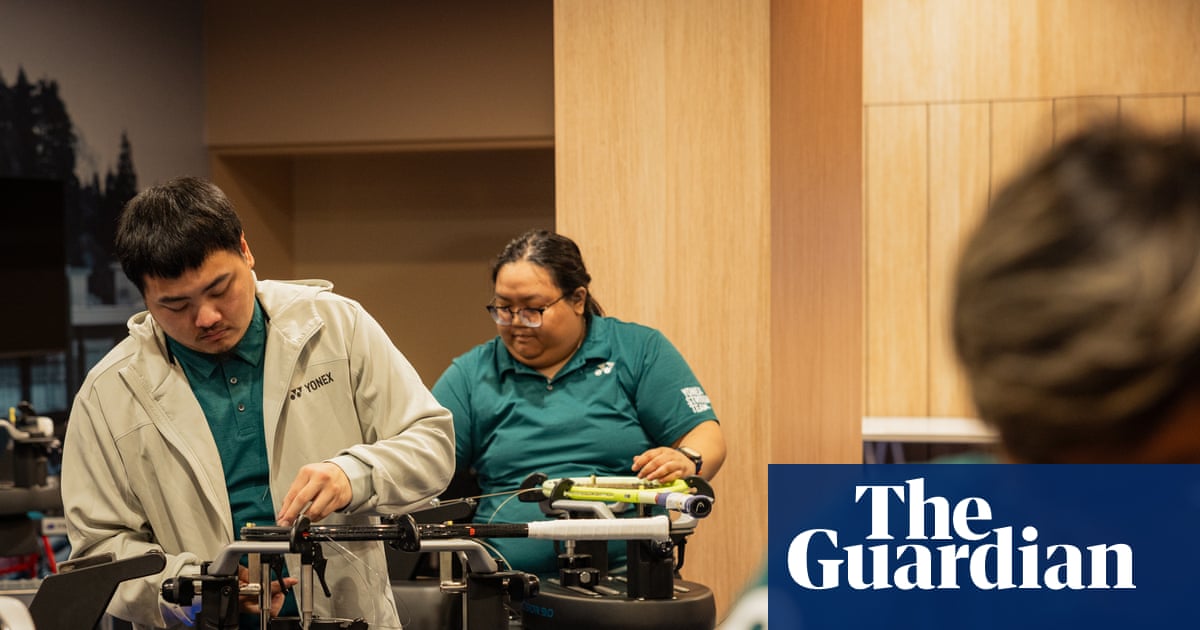
"Underneath Rod Laver Arena, a group of tennis specialists cut and twist and weave intently focused on their preparation for the action on the blue court a few metres above their heads. In the lead-up to the Australian Open, these experts maintain a consistent workload, training their muscles and technique, ready to peak as if they were the athletes taking to the courts themselves."
"A highly strung racket generally offers its user more control but less power, while the opposite is true for a racket with lower tension. A lot of people know how to string, he says. You have your shop stringers, but they might not be quick enough to do this job and maybe not consistent enough for the players' needs at this level."
"British stringer Sarah Bloomfield, who is at her second Australian Open, says those needs vary depending on the player and the venue. I think the weather is the biggest factor on how it affects them playing, she says. They all arrive in Australia and up their tension because it's hotter so the ball travels faster, so, they all want more control."
Specialist racket stringers operate beneath Rod Laver Arena, preparing rackets intensely ahead of play on the court above. The Yonex stringing team, led by Jim Downes with three decades of experience, services roughly 800 athletes with a 22-person crew. String tension choices directly affect control and power, so players request precise tensions. Many local shop stringers exist, but tournament demands require greater speed and consistency. Weather influences tension decisions, with hotter conditions prompting players to increase tension for more control. Players or coaches drop off rackets, tension instructions, and preferred strings for servicing.
Read at www.theguardian.com
Unable to calculate read time
Collection
[
|
...
]