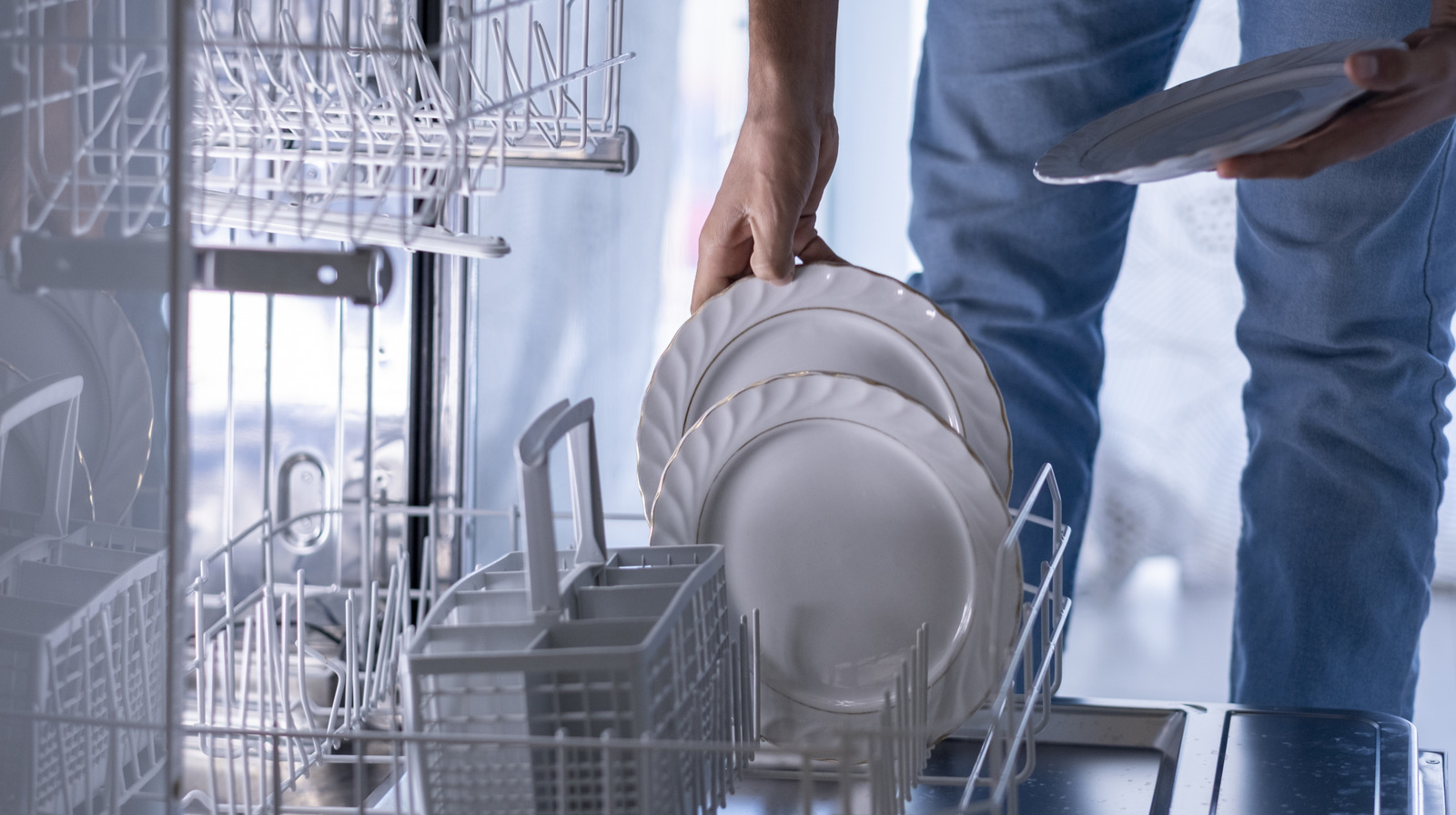
"Not only does this complicate what should be a quick task, but it's actually counterproductive for getting the cleanest dishes out of the washing cycle - and that equals waste, since you're using water unnecessarily. The enzymes in dishwasher detergents actually work better when they can directly access the food on dirty plates without remaining water in the way."
"The dishwasher itself also works better without that pre-rinse. It has sensors that detect how clear its water is in order to determine how strong of a cycle to run. If you've pre-rinsed, that water will look clearer, so the dishwasher won't run as strong, but you'll still have residue on those plates. The water from pre-rinsing throws off the dishwasher's temperature and water pressure, too."
"Skipping the pre-rinse is one of the key tips for loading your dishwasher, but there's one exception: if you've got an older model. Newer versions from the best dishwasher brands will have those smart features that tailor how strong of a cycle to run and where to target their own water jets."
Dishwashers save time and energy by handling dishwashing tasks. Pre-rinsing dishes complicates the loading process and wastes water. Enzymes in dishwasher detergents (amylase for starches, protease for meat and dairy, lipase for fats) work best when they directly contact food residues without remaining water. Dishwashers use sensors to assess water clarity and adjust cycle strength and targeting. Introducing pre-rinse water makes dishes appear cleaner, causing the machine to run weaker cycles while leaving residue on plates. Pre-rinsing also disrupts dishwasher temperature and water pressure. Newer dishwashers from leading brands include smart features; older models over 10–15 years may still require pre-rinsing.
Read at Tasting Table
Unable to calculate read time
Collection
[
|
...
]