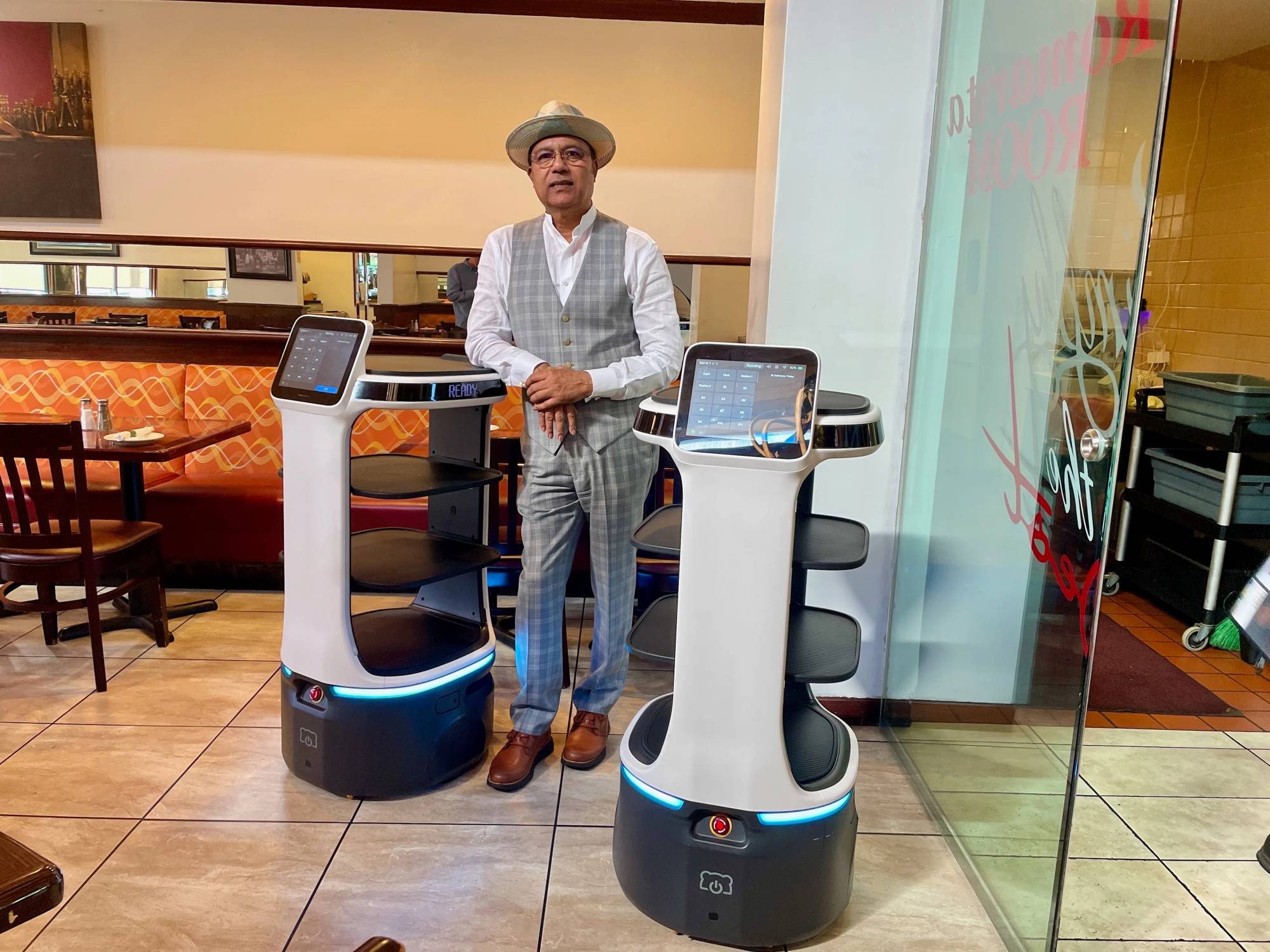
Service robots are becoming more common in warehouses, hotels, and restaurants, performing tasks like moving parts, cleaning floors, and delivering food. A Carson steakhouse rents two server robots for $1,100 per month to run food and return dishes, which enabled modest reductions in employee hours — about one shift or five hours per worker. Analysts project the service robot industry to reach $600 million this year, indicating wider adoption that could reduce headcount and increase workload for remaining staff. Separately, a shooting at a Stockton toddler's birthday party killed four guests and wounded eleven, with suspects still sought.
"Inside the dining room of a Tony's Roma's steakhouse in Carson, two robots are used as servers. General Manager Mithun Chowdhury said business fell this summer when immigration raids began in Southern California. "It's little bit tough, because people are scared to get out. So they don't come frequently in the restaurant anymore. So the business is hurting little bit," he said. The robots cost $1100 a month to rent. They run food from the kitchen to tables, and then bring dirty dishes back to the kitchen. "It's very helpful. I also cut some labor," Chowdhury said."
"The robots allowed him to cut some employees' hours - everyone lost about one shift a week, or about five hours. Robots are not replacing human workers one to one at this restaurant but it's an example of a future with fewer human employees. Expect to see more of this. Analysts predict the service robot industry will grow to $600 million this year. That could mean not just a loss of jobs, but harder work for the people left behind."
"Family members were getting ready to cut the cake at a toddler's birthday party when the gunfire started inside a banquet hall packed with relatives and friends over the weekend in Stockton."
Read at Kqed
Unable to calculate read time
Collection
[
|
...
]