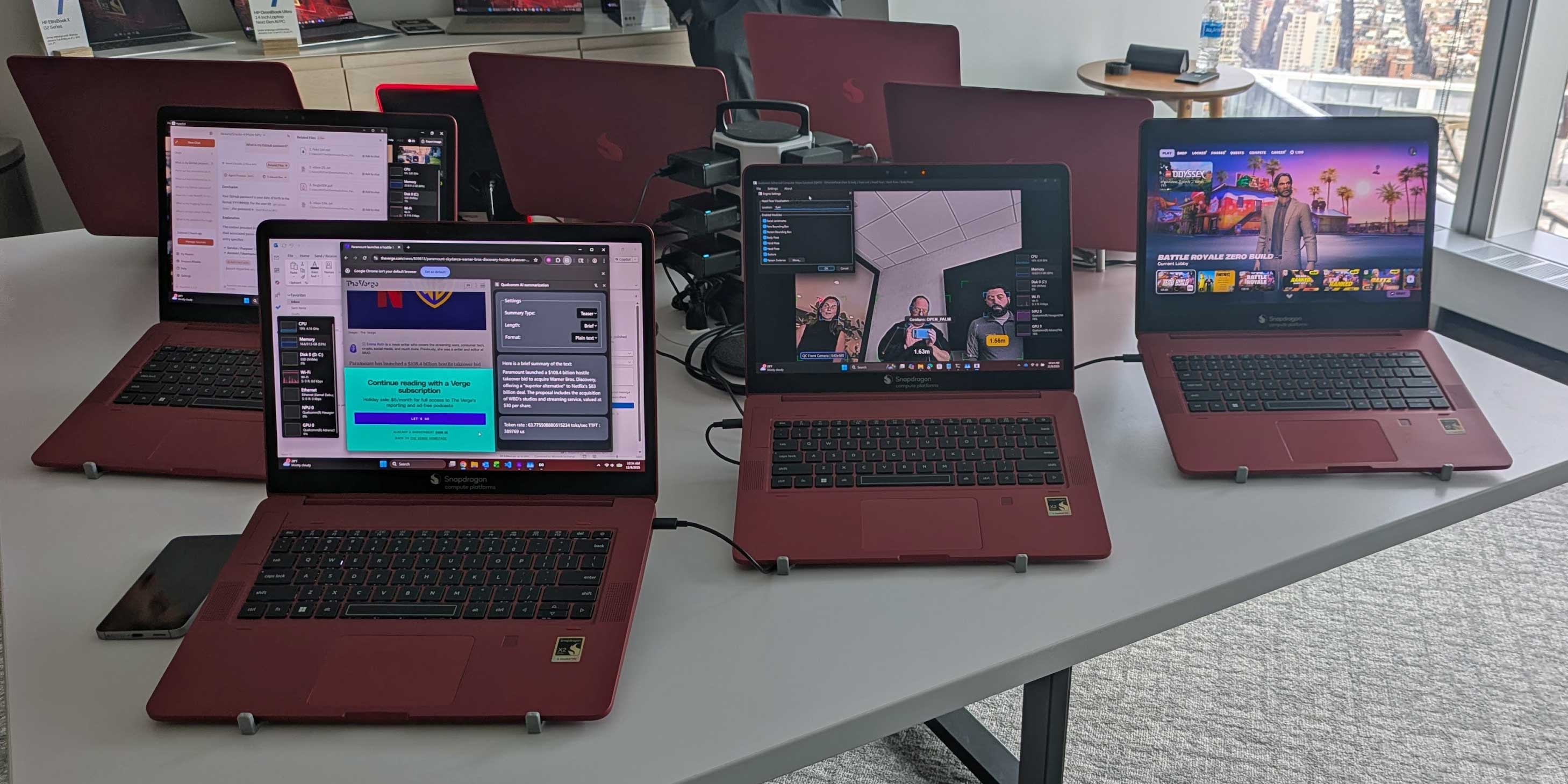
"Qualcomm is trying to become a major player in the laptop processor space. Its Snapdragon X Elite and X Plus chips, along with a concerted effort to improve the Windows on Arm software ecosystem, have made it a credible alternative to Intel and AMD, although it's still stuck at below 1% market share. On Monday at CES in Las Vegas, the company showed the next step in this strategy: the next-gen Snapdragon X2 Plus chips, which are targeted at budget and mainstream systems."
"Available in two SKUs - a 10-core model and a 6-core alternative - the Snapdragon X2 Plus boasts a maximum 4 GHz clock speed, support for high-speed LPDDR5x memory, and an NPU that achieves up to 80 TOPS (trillion operations per second) for local AI. Qualcomm claims that the new chips, based on a 3nm process, will provide multi-day battery life in laptops due to their improved power efficiency, requiring 43 percent less power than their immediate predecessors."
"The perf improvements come as a result of the more effective cores built into the main CPU. Qualcomm claims that its third-gen Oryon CPU cores are up to 35 percent faster at single-core tasks than the prior-gen Snapdragon X processors and 17 percent faster on multi-core tasks. Its Adreno GPU is 39 percent quicker at GPU tasks, and its Hexagon NPU is 78 percent more performant than those in the original Snapdragon X Plus line."
Qualcomm introduced the Snapdragon X2 Plus lineup aimed at budget and mainstream laptops, offered in 10-core and 6-core SKUs. The chips reach up to 4 GHz, support LPDDR5x memory, and include an NPU rated up to 80 TOPS for on-device AI. Built on a 3nm process, the X2 Plus promises multi-day battery life by using 43 percent less power than its predecessors. Qualcomm reports single-core CPU gains up to 35 percent, multi-core gains of 17 percent, a 39 percent faster Adreno GPU, and a 78 percent improvement in the Hexagon NPU, plus strong Geekbench multi-core comparisons versus current Intel parts.
Read at Theregister
Unable to calculate read time
Collection
[
|
...
]