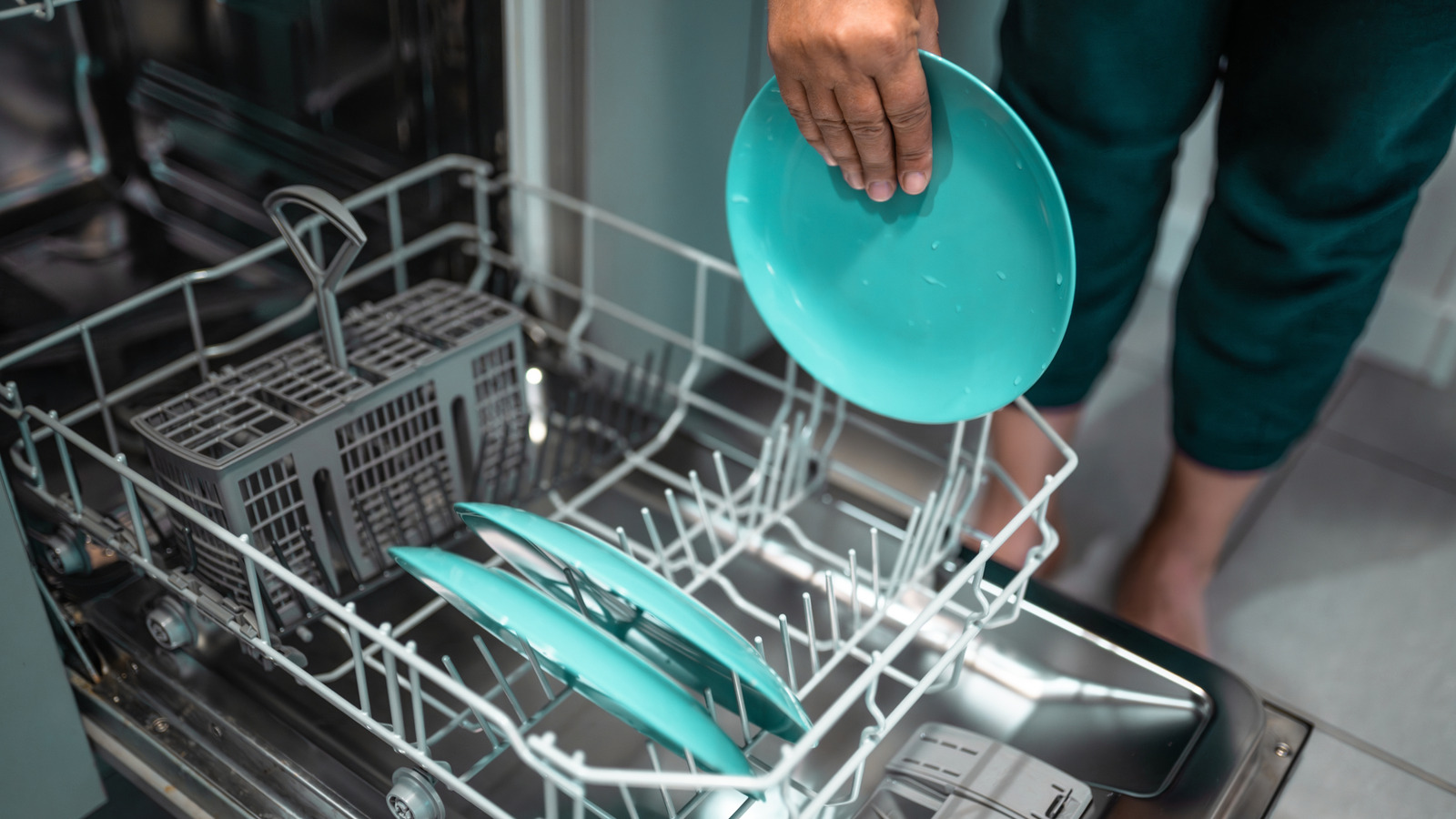
"But you want to make sure you're using your appliance properly to get the most benefit from it. If you notice dishes coming out dirty or food still stuck on utensils, it could be because you're loading the dishwasher incorrectly. There is a right way and a wrong way to load your appliance, and you need to make sure you're not stacking or "nesting" bowls and plates."
"Nesting is what happens when you put things too close together in the dishwasher. If you don't have tines separating plates and bowls, they can fall against one another and that prevents water from getting between them. The front of one plate and the back of another will remain dirty when the wash cycle is done, and you'll have to clean them again. It's a waste of time and energy, and it can be a real frustration to deal with."
"Even if dishes aren't pressed together when you load the dishwasher, water pressure can force them together if there's nothing between them. You need to make sure bowls are separated and angled down. Plates should instead be lined up evenly with tines between them, and utensils like forks and spoons should be alternated so matching items don't nest into each other."
A dishwasher uses less water than hand washing, potentially saving up to 5,000 gallons per year depending on the model. Incorrect loading causes dishes to come out dirty because items that touch or nest block water and detergent from reaching surfaces. Tines should separate plates and bowls, bowls should be angled down, and utensils should be alternated so matching pieces do not nest. Pre-rinsing is unnecessary; scraping is sufficient because detergents need food residue to activate enzymes and clean effectively. Water pressure during the cycle can push unseparated items together, so spacing matters for performance and efficiency.
Read at Tasting Table
Unable to calculate read time
Collection
[
|
...
]