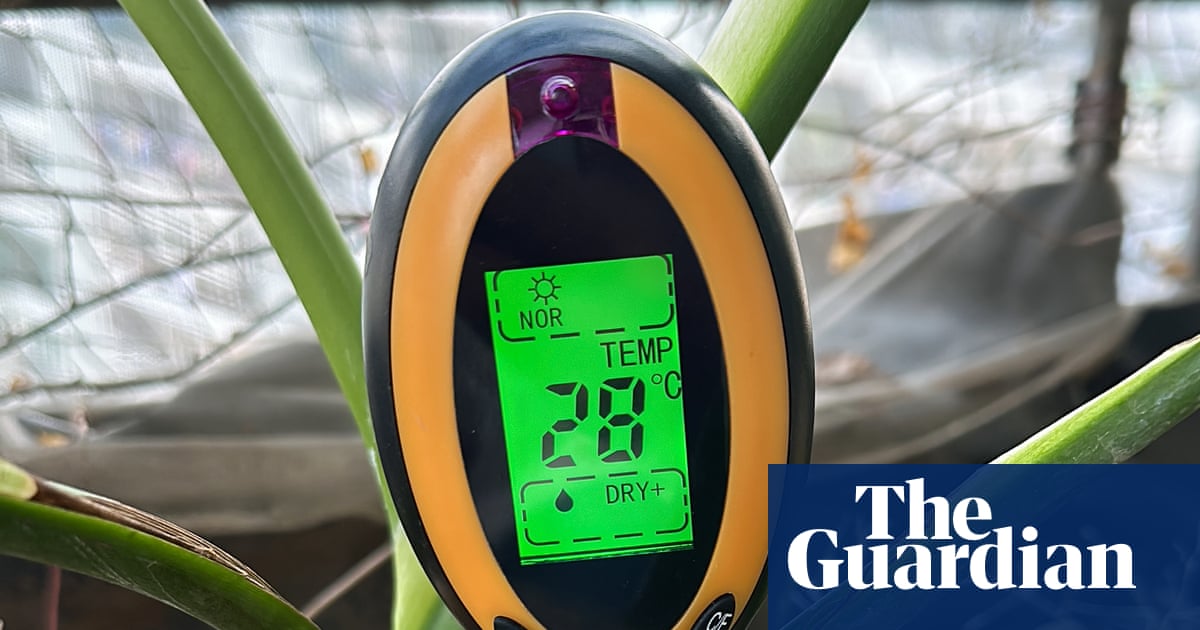
"The method Moisture meters measure electrical conductivity in the soil, which roughly correlates with moisture. Push the probe into the pot, around the root ball, read the dial and water only if it dips into the dry zone. Cross-check with the old tests: feel the soil, lift the pot to gauge the weight, and look at the plant itself. If the meter says dry but the soil feels cool and damp, trust your senses."
"In larger pots, it was broadly accurate, but in small nursery pots, the needle swung wildly. One reading suggested the soil was bone dry when it was clearly still moist. Houseplant hacks: does washing-up liquid get rid of pests? The verdict A moisture meter can be a handy confidence-booster if you tend to overwater, but it is not an oracle. Use one as a guide, to build your confidence, but in the end nothing beats learning to read the plant and the soil yourself."
Moisture meters measure electrical conductivity in potting soil, which roughly correlates with moisture levels. A probe is inserted around the root ball and a dial indicates wet-to-dry zones; water only when the needle reaches the dry zone. Users should cross-check meter readings by feeling the soil, lifting the pot to judge weight, and observing plant appearance. Meters tended to be broadly accurate in larger pots but produced erratic readings in small nursery pots, sometimes reporting bone-dry conditions when the soil remained moist. A moisture meter can boost confidence for those who overwater, but it should be used as a guide alongside sensory checks.
Read at www.theguardian.com
Unable to calculate read time
Collection
[
|
...
]