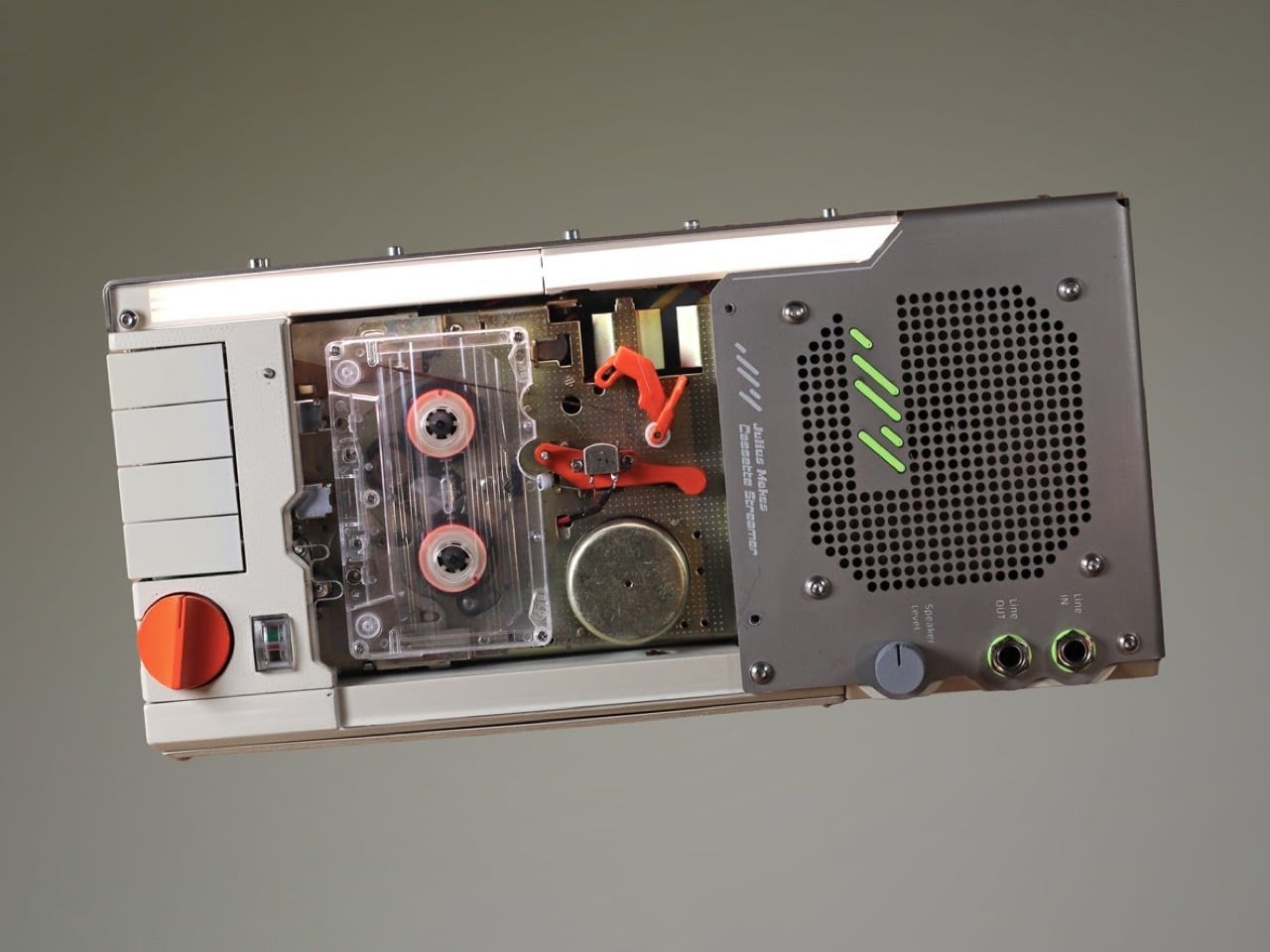
"Most audio enthusiasts fall into one of two camps: the ones chasing perfect fidelity with lossless files and the ones who swear their vinyl sounds warmer. Julius decided to build a bridge between these worlds, and it looks like something Q would hand to James Bond if the mission involved a particularly groovy villain."
"Bluetooth audio arrives digitally, converts to analog, mixes from stereo to mono, records onto cassette tape, travels around the loop, hits a playback head, then reaches the speaker. That physical trip through magnetic tape creates the warmth people obsess over. The compression happens because ferric oxide particles on polyester film genuinely can't capture digital audio's full range. These are real physical limitations making the sound different, and somehow our ears prefer it that way."
"Getting everything to work required solving problems that shouldn't exist anymore. Cassette decks connect their chassis to the positive power rail instead of ground. Julius only learned this after bolting his grounded metal case directly to the deck with screws, nearly shorting everything. The audio input shielding also runs to positive, which makes zero sense if you're used to modern"
A Bluetooth audio stream is converted to analog, summed to mono, recorded onto a continuous cassette tape loop, and played back to physically impart tape saturation and compression. Ferric oxide particles on polyester film limit dynamic range and frequency response, producing the perceived warmth and compression preferred by listeners. The design exposes the moving tape with orange guide brackets for visual effect. Integrating modern Bluetooth hardware with vintage cassette electronics required DC-isolating voltage regulators and creative grounding workarounds because many vintage decks reference chassis and input shielding to the positive power rail, risking shorts with grounded enclosures.
Read at Yanko Design - Modern Industrial Design News
Unable to calculate read time
Collection
[
|
...
]