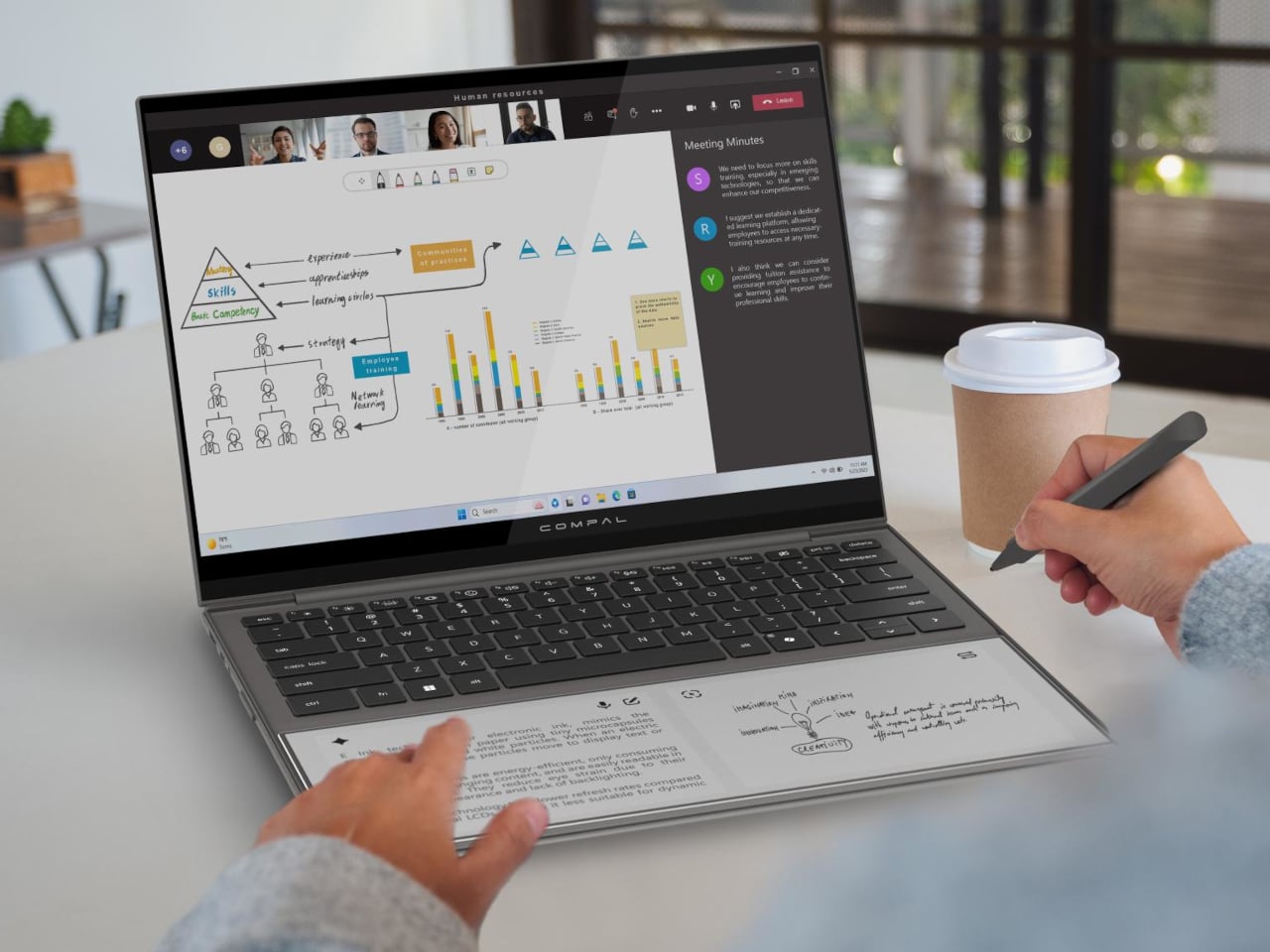
Compal, a Taiwanese ODM, developed the AI Book concept to repurpose the traditionally unused palm rest area of laptops. The innovation replaces this static surface with a touch-enabled E Ink display that supports stylus input, creating a secondary workspace. Users can sketch diagrams, take notes, or maintain to-do lists without consuming primary screen space. The E Ink technology provides significant advantages: it consumes no power to maintain static images, preserving content even after shutdown. The panel features a hinge mechanism allowing it to flip outward when the laptop closes, displaying notifications and calendar entries without opening the lid. A narrow information strip remains visible before flipping, offering passive, glanceable data without user interaction.
"The AI Book replaces the traditional static palm rest with a touch-enabled E Ink display that supports stylus input, turning dead surface area into a secondary workspace. You could sketch a quick diagram while waiting for a file to export, jot down a phone number without switching apps, or keep a running to-do list visible without dedicating screen space to a sticky-note app."
"E Ink doesn't consume power to hold a static image, so that list stays put even after you shut the laptop down. A conventional display goes dark the moment you close the lid, taking your notes with it. The AI Book's E Ink panel doesn't, which means whatever you left there is still there in the morning, no login required, no waiting for the machine to wake."
"The E Ink panel has a hinge, allowing it to flip outward when the laptop is closed so it faces up rather than folding in against the keyboard. In that position, it can show notifications, calendar entries, or a stylus sketch without requiring the lid to open. A narrow strip of the panel also stays visible even before flipping, offering a passive, glanceable information band."
Read at Yanko Design - Modern Industrial Design News
Unable to calculate read time
Collection
[
|
...
]