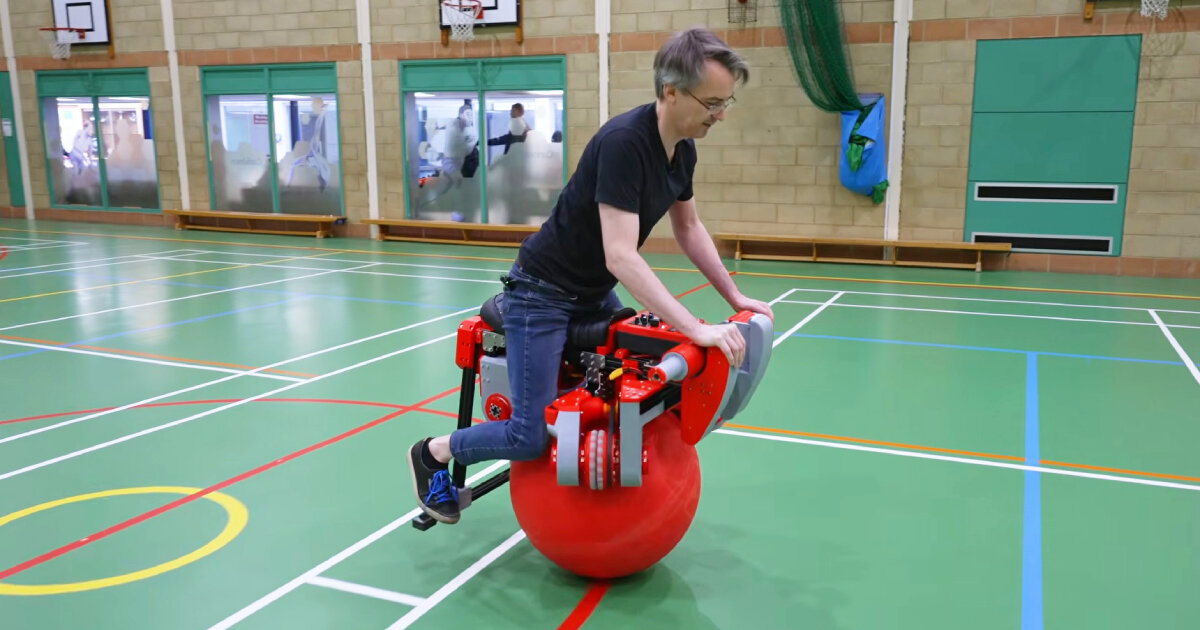
"Building on an earlier two-ball model, the creator chops the rear ball to make way for a single-ball system. Around this sphere sit three omni wheels, each of which is connected to the frame of the vehicle and touches the red ball. Then, each omni wheel includes two rows of small rollers sitting inside the main wheel body. Every roller uses bearings, so the bike with multi-directional balls has a total of 216 bearings."
"The design spreads the load through many moving points instead of one fixed contact to support the rider and the frame. The creator says that the small rollers use TPU tires, and inside each tire sits an aluminum core. This core connects to an axle, which then runs through bearings."
"There are three brushless motors that drive James Bruton's bike with a multi-directional ball. Each motor connects to one wheel using a belt, so the design removes extra pulley stages, creating a direct drive system between motor and wheel. This unit measures roll and pitch, which tells him how the system balances in two directions at once. The software uses PID control to adjust wheel speed."
James Bruton designed an innovative single-ball omnidirectional bike that moves in the direction riders lean. The vehicle features three omni wheels positioned around a central red ball, each wheel containing two rows of small rollers with TPU tires and aluminum cores. The system incorporates 216 bearings total to distribute load across multiple contact points. Three brushless motors drive the wheels via direct belt drive, eliminating extra pulley stages. The frame uses aluminum extrusions for structural support and 3D printed components for axle positioning. An inertial measurement unit tracks roll and pitch data, while PID control software adjusts wheel speeds to maintain balance and enable responsive directional control based on rider input.
#omnidirectional-vehicle #ball-based-mobility #brushless-motors #mechanical-engineering #custom-bike-design
Read at designboom | architecture & design magazine
Unable to calculate read time
Collection
[
|
...
]