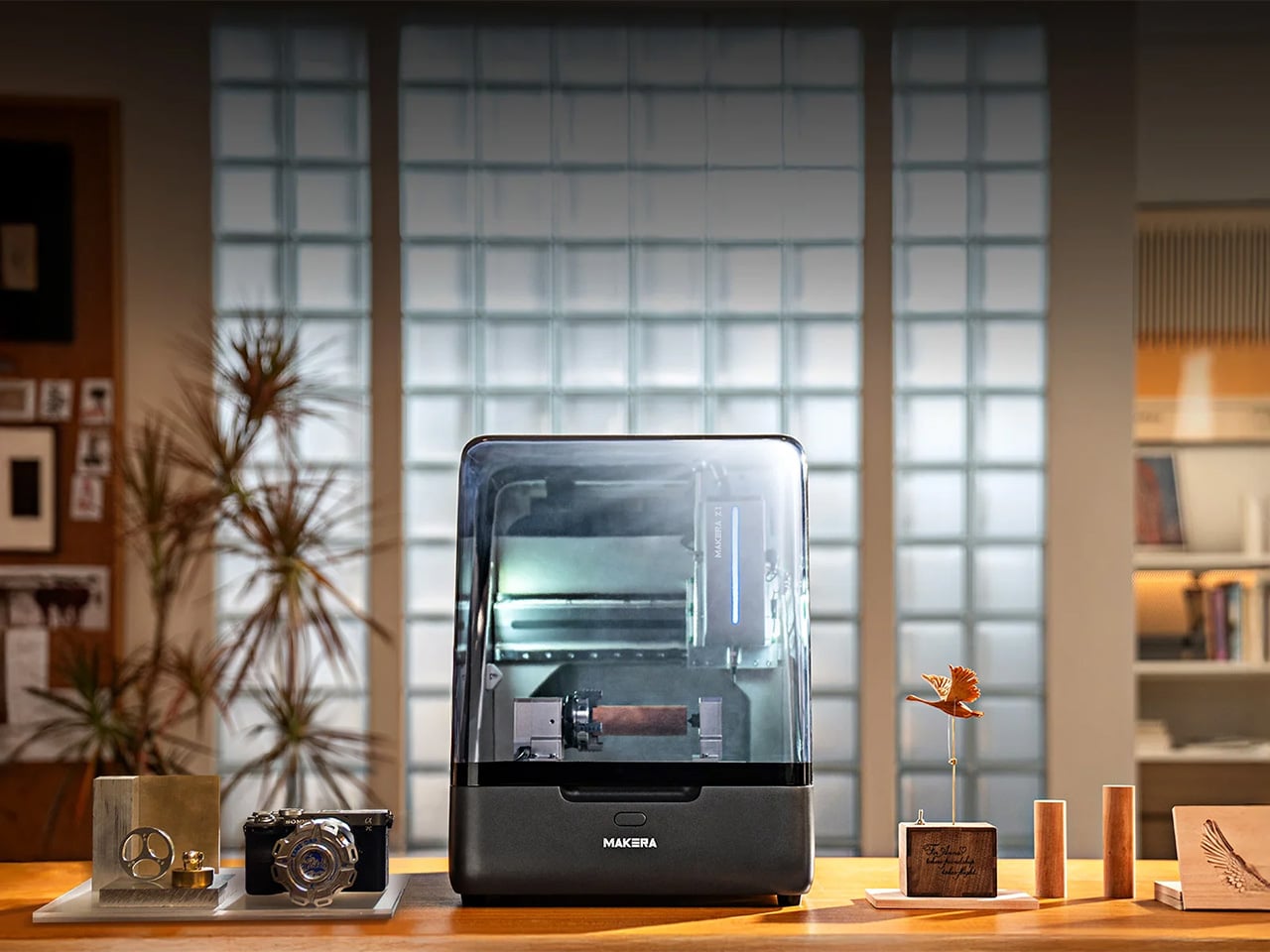
"The maker movement has always had this tension between aspiration and reality. We want to believe that anyone with creativity and determination can fabricate complex physical objects, but the actual tools have never quite lived up to that vision. 3D printers got there eventually, becoming genuinely accessible after years of tinkering and iteration. CNC mills are still waiting for their Prusa moment, that breakthrough where capability and usability finally converge at a price point that makes sense for individual creators rather than small manufacturers."
"Makera's Z1 looks like it might be taking a serious run at becoming that machine. The specs are legitimately compelling: 4-axis machining for complex geometries, laser engraving for multi-material work, tool changing that doesn't kill your workflow momentum. But the really smart move is how they've approached the software side with their Smart Machining Wizard that handles toolpath optimization automatically. That's the kind of feature that could genuinely flatten the learning curve, because the hardest part of CNC work isn't understanding what you want to make, it's translating that into the specific sequence of cuts and feeds that won't destroy your material or your bit."
"Makera built this thing with a die-cast metal frame that keeps it rigid enough for precision work while staying compact enough for a desk or workbench. Most desktop CNCs either sacrifice rigidity for size or end up being "desktop" machines that require you to dedicate half a room to them. The Z1 actually fits where people work without turning into a wobbly mess the moment you put any real cutting force on it. A transparent enclosure with blue LED lighting lets you watch what's happening, which sounds purely aesthetic until you've spent enough time with CNC work to know that being able to see when something starts going wrong"
The Z1 combines 4-axis machining, laser engraving, and an automatic tool changer to broaden desktop fabrication capabilities. A Smart Machining Wizard automates toolpath optimization to reduce the CNC learning curve and minimize user error. The machine uses a die-cast metal frame to maintain rigidity while remaining desk-friendly, avoiding the typical tradeoff between size and stiffness. A transparent enclosure with blue LED lighting provides visibility to monitor operations and detect issues early. The product is positioned at a consumer-friendly price point on a funded campaign and emphasizes usability for individual creators rather than small manufacturers.
Read at Yanko Design - Modern Industrial Design News
Unable to calculate read time
Collection
[
|
...
]