"Charles V kept his celebrated library here; Henri IV installed his cabinets of paintings, objets d'art and arms, and created within its walls a veritable city of artists, where cabinetmakers, tapestry-makers, painters and armourers lived and worked. Under Louis XIII, coins, medals and the Louvre's printing press were added; under Louis XIV came casts, antiquities and the academies of architecture, the arts and the sciences."
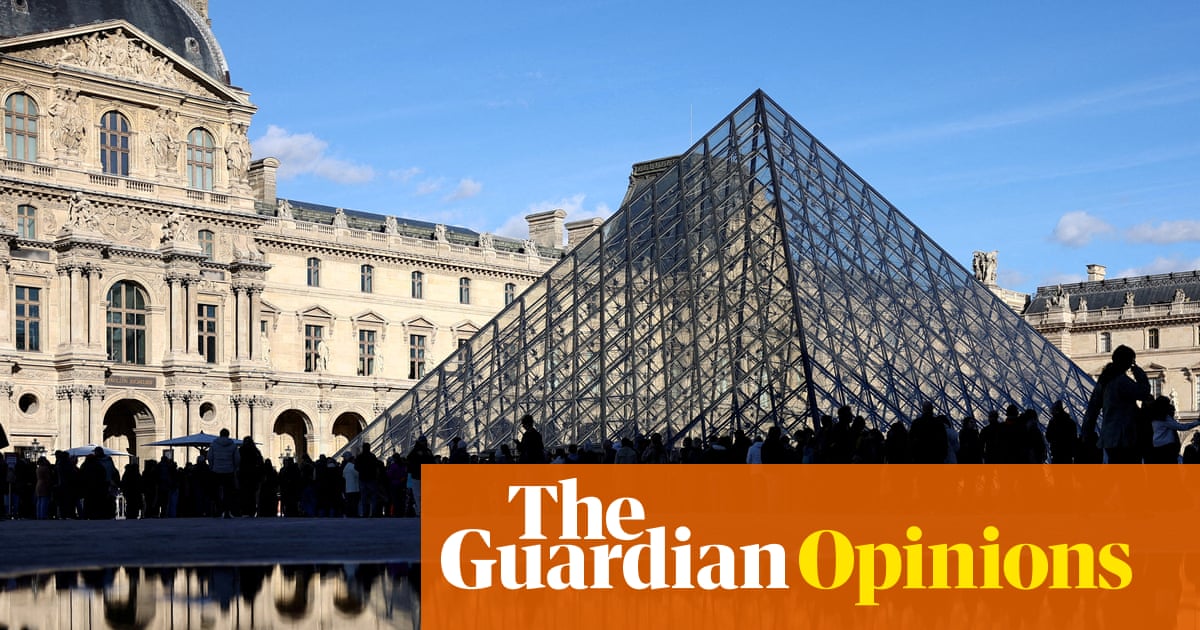
"On 8 November 1793, ordinary citizens were admitted to the Louvre's Salon Carre and Grande Galerie for the first time, transforming a royal palace into a national art museum. Continually evolving through redesign, reconstruction and reinvention, it has survived revolutions, arson and Nazi occupation. Within its labyrinthine galleries, audacious thefts have unfolded in broad daylight, while secret acts of bravery left barely a trace in history."
The Louvre began as a royal residence on the Seine, housing Charles V's celebrated library and Henri IV's cabinets of paintings, objets d'art and arms, with artisans and artists living and working within. Successive monarchs added coins, medals, a printing press, casts, antiquities and academies of architecture, arts and sciences. The Enlightenment and the Revolution opened masterpieces to ordinary citizens on 8 November 1793, creating a national art museum. The institution has endured redesigns, reconstruction, revolutions, arson and Nazi occupation, as well as audacious daylight thefts; recent thefts, leaks and infrastructure failures have raised fresh concerns about preservation and security.
Read at www.theguardian.com
Unable to calculate read time
Collection
[
|
...
]