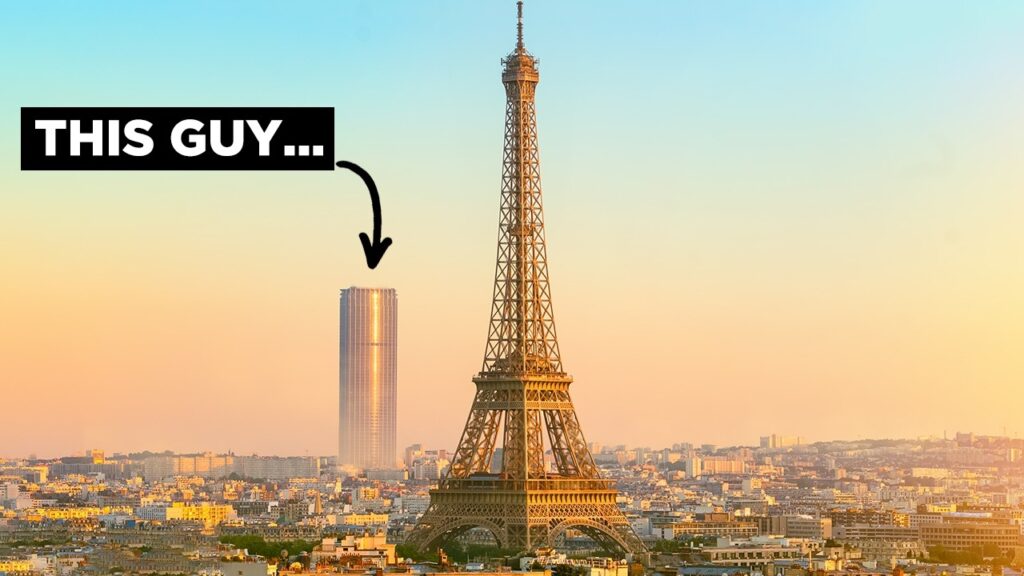
"The play­wright Tris­tan Bernard is said to have eat­en lunch at the Eif­fel Tow­er every day, but not because he liked the menu in its café: rather, because it was the only place in Paris with no view of the Eif­fel Tow­er. His view wasn't whol­ly eccen­tric in the decades after its con­struc­tion, in the late eigh­teen-eight­ies, when the struc­ture had yet to become the most beloved in France, and per­haps in the world."
"Unlike the Eif­fel Tow­er, which was com­mis­sioned in part to cel­e­brate the cen­ten­ni­al of the French Rev­o­lu­tion, the Tour Mont­par­nasse projects no polit­i­cal sym­bol­ism; unlike Notre-Dame de Paris, or Sacré-Cœur de Mont­martre, it has no reli­gious sig­nif­i­cance. Its pur­pose is whol­ly com­mer­cial, befit­ting a large office build­ing with a shop­ping mall - or now, the remains of a shop­ping mall - at the bot­tom."
"But when it was first con­ceived in 1958, it embod­ied the very image of moder­ni­ty in a built envi­ron­ment that was dilap­i­dat­ed where it wasn't war-torn. A mod­ern sky­scraper would show the world, unmis­tak­ably, that Paris had stepped ful­ly into the twen­ti­eth cen­tu­ry of indoor plumb­ing, elec­tric­i­ty, fast trains, and telecom­mu­ni­ca­tion. This mis­sion gained the full back­ing of none oth­er than Andre Mal­raux, then France's first Min­is­ter of Cul­tur­al Affairs."
Tristan Bernard preferred dining at the Eiffel Tower because it was the only Parisian spot without a view of the Eiffel Tower. The Tour Montparnasse stands as Paris' least beloved building and has been the only central skyscraper since its 1973 completion. The tower serves a commercial role with office space and a shopping mall now largely defunct. Conceived in 1958, the tower was intended to embody modernity amid a dilapidated urban fabric. A modern skyscraper was meant to signal Paris' embrace of indoor plumbing, electricity, fast trains, and telecommunications. Andre Malraux gave full backing to the project.
Read at Open Culture
Unable to calculate read time
Collection
[
|
...
]