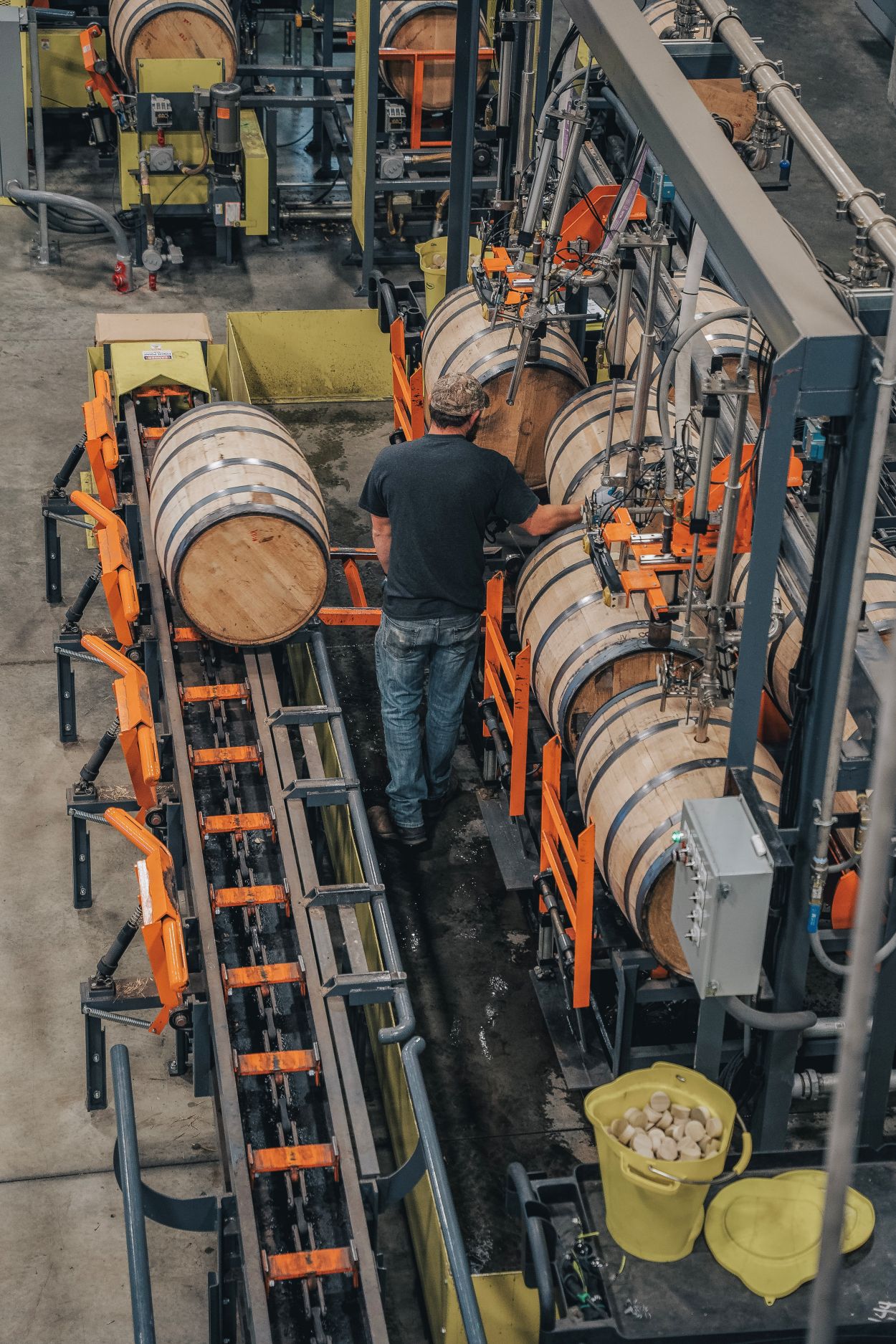
"Whiskey House of Kentucky has completed construction of its first seven-story rickhouse featuring the revolutionary K-RAX barrel storage system: a collaboration with The Koetter Group that finished one month ahead of schedule and sets a new standard for how American whiskey will age for generations to come. Located in Elizabethtown, Kentucky, this state-of-the-art facility represents the first of twelve warehouses that Whiskey House plans to build over the next decade."
""As the leader in custom whiskey production, we are proud to introduce the most innovative and advanced rickhouse in the industry for our exclusive customers," said Whiskey House co-founder and CEO David Mandell. "The Koetter Group provides an incredible product that delivers significant improvements in warehouse maturation, air flow, safety, and durability." For hospitality professionals and beverage industry leaders tracking innovation in spirits production, the K-RAX system addresses longstanding challenges that have plagued traditional rickhouse design for over a century."
"The K-RAX warehouse isn't simply a larger version of traditional rickhouses. It represents a fundamental reimagining of how whiskey ages, how workers stay safe, and how buildings endure decades of bourbon production. Traditional barrel warehouses have always struggled with inconsistent maturation: barrels on upper floors age differently than those on lower levels, creating variability that complicates blending and quality control. The K-RAX design tackles this challenge head-on with engineering innovations that improve airflow throughout the entire structure."
Whiskey House of Kentucky completed a seven-story rickhouse using the K-RAX barrel storage system in partnership with The Koetter Group, finishing one month ahead of schedule. The Elizabethtown facility is the first of twelve planned warehouses, each holding 48,048 barrels. K-RAX redesigns maturation by improving airflow, vapor management, safety, and structural durability. The system reduces vertical aging variability that complicates blending and quality control. The development expands contract whiskey manufacturing capacity and establishes a new standard for how American whiskey will mature over future generations.
Read at Food & Beverage Magazine
Unable to calculate read time
Collection
[
|
...
]