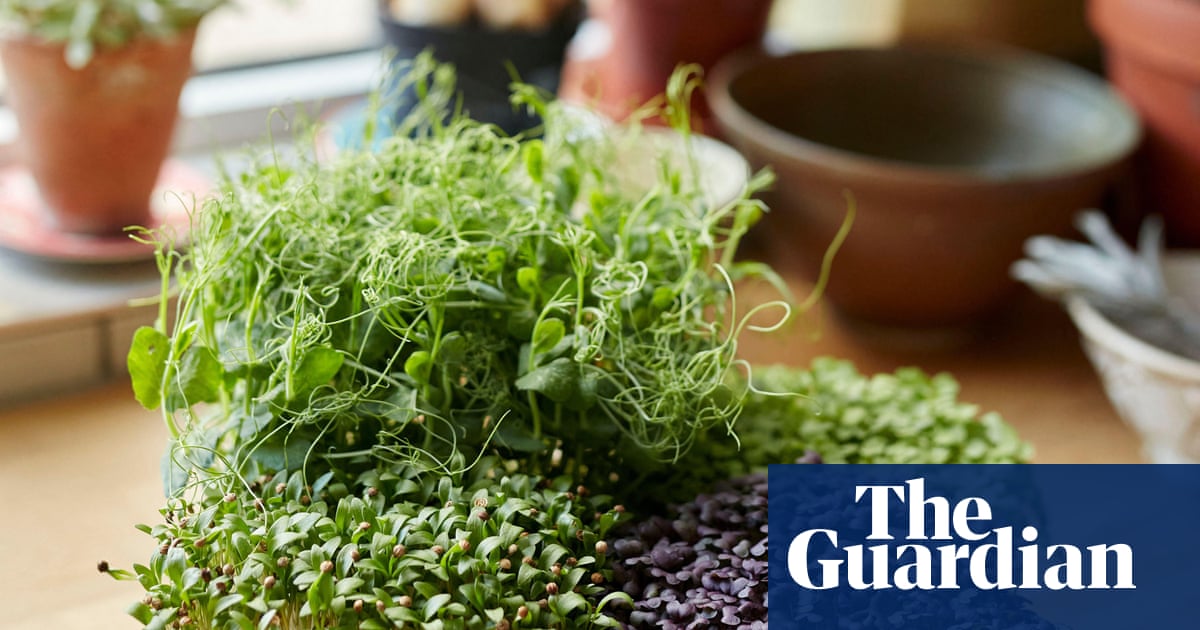
"January can hardly be considered an abundant time of year. All but the evergreens are barren and bare. Yet there is an approach to year-round growing that, in the depths of winter, feels all the more miraculous. Microgreens are not a type of plant, but a method of growing leafy crops which doesn't require much space or effort and, importantly for now, can be done indoors in order to achieve an unseasonably fresh burst of flavour on your dinner plate."
"Any plant that is edible from top-to-toe can be grown as a microgreen. From salad leaves like lettuce and sorrel to herbs such as basil, dill, coriander and fennel, plus all the brassicas from the very delicious mustard greens and rocket to the far less spicy broccoli and kale. Also on the fuller side of the flavour profile are nasturtiums and sunflowers, which produce juicy shoots with a nutty flavour. Peas also produce a substantial shoot with pretty leaves and tendrils."
"Spread a generous single layer of seeds on to the compost and cover with a fine layer of compost no deeper than the size of the seed itself. In the case of tiny seeds such as amaranth this will only be a smattering. Water well using a can with a fine rose so you don't disrupt all your careful work."
Microgreens are a method of growing leafy crops densely in containers for early harvesting, requiring little space, little effort and tolerating low light. Any edible plant can be grown as a microgreen, including salad leaves, basil, dill, coriander, fennel, brassicas, nasturtiums, sunflowers, peas, amaranth, carrot and perilla. Seed trays or recycled punnets are filled about two-thirds with compost and tamped to a firm but not compacted bed. Spread a generous single layer of seeds, cover with a fine layer of compost no deeper than the seed, and water gently with a fine-rose can or germinate under a damp kitchen towel. Harvest young to enjoy concentrated flavour and make efficient use of indoor space.
Read at www.theguardian.com
Unable to calculate read time
Collection
[
|
...
]